


Causes and correlates of 30 day and 180 day readmission following discharge from a Medicine for the Elderly Rehabilitation unit
- PMID: 30153802
- PMCID: PMC6114496
- DOI: 10.1186/s12877-018-0883-3
Causes and correlates of 30 day and 180 day readmission following discharge from a Medicine for the Elderly Rehabilitation unit
Abstract
Background: Recently hospitalized patients experience a period of generalized risk of adverse health events. This study examined reasons for, and predictors of, readmission to acute care facilities within 30 and 180 days of discharge from an inpatient rehabilitation unit for older people.
Methods: Routinely collected, linked clinical data on admissions to a single inpatient rehabilitation facility over a 13-year period were analysed. Data were available regarding demographics, comorbid disease, admission and discharge Barthel scores, length of hospital stay, and number of medications on discharge. Discharge diagnoses for the index admission and readmissions were available from hospital episode statistics. Univariate and multivariate Cox regression analyses were performed to identify baseline factors that predicted 30 and 180-day readmission.
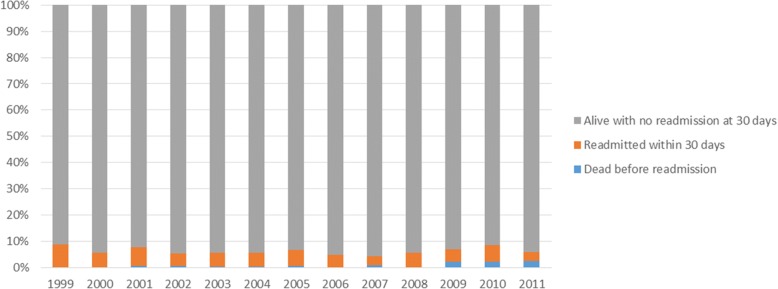
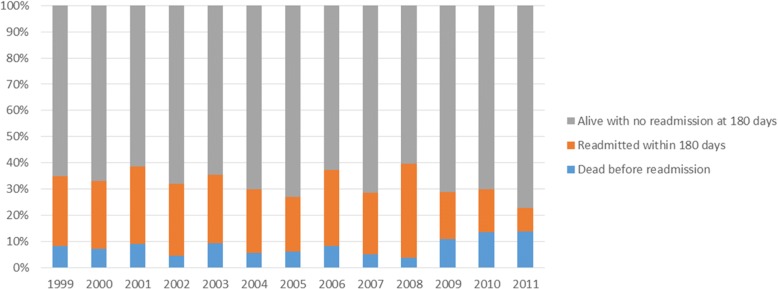
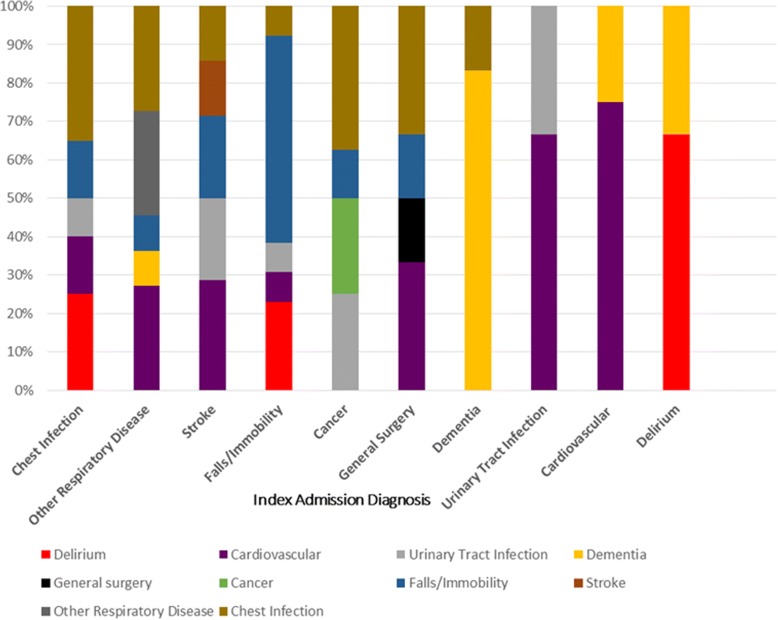
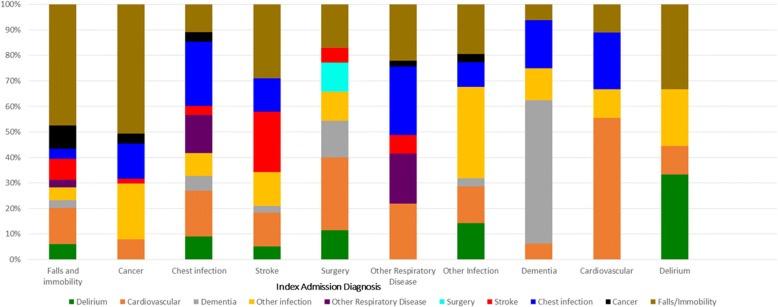
Results: A total of 3984 patients were included in the analysis. The cohort had a mean age of 84.1 years (SD 7.4), and 39.7% were male. Overall, 5.6% (n = 222) and 23.2% (n = 926) of the patients were readmitted within 30 days and 180 days of discharge respectively. For patients readmitted to hospital, 26.6% and 21.1% of patients were readmitted with the same condition as their initial admission at 30 days and 180 respectively. For patients readmitted within 30 days, 13.5% (n = 30) were readmitted with the same condition with the most common diagnoses associated with readmission being chest infection, falls/immobility and stroke. For patients readmitted within 180 days, 12.4% (n = 115) of patients were readmitted with the same condition as the index condition with the most common diagnoses associated with readmission being falls/immobility, cancer and chest infections. In multivariable Cox regression analyses, older age, male sex, length of stay and heart failure predicted 30 or 180-day readmission. In addition, discharge from hospital to patients own home predicted 30-day readmission, whereas diagnoses of cancer, previous myocardial infarction or chronic obstructive pulmonary disease predicted 180-day readmission.
Conclusion: Most readmissions of older people after discharge from inpatient rehabilitation occurred for different reasons to the original hospital admission. Patterns of predictors for early and late readmission differed, suggesting the need for different mitigation strategies.
Conflict of interest statement
Ethics approval and consent to participate
Management of these routinely collected data is performed under generic ethics committee approval from the East of Scotland Research Ethics committee and the local Data Protection Officer. Individual consent was not obtainable for retrospective use of these data.
Consent for publication
Not applicable
Competing interests
The authors declare that they have no competing interests.
Publisher’s Note
Springer Nature remains neutral with regard to jurisdictional claims in published maps and institutional affiliations.
Figures
References
-
- Reducing Readmissions. NHS Innovation & Improvement. Available from: http://webarchive.nationalarchives.gov.uk/20121108093302/http://www.inst... Accessed: 13th Oct 2017.
Publication types
MeSH terms
LinkOut - more resources
Full Text Sources
Other Literature Sources
