


Effectiveness of fixed-dose combination therapy in hypertension: systematic review and meta-analysis
- PMID: 30154897
- PMCID: PMC6111352
- DOI: 10.5114/aoms.2018.77561
Effectiveness of fixed-dose combination therapy in hypertension: systematic review and meta-analysis
Abstract
Introduction: Clinical studies have revealed that fixed-dose combinations (FDCs) of drugs can have a better effect on blood pressure than free-equivalent combinations (FECs). Our objectives were to perform an up-to-date assessment of the effectiveness of FDCs and FECs in antihypertensive therapy, to provide more accurate results by using a stratified meta-analysis.
Material and methods: A systematic review was performed in PubMed, Web of Science, and Cochrane databases according to PRISMA guidelines. The outcomes were adherence (compliance), persistence to medication, reduction of blood pressure and the safety profile. We used the Newcastle Ottawa scale or the Delphi list for the assessment of the quality of cohort studies or clinical trials, respectively. Heterogeneity was assessed using the Cochrane Q test and I2 statistic.
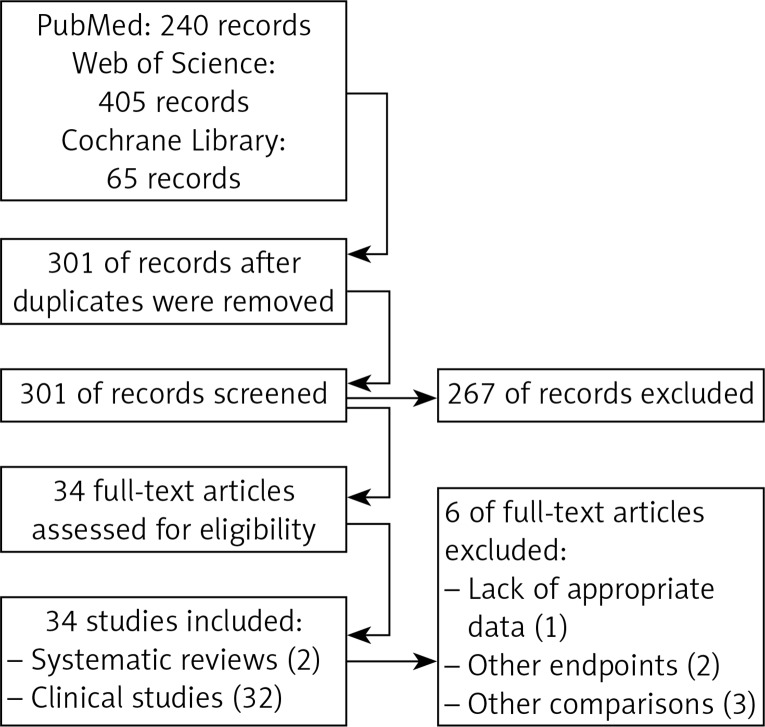
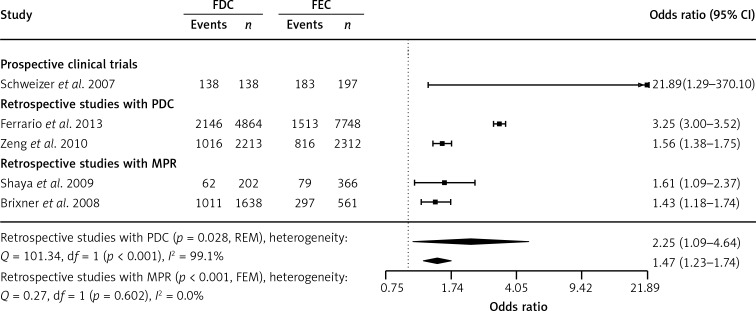
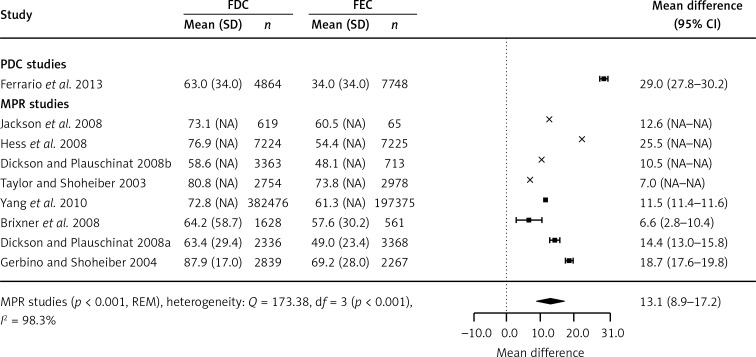
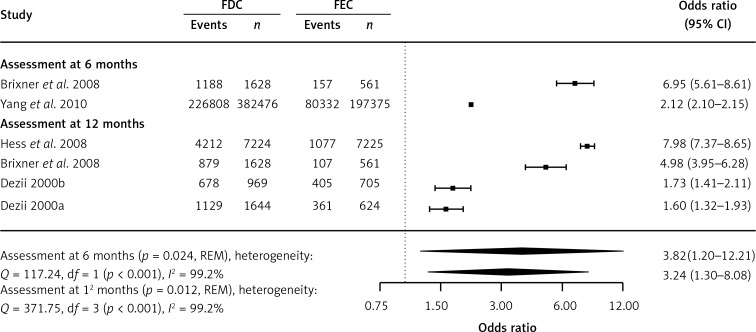
Results: Of 301 abstracts screened, 26 primary studies and 2 other meta-analyses were identified, of which 12 studies were included in the meta-analyses and 3 studies were included in the narrative review. The FDC treatment is associated with a significant improvement in adherence and persistence in comparison with FEC treatment, e.g., the average medicine possession ratio increased with FDC by 13.1% (p < 0.001). For endpoints correlated with higher adherence (e.g., a reduction in blood pressure), a nonsignificant benefit was observed for FDCs. Moreover, it was demonstrated that higher adherence can lead to a lower risk of cardiovascular events.
Conclusions: In comparison with FECs, the FDC treatment is associated with a significant improvement in the cooperation between a doctor and a patient and with increased patients' adherence to the treatment schedule.
Keywords: fixed-dose combinations; free-equivalent combinations; hypertension.
Figures
References
-
- Kearney PM, Whelton M, Reynolds K, et al. Global burden of hypertension: analysis of worldwide data. Lancet. 2005;365:217–23. - PubMed
-
- Heidenreich P, Trogdon J, Khavjou O, et al. Forecasting the future of cardiovascular disease in the United States: a policy statement from the American Heart Association. Circulation. 2011;123:933–44. - PubMed
-
- Psaty B, Furberg C, Kuller L, et al. Association between blood pressure level and the risk of myocardial infarction, stroke, and total mortality: the Cardiovascular Health Study. Arch Intern Med. 2001;161:1183–92. - PubMed
-
- Chobanian AV, Bakris GL, Black HR, et al. Seventh Report of the Joint National Committee on Prevention, Detection, Evaluation, and Treatment of High Blood Pressure: The JNC 7 Report. JAMA. 2003;289:2560–72. - PubMed
-
- Roger VL, Go AS, Lloyd-Jones DM, et al. Executive summary: heart disease and stroke statistics–2012 update: a report from the American Heart Association. Circulation. 2012;125:188–97. - PubMed
Publication types
LinkOut - more resources
Full Text Sources
Other Literature Sources
