Ivabradine in acute heart failure: Effects on heart rate and hemodynamic parameters in a randomized and controlled swine trial
- PMID: 30155868
- PMCID: PMC8086495
- DOI: 10.5603/CJ.a2018.0078
Ivabradine in acute heart failure: Effects on heart rate and hemodynamic parameters in a randomized and controlled swine trial
Abstract
Background: Acute heart failure patients could benefit from heart rate reduction, as myocardial consumption and oxidative stress are related to tachycardia. Ivabradine could have a clinical role attenuating catecholamine-induced tachycardia. The aim of this study was to evaluate hemodynamic effects of ivabradine in a swine model of acute heart failure.
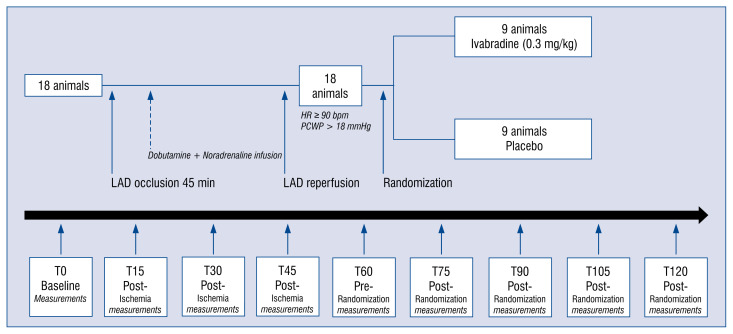
Methods: Myocardial infarction was induced by 45 min left anterior descending artery balloon occlusion in 18 anesthetized pigs. An infusion of dobutamine and noradrenaline was maintained aiming to preserve adequate hemodynamic support, accompanied by fluid administration to obtain a pulmonary wedged pressure ≥ 18 mmHg. After reperfusion, rhythm and hemodynamic stabilization, the animals were randomized to 0.3 mg/kg ivabradine intravenously (n = 9) or placebo (n = 9). Hemodynamic parameters were observed over a 60 min period.
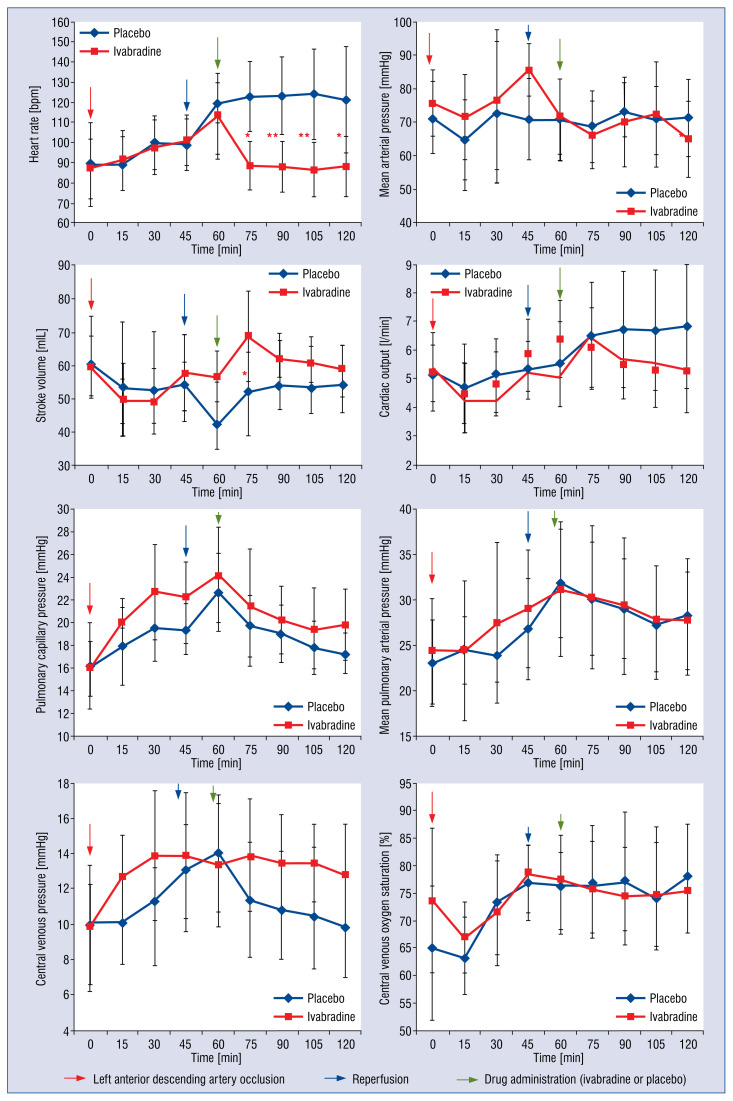
Results: Ivabradine was associated with a significant reduction in heart rate (88.4 ± 12.0 bpm vs. 122.7 ± 17.3 bpm after 15 min of ivabradine/placebo infusion, p < 0.01) and an increase in stroke volume (68.8 ± 13.7 mL vs. 52.4 ± 11.5 mL after 15 min, p = 0.01). There were no significant differences in systemic or pulmonary arterial pressure, or significant changes in pulmonary capillary pressure. However, after 15 min, cardiac output was significantly reduced with ivabradine (-5.2% vs. +15.0% variation in ivabradine/placebo group, p = 0.03), and central venous pressure increased (+4.2% vs. -19.7% variation, p < 0.01).
Conclusions: Ivabradine reduces heart rate and increases stroke volume without modifying systemic or left filling pressures in a swine model of acute heart failure. However, an excessive heart rate reduction could lead to a decrease in cardiac output and an increase in right filling pressures. Future studies with specific heart rate targets are needed.
Keywords: acute heart failure; heart rate; ivabradine; porcine model; swine model.
Conflict of interest statement
Figures
References
-
- Ponikowski P, Voors AA, Anker SD, et al. 2016 ESC Guidelines for the diagnosis and treatment of acute and chronic heart failure: The Task Force for the diagnosis and treatment of acute and chronic heart failure of the European Society of Cardiology (ESC). Developed with the special contribution of the Heart Failure Association (HFA) of the ESC. Eur J Heart Fail. 2016;18(8):891–975. doi: 10.1002/ejhf.592. - DOI - PubMed
-
- Hastillo A, Taylor DO, Hess ML. Secific ositiv inotroic agents. In: Messerli FH, editor. Cardiovascular drug theray. 2nd Ed. W G Saunders Company; Philadelphia: 1996. pp. 1151–1161.
-
- Tisdale JE, Patel R, Webb CR, et al. Electrophysiologic and proarrhythmic effects of intravenous inotropic agents. Prog Cardiovasc Dis. 1995;38(2):167–180. - PubMed
MeSH terms
Substances
LinkOut - more resources
Full Text Sources
Other Literature Sources
Medical