


Temperature responses of mutation rate and mutational spectrum in an Escherichia coli strain and the correlation with metabolic rate
- PMID: 30157765
- PMCID: PMC6116381
- DOI: 10.1186/s12862-018-1252-8
Temperature responses of mutation rate and mutational spectrum in an Escherichia coli strain and the correlation with metabolic rate
Abstract
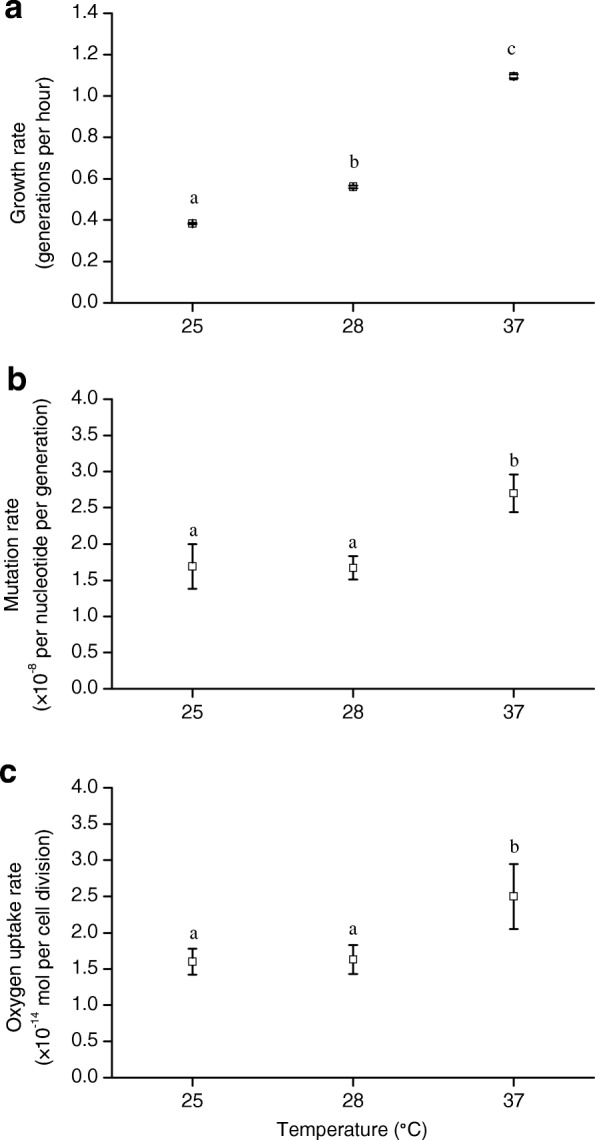
Background: Temperature is a major determinant of spontaneous mutation, but the precise mode, and the underlying mechanisms, of the temperature influences remain less clear. Here we used a mutation accumulation approach combined with whole-genome sequencing to investigate the temperature dependence of spontaneous mutation in an Escherichia coli strain. Experiments were performed under aerobic conditions at 25, 28 and 37 °C, three temperatures that were non-stressful for the bacterium but caused significantly different bacterial growth rates.
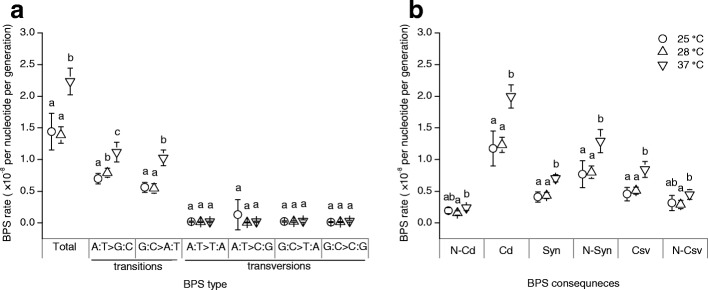
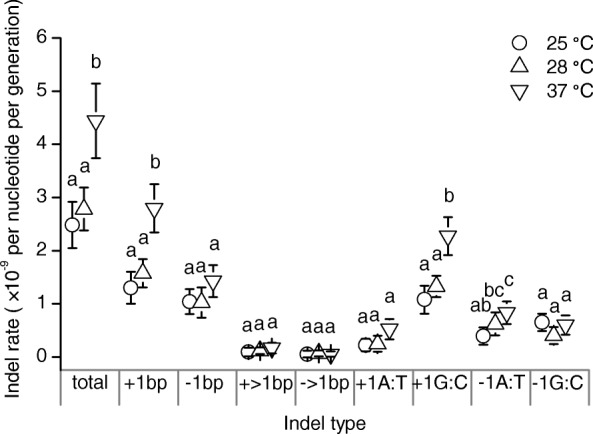
Results: Mutation rate did not differ between 25 and 28 °C, but was higher at 37 °C. Detailed analyses of the molecular spectrum of mutations were performed; and a particularly interesting finding is that higher temperature led to a bias of mutation to coding, relative to noncoding, DNA. Furthermore, the temperature response of mutation rate was extremely similar to that of metabolic rate, consistent with an idea that metabolic rate predicts mutation rate.
Conclusions: Temperature affects mutation rate and the types of mutation supply, both being crucial for the opportunity of natural selection. Our results help understand how temperature drives evolutionary speed of organisms and thus the global patterns of biodiversity. This study also lend support to the metabolic theory of ecology for linking metabolic rate and molecular evolution rate.
Keywords: Evolutionary speed hypothesis; Molecular evolution; Mutation accumulation; Mutation rate; Mutational spectrum; Oxidative DNA damage.
Conflict of interest statement
Ethics approval and consent to participate
Not applicable.
Consent for publication
Not applicable.
Competing interests
The authors declare that they have no competing interests.
Publisher’s Note
Springer Nature remains neutral with regard to jurisdictional claims in published maps and institutional affiliations.
Figures
References
-
- Cheng KC, Cahill DS, Kasai H, Nishimura S, Loeb LA. 8-hydroxyguanine, an abundant form of oxidative DNA damage, causes G->T and A->C substitutions. J Biol Chem. 1992;267:166–172. - PubMed
Publication types
MeSH terms
Grants and funding
LinkOut - more resources
Full Text Sources
Other Literature Sources
