


High expression of HMGB1 in children with refractory Mycoplasma pneumoniae pneumonia
- PMID: 30157804
- PMCID: PMC6116361
- DOI: 10.1186/s12879-018-3346-8
High expression of HMGB1 in children with refractory Mycoplasma pneumoniae pneumonia
Abstract
Background: Increasing numbers of refractory or severe, even fatal, cases of Mycoplasma pneumoniae infections have been reported in recent years. Excessive inflammatory responses play a vital role in the pathogenesis of refractory M. pneumoniae pneumonia (RMPP). HMGB1 is an actively secreted cytokine produced by macrophages and other inflammatory cells that participates in various infectious diseases. The present study aimed to explore the role and clinical significance of HMGB1 in children with RMPP and the potential mechanism of HMGB1 expression.
Methods: Four hundred and fifty-two children diagnosed with M. pneumoniae pneumonia, including 108 children with RMPP, were enrolled from January 2013 to December 2015 at the Children's Hospital of Soochow University. HMGB1, TNF-α, and IL-6 in peripheral blood from RMPP and non-RMPP (NRMPP) cases were detected by real-time PCR and ELISA. Lipid-associated membrane proteins (LAMPs) were extracted from live M. pneumoniae and prepared at different concentrations for stimulation of THP-1 cells. After coculture with LAMPs, HMGB1, TNF-α, IL-6, RAGE, TLR2, and TLR4 in THP-1 cells were detected by real-time PCR.
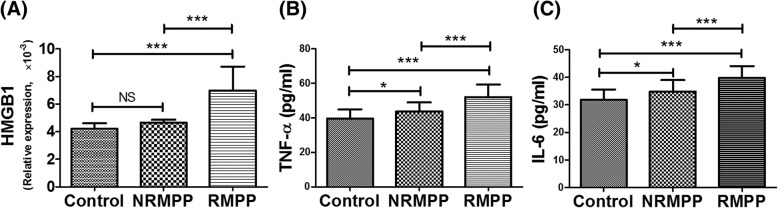
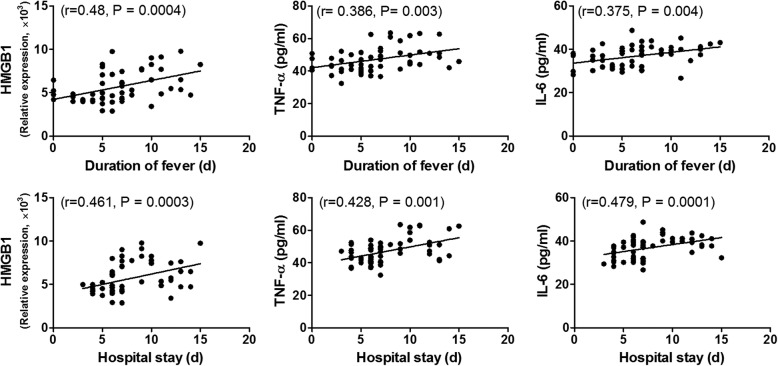
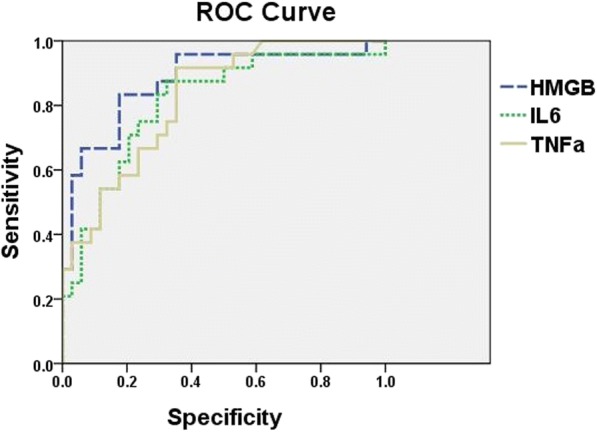
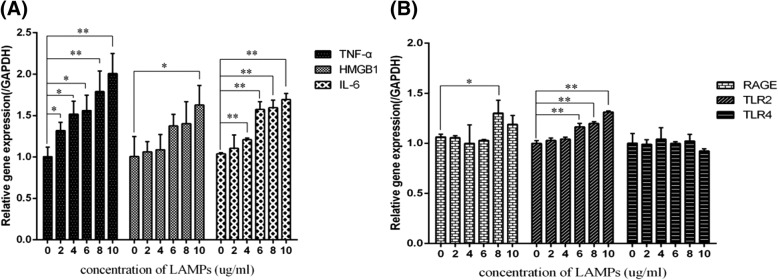
Results: Occurrences of cough, fever, and abnormal lung signs were more frequent in RMPP cases compared with NRMPP cases (all p < 0.05). Children with RMPP had longer hospital stays than children with NRMPP (p < 0.05). Different distributions of lymphocytes were noted between RMPP and NRMPP cases. HMGB1, TNF-α, and IL-6 levels were significantly higher in RMPP cases compared with NRMPP cases (all p < 0.05). HMGB1 had good diagnostic ability to differentiate RMPP with AUC of 0.876, sensitivity of 0.833, and specificity of 0.824 compared with TNF-α and IL-6. HMGB1 expression in THP-1 cells was increased by stimulation with 10 μg/ml LAMPs. TLR2 expression was increased after stimulation with 6 μg/ml LAMPs. HMGB1 level was positively associated with TNF-α, IL-6, and TLR2 levels.
Conclusions: HMGB1 is a good diagnostic biomarker for differentiating RMPP and NRMPP. LAMPs from M. pneumoniae may induce HMGB1 expression in immune cells through the TLR2 pathway. Further in vitro and in vivo studies are needed for the development of a new treatment strategy to inhibit the HMGB1 pathway, thereby preventing the inflammation in RMPP.
Keywords: HMGB1; Lipid-associated membrane proteins (LAMPs); M. Pneumoniae pneumonia; RMPP.
Conflict of interest statement
Ethics approval and consent to participate
All procedures performed in studies involving human participants were in accordance with the ethical standards of the Institutional Review Board of Children’s Hospital of Soochow University (project approval number 2012LW002) and with the 1964 Helsinki declaration and its later amendments or comparable ethical standards. Participant consent was written by the adults or the legal representatives of patients aged < 16 years and informed consent forms were archived.
Consent for publication
Not applicable.
Competing interests
The authors declare that they have no competing interests.
Publisher’s Note
Springer Nature remains neutral with regard to jurisdictional claims in published maps and institutional affiliations.
Figures
References
-
- Arai S, Furukawa M, Munakata T, Kuwano K, Inoue H, Miyazaki T. Enhancement of cytotoxicity of active macrophages by mycoplasma: role of mycoplasma-associated induction of tumor necrosis factor-alpha (TNF-alpha) in macrophages. Microbiol Immunol. 1990;34(3):231–243. doi: 10.1111/j.1348-0421.1990.tb01006.x. - DOI - PubMed
MeSH terms
Substances
Grants and funding
LinkOut - more resources
Full Text Sources
Other Literature Sources
Medical
