


Phenotypic Detection of Carbapenemase-Producing Organisms from Clinical Isolates
- PMID: 30158194
- PMCID: PMC6204673
- DOI: 10.1128/JCM.01140-18
Phenotypic Detection of Carbapenemase-Producing Organisms from Clinical Isolates
Abstract
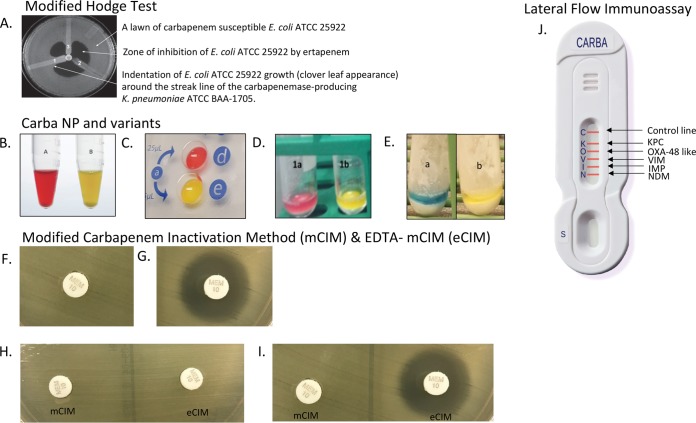
The rapid spread of multidrug-resistant Gram-negative organisms constitutes one of the greatest challenges to global health. While Gram-negative organisms have developed several mechanisms to avert the bactericidal effects of commonly prescribed antibiotic agents, the increasing prevalence of carbapenemase-producing organisms (CPO) is particularly concerning given the rapid spread of mobile genetic elements containing carbapenemase genes, the limited treatment options for infections caused by these organisms, and the high mortality rates associated with CPO infections. Understanding if an organism is carbapenemase producing and, if so, the class of carbapenemase(s) produced has treatment implications, as some agents preferentially have activity against specific carbapenemases. Furthermore, CPO disseminate between patients with greater ease than non-CP-carbapenem-resistant organisms and warrant more intensive infection control measures than would be employed in the absence of carbapenemase production. Phenotypic assays currently used in clinical practice to detect CPO consist of the following: (i) growth-based assays which measure carbapenem resistance based on organism growth in the presence of a carbapenem antibiotic (e.g., modified Hodge test and modified carbapenem inactivation method), (ii) hydrolysis methods which detect carbapenem degradation products (e.g., Carba NP test and matrix-assisted laser desorption-ionization time of flight mass spectrometry), and (iii) lateral flow immunoassays which detect carbapenemase enzymes through the use of specific antibodies. Although there is no single phenotypic test that meets all specifications of the ideal test, as we describe in this review, there are a number of tests that are user-friendly, affordable, accurate, and feasible for implementation in clinical microbiology laboratories of all sizes.
Keywords: Carba NP; Carba NP test; carbapenemase; carbapenemase-producing Enterobacteriaceae; carbapenemase-producing organism; lateral flow antigen; lateral flow assay; modified Hodge test; modified carbapenem inactivation method; phenotypic.
Copyright © 2018 American Society for Microbiology.
Figures
References
Publication types
MeSH terms
Substances
Grants and funding
LinkOut - more resources
Full Text Sources
Other Literature Sources
Miscellaneous
