SIADH and water intoxication related to ecstasy
- PMID: 30158258
- PMCID: PMC6119400
- DOI: 10.1136/bcr-2018-224731
SIADH and water intoxication related to ecstasy
Abstract
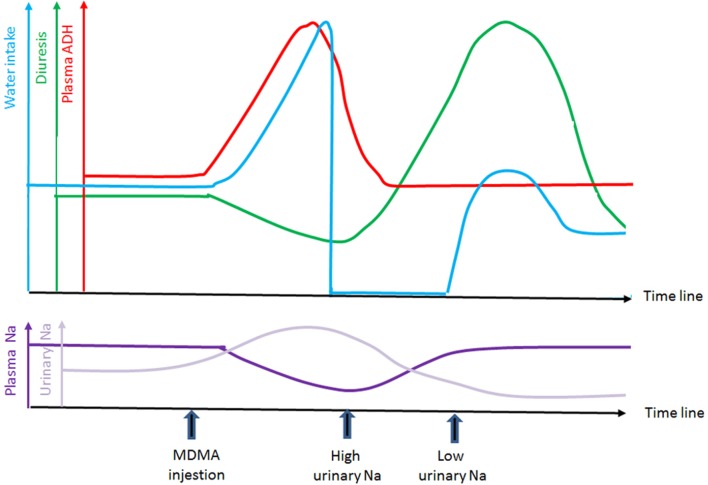
Recreational drug use is a significant societal issue and remains a clinical challenge in emergency and critical care departments. We report on a 19-year-old woman admitted to hospital semiconscious and with severe hyponatraemia. Urinalysis was positive for methamphetamine and supported a diagnosis of hyponatraemia related to ecstasy use together with a syndrome of inappropriate antidiuretic hormone secretion (SIADH). The woman was transferred to an intensive care unit, where a hypertonic saline infusion was started. Three hours postadmission she developed polyuria. Follow-up urinalysis at this point was consistent with water intoxication. This case is a reminder that hyponatraemia is a potentially fatal complication after the ingestion of 3,4-methylenedioxymethamphetamine, illustrates the sequential nature of an SIADH and water intoxication and highlights the importance of considering the sequence of onset of hyponatraemia, as the patient may be admitted at any stage.
Keywords: fluid electrolyte and acid–base disturbances; toxicology; unwanted effects/adverse reactions.
© BMJ Publishing Group Limited 2018. No commercial re-use. See rights and permissions. Published by BMJ.
Conflict of interest statement
Competing interests: None declared.
Figures
References
-
- Abuse NIoD. Drug Facts: MDMA (Ecstasy/Molly). 2016. https://www.drugabuse.gov/publications/drugfacts/mdma-ecstasymolly2016
-
- Bodmer M, Nemec M, Scholer A, et al. . Les intoxications aux amphétamines: importance pour la médecine durgences. Forum Médical Suisse ‒ Swiss Medical Forum 2008;8:534–8.
-
- O’Connor A, Cluroe A, Couch R, et al. . Death from hyponatraemia-induced cerebral oedema associated with MDMA (“Ecstasy”) use. N Z Med J 1999;112:255–6. - PubMed
Publication types
MeSH terms
Substances
LinkOut - more resources
Full Text Sources
Other Literature Sources
Medical