


Comparison of Epidemiology, Clinical Features, and Outcomes of Patients with Reported Ewing Sarcoma and PNET over 40 Years Justifies Current WHO Classification and Treatment Approaches
- PMID: 30158829
- PMCID: PMC6109476
- DOI: 10.1155/2018/1712964
Comparison of Epidemiology, Clinical Features, and Outcomes of Patients with Reported Ewing Sarcoma and PNET over 40 Years Justifies Current WHO Classification and Treatment Approaches
Abstract
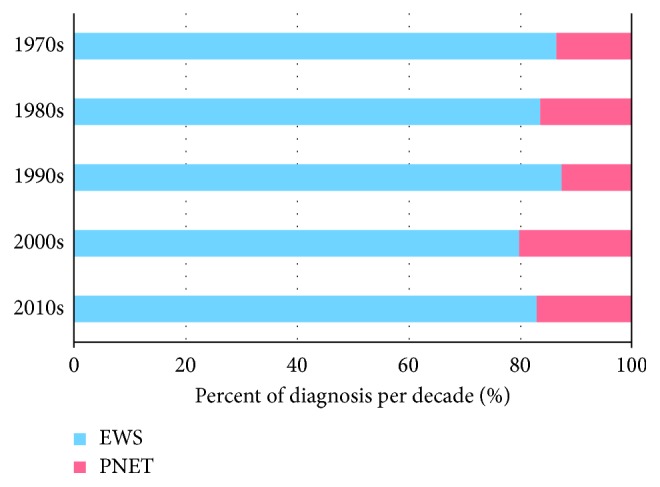
Background: As of 2013, the WHO has classified peripheral primitive neuroectodermal tumors (PNETs) within the umbrella of Ewing sarcoma family of tumors (ESFTs) given their shared biology. Histologic features differ between PNET and Ewing sarcoma (ES), and potential clinical differences between PNET and ES have not been fully elucidated.
Methods: Through the National Cancer Institute's Surveillance, Epidemiology, and End Results (SEER) database, we identified 3,575 patients identified with histologic diagnosis of ES or PNET from 1973 to 2014. We used Fisher's exact tests to compare patient and tumor characteristics between groups. Kaplan-Meier methods were used to estimate overall survival.
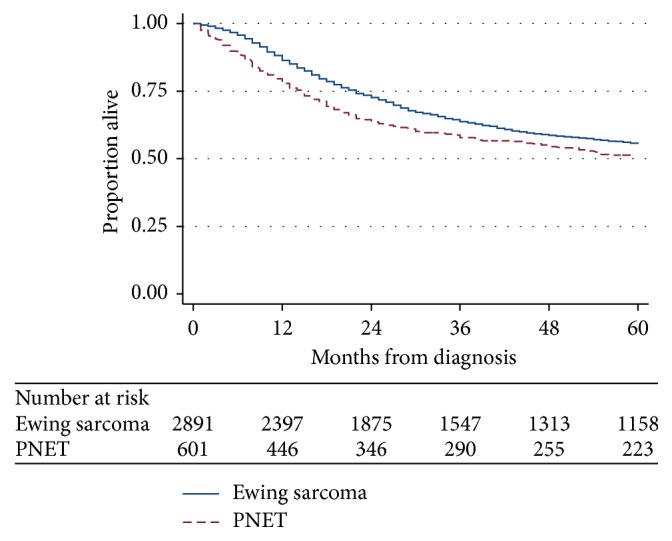
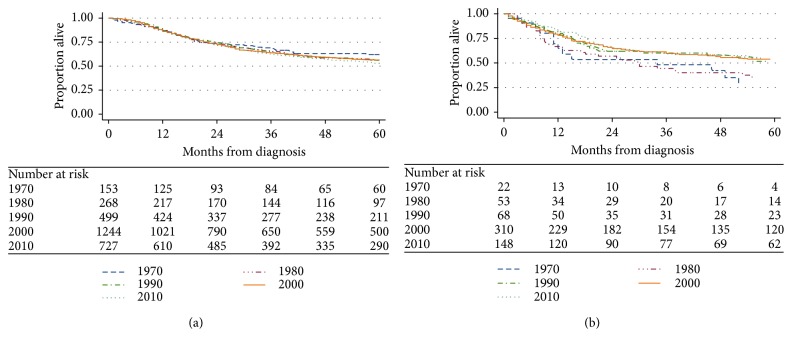
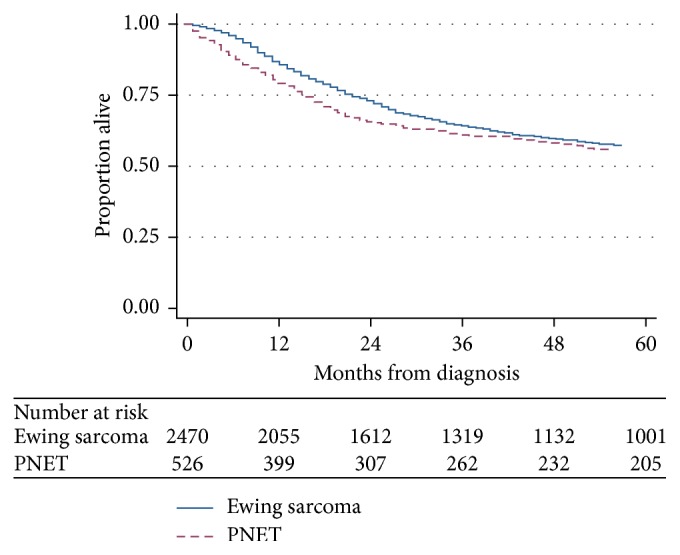
Results: Patients with ES were more likely to be male, ≤18 years old at diagnosis, white, and hispanic compared to patients with PNET (p=0.016 for sex; p < 0.001 for all other variables). Patients with PNET were more likely to have soft tissue primary tumors (p < 0.001), and among those with bone tumors, a lower rate of axial or pelvic tumors (p < 0.001). Patients with PNET had significantly worse 5-year survival compared to ES patients, though the absolute difference was small (51.3% versus 55.5%; p < 0.001). Survival of patients with PNET diagnosed in the 1990s or later more closely approximated patients with ES, while patients with PNET diagnosed in the 1980's and earlier had inferior outcomes.
Conclusions: Despite shared underlying biology, patients with PNET and ES show differences in clinical presentation and overall survival, with the latter differences largely mitigated in more recent decades.
Figures
References
-
- WHO. International Classification of Disease for Oncology (ICD-O) 3rd. Geneva, Switzerland: World Health Organization; 2013.
-
- Marina N. M., Etcubanas E., Parham D. M., et al. Peripheral primitive neuroectodermal tumor (peripheral neuroepithelioma) in children. A review of the St. Jude experience and controversies in diagnosis and management. Cancer. 1989;64(9):1952–1960. doi: 10.1002/1097-0142(19891101)64:9<1952::aid-cncr2820640931>3.0.co;2-w. - DOI - PubMed
-
- Schmidt D., Herrmann C., Jurgens H., et al. Malignant peripheral neuroectodermal tumor and its necessary distinction from Ewing’s sarcoma. A report from the Kiel pediatric tumor registry. Cancer. 1991;68(10):2251–2259. doi: 10.1002/1097-0142(19911115)68:10<2251::aid-cncr2820681025>3.0.co;2-x. - DOI - PubMed
LinkOut - more resources
Full Text Sources
Other Literature Sources
