


A Review of Prebiotics Against Salmonella in Poultry: Current and Future Potential for Microbiome Research Applications
- PMID: 30159318
- PMCID: PMC6104193
- DOI: 10.3389/fvets.2018.00191
A Review of Prebiotics Against Salmonella in Poultry: Current and Future Potential for Microbiome Research Applications
Abstract
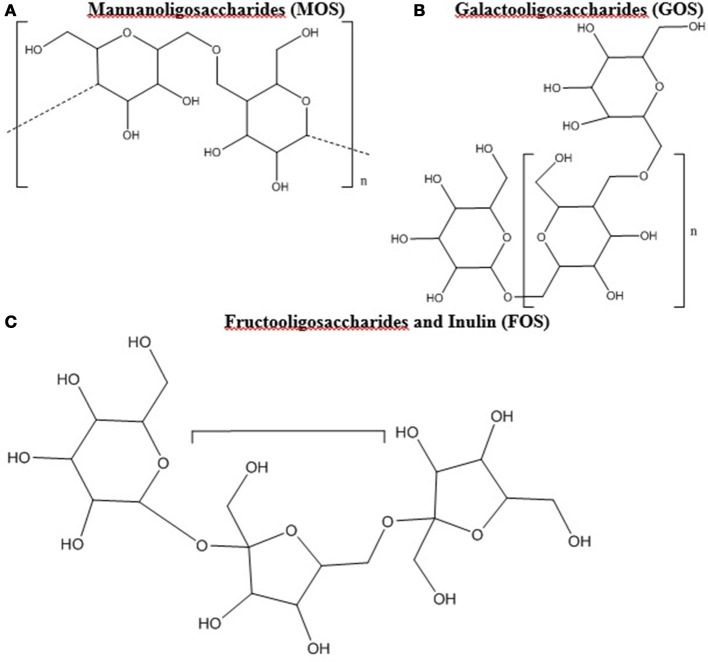
Prebiotics are typically fermentable feed additives that can directly or indirectly support a healthy intestinal microbiota. Prebiotics have gained increasing attention in the poultry industry as wariness toward antibiotic use has grown in the face of foodborne pathogen drug resistance. Their potential as feed additives to improve growth, promote beneficial gastrointestinal microbiota, and reduce human-associated pathogens, has been well documented. However, their mechanisms remain relatively unknown. Prebiotics increasing short chain fatty acid (SCFA) production in the cecum have long since been considered a potential source for pathogen reduction. It has been previously concluded that prebiotics can improve the safety of poultry products by promoting the overall health and well-being of the bird as well as provide for an intestinal environment that is unfavorable for foodborne pathogens such as Salmonella. To better understand the precise benefit conferred by several prebiotics, "omic" technologies have been suggested and utilized. The data acquired from emerging technologies of microbiomics and metabolomics may be able to generate a more comprehensive detailed understanding of the microbiota and metabolome in the poultry gastrointestinal tract. This understanding, in turn, may allow for improved administration and optimization of prebiotics to prevent foodborne illness as well as elucidate unknown mechanisms of prebiotic actions. This review explores the use of prebiotics in poultry, their impact on gut Salmonella populations, and how utilization of next-generation technologies can elucidate the underlying mechanisms of prebiotics as feed additives.
Keywords: Salmonella; fructooligosaccharides; galactooligosaccharides; mannanoligosaccharides; metabolomics; microbiomics; poultry; prebiotics.
Figures
References
-
- Gianella RA. Chapter 21: Salmonella. Medical Microbiology, 4th edition (1996).
-
- Centers for Disease Control and Prevention Antibiotic Resistance Threats in the United States (2013). Available online at: http://www.cdc.gov/drugresistance/pdf/ar-threats-2013-508.pdf (Accessed June 20, 2017).
Publication types
LinkOut - more resources
Full Text Sources
Other Literature Sources
