


Reassessing Serosurvey-Based Estimates of the Symptomatic Proportion of Zika Virus Infections
- PMID: 30165474
- PMCID: PMC6321808
- DOI: 10.1093/aje/kwy189
Reassessing Serosurvey-Based Estimates of the Symptomatic Proportion of Zika Virus Infections
Abstract
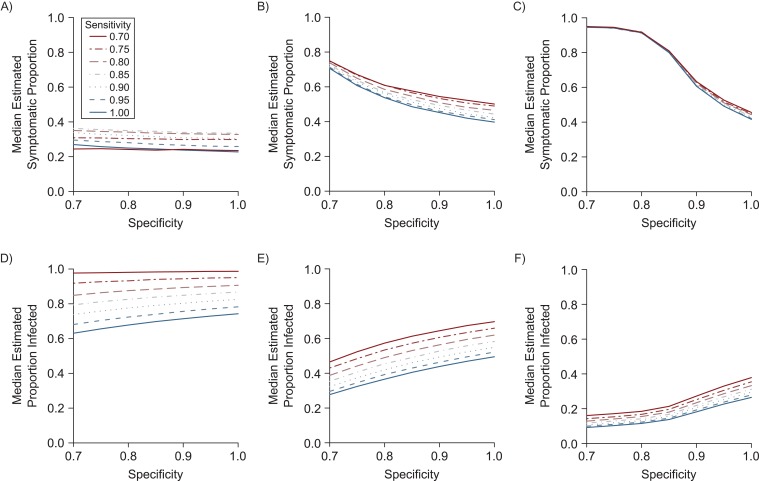
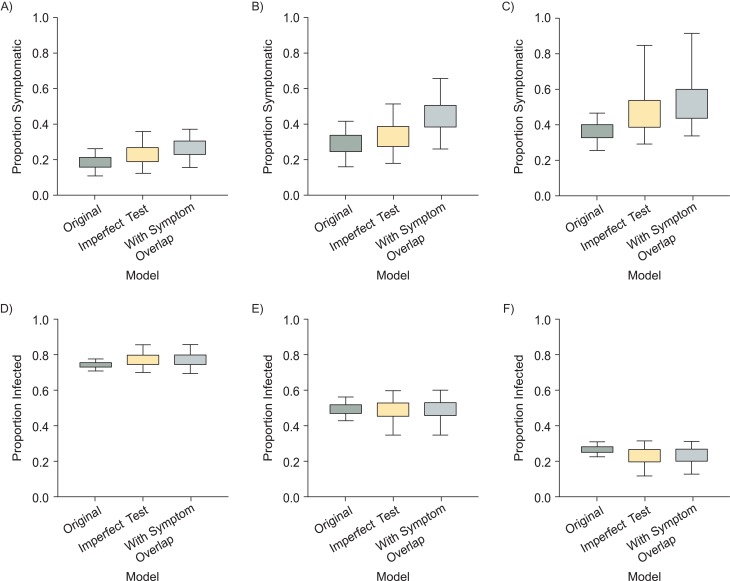
Since the 2007 Zika epidemic in the Micronesian state of Yap, it has been apparent that not all people infected with Zika virus (ZIKV) experience symptoms. However, the proportion of infections that result in symptoms remains unclear. Existing estimates have varied in their interpretation of symptoms due to other causes and the case definition used, and they have assumed perfect test sensitivity and specificity. Using a Bayesian model and data from ZIKV serosurveys in Yap (2007), French Polynesia (2013-2014), and Puerto Rico (2016), we found that assuming perfect sensitivity and specificity generally led to lower estimates of the symptomatic proportion. Incorporating reasonable assumptions for assay sensitivity and specificity, we estimated that 27% (95% credible interval (CrI): 15, 37) (Yap), 44% (95% CrI: 26, 66) (French Polynesia), and 50% (95% CrI: 34, 92) (Puerto Rico) of infections were symptomatic, with variation due to differences in study populations, study designs, and case definitions. The proportion of ZIKV infections causing symptoms is critical for surveillance system design and impact assessment. Here, we accounted for key uncertainties in existing seroprevalence data and found that estimates for the symptomatic proportion ranged from 27% to 50%, suggesting that while the majority of infections are asymptomatic or mildly symptomatic, symptomatic infections might be more common than previously estimated.
Figures
References
-
- Duffy MR, Chen TH, Hancock WT, et al. . Zika virus outbreak on Yap Island, Federated States of Micronesia. N Engl J Med. 2009;360(24):2536–2543. - PubMed
-
- Musso D, Nilles EJ, Cao-Lormeau VM. Rapid spread of emerging Zika virus in the Pacific area. Clin Microbiol Infect. 2014;20(10):O595–O596. - PubMed
-
- Pan American Health Organization Timeline of the emergence of Zika virus in the Americas, April 2016. Washington, DC: World Health Organization; 2016. http://www.paho.org/hq/index.php?option=com_content&view=article&id=1195.... Accessed September 19, 2018.
Publication types
MeSH terms
Grants and funding
LinkOut - more resources
Full Text Sources
Other Literature Sources
Medical
