


A systematic review of cognitive functioning in early treated adults with phenylketonuria
- PMID: 30165883
- PMCID: PMC6117942
- DOI: 10.1186/s13023-018-0893-4
A systematic review of cognitive functioning in early treated adults with phenylketonuria
Abstract
Background: Even though early dietary management of phenylketonuria (PKU) successfully prevents severe neurological impairments, deficits in cognitive functioning are still observed. These deficits are believed to be the result of elevated levels of phenylalanine throughout life. Research on cognitive functioning in adults with PKU (AwPKU) often focuses on domains shown to be compromised in children with PKU, such as attention and executive functions, whereas other cognitive domains have received less attention. This systematic review aimed to provide an overview of cognitive functioning across domains examined in early treated (ET) AwPKU.
Methods: A systematic search was performed in Ovid MEDLINE(R), PsycINFO, Web of Science, Cochrane, Scopus, Embase, ScienceDirect, and PubMed for observational studies on cognitive performance in ET AwPKU.
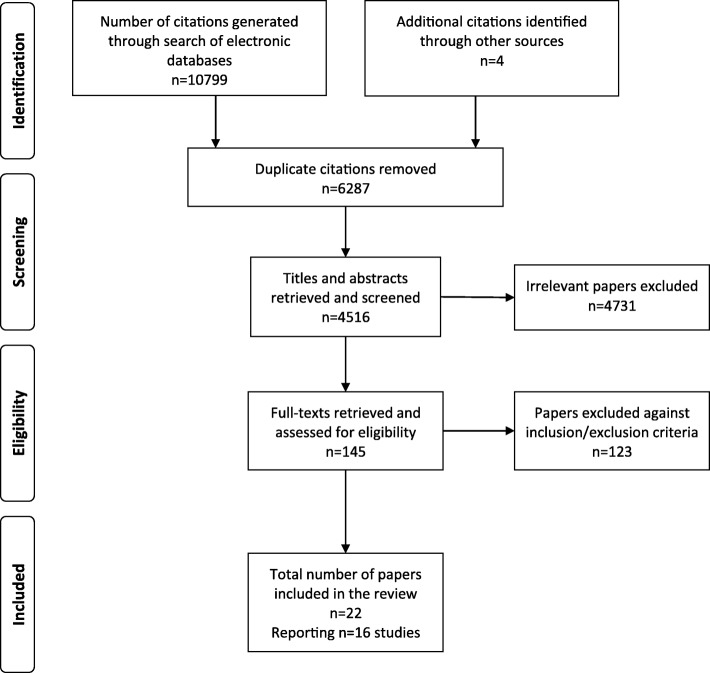
Results: Twenty-two peer-reviewed publications, reporting on outcomes from 16 studies were reviewed. Collectively, the results most consistently showed deficits in vigilance, working memory and motor skills. Deficits in other cognitive domains were less consistently observed or were understudied. Furthermore, despite reports of several associations between cognitive performance and phenylalanine (Phe) levels throughout life the relationship remains unclear. Inconsistencies in findings across studies could be explained by the highly heterogeneous nature of study samples, resulting in large inter- and intra-variability in Phe levels, as well as the use of a variety of tests across cognitive domains, which differ in sensitivity. The long-term cognitive outcomes of early and continuous management of PKU remain unclear.
Conclusions: To better understand the development of cognitive deficits in ET AwPKU, future research would benefit from 1) (inter)national multicentre-studies; 2) more homogeneous study samples; 3) the inclusion of other nutritional measures that might influence cognitive functioning (e.g. Phe fluctuations, Phe:Tyrosine ratio and micronutrients such as vitamin B12); and 4) careful selection of appropriate cognitive tests.
Keywords: Attention; Cognitive function; Executive function; Motor skills; Phenylketonuria; Processing speed.
Conflict of interest statement
Ethics approval and consent to participate
Not applicable.
Consent for publication
Not applicable.
Competing interests
The authors declare that they have no competing interests.
Publisher’s Note
Springer Nature remains neutral with regard to jurisdictional claims in published maps and institutional affiliations.
Figures
References
-
- Blau N, Yue W, Perez B. PAHvdb : Phenylalanine Hydroxylase Gene Locus-Specific Database http://www.biopku.org/home/home.asp. Accessed 23 July 2018.
-
- Guthrie R, Susi A. A simple phenylalanine method for detecting phenylketonuria in large populations of newborn infants. Pediatrics. 1963;32:338–343. - PubMed
Publication types
MeSH terms
Substances
Grants and funding
LinkOut - more resources
Full Text Sources
Other Literature Sources
Medical
