


Feeling Loved: A Novel Brief Self-Report Health Measure
- PMID: 30166237
- PMCID: PMC6339840
- DOI: 10.1016/j.explore.2018.07.005
Feeling Loved: A Novel Brief Self-Report Health Measure
Abstract
Context: There is need for a short validated self-report instrument for assessing the feeling of being loved. The Feeling Loved instrument asks: "Do you feel loved?" and "How loved do you feel?" as well as "Do you love yourself?" and "How much do you love yourself?" with 100 mm visual analogue scales assessing the continuous response options.
Objective: To assess convergent and discriminant validity and to explore psychometric structure for this novel self-report measure.
Design: Convergent validity comparators include: general mental health, perceived social support, perceived stress, depressive symptoms, and positive/negative emotion. Discriminant validity comparators include: gender, age, ethnicity, socioeconomic status, and body mass index. Latent class analysis techniques explore psychometric structure.
Setting: Baseline evaluation for a randomized controlled trial.
Participants: Community-recruited adults in Madison, Wisconsin.
Intervention: This validation study is based on pre-intervention data.
Main outcome measures: Strength of correlation with comparators is used to assess convergence and discrimination. Goodness-of-fit indicators assess latent class models.
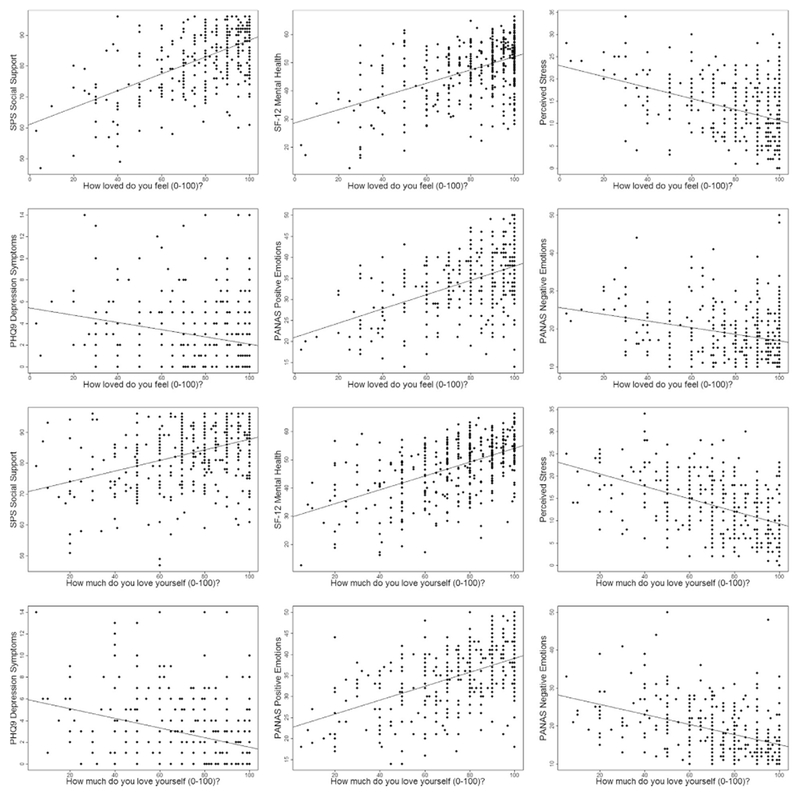
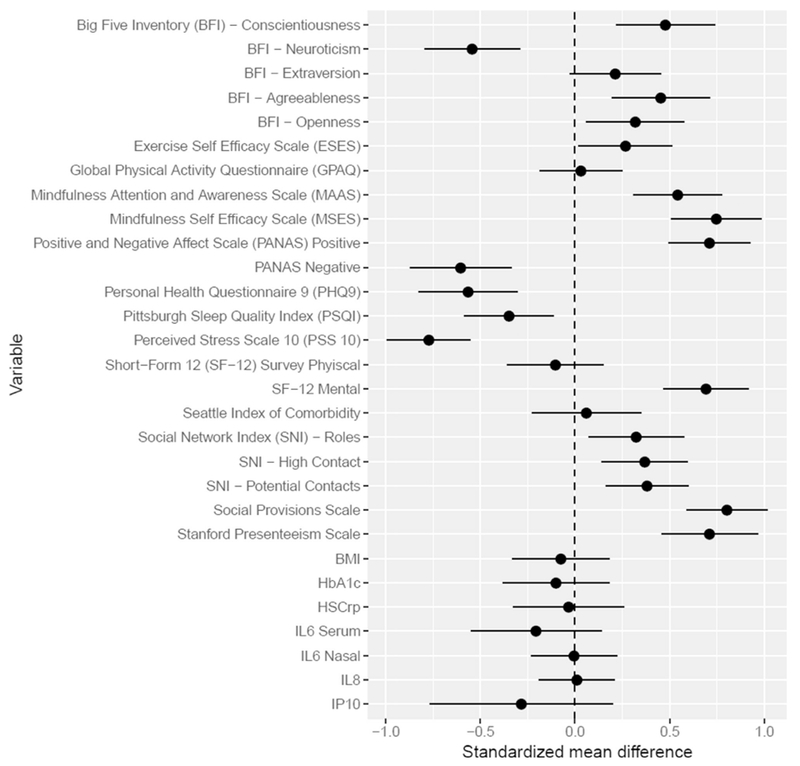
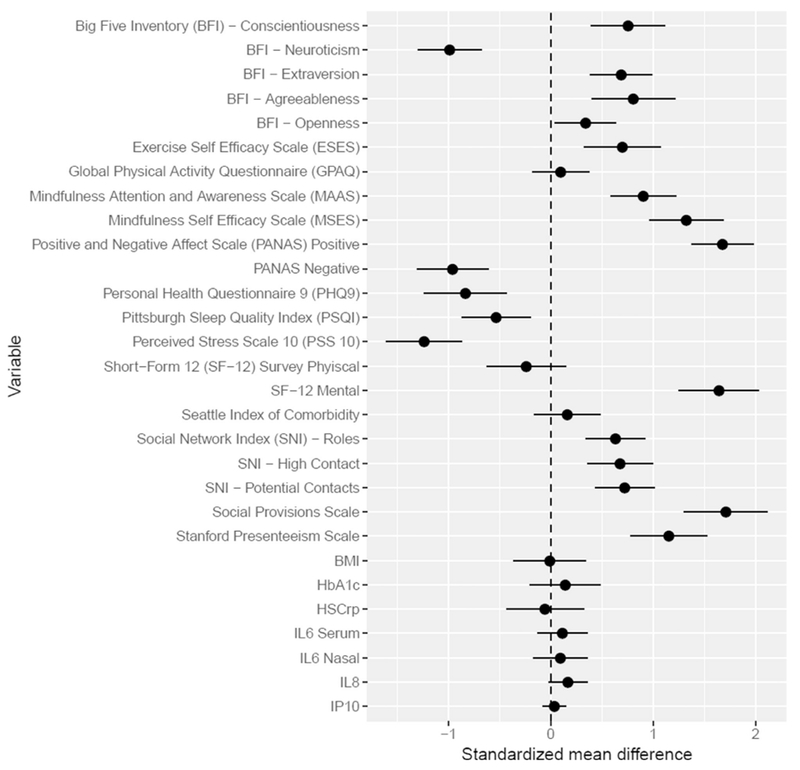
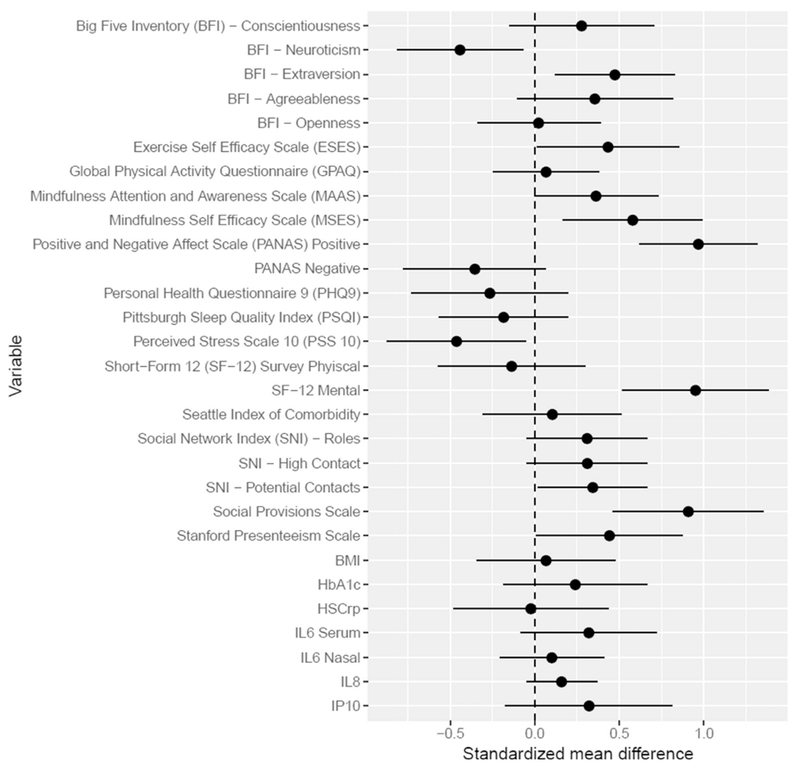
Results: Of n = 412 respondents, 92% answered positively to both Yes/No questions, and 59% self-rated ≥75/100 on both 0-to-100 VAS scales. Supporting convergent validity, highly significant (p < 0.001) Spearman's rho=ρ correlations of a summed Feeling Loved score were: mental health (ρ = 0.49); social support (ρ = 0.46); perceived stress (ρ = -0.46), depressive symptoms (ρ = -0.31), and both positive (ρ = 0.50) and negative (ρ = -0.43) emotion. Significant associations were also found for personality indicators. Supporting discriminant validity, Feeling Loved scores did not correlate significantly with physical health (ρ = -0.08), body mass index (ρ = 0.01), age (ρ = 0.06), or income (ρ = 0.07) (p values all ≥ 0.12). Latent class analysis models suggested a 3-class structure, with strong goodness-of-fit indicators.
Keywords: Construct validity; Love; Mental health; Social support; Surveys and questionnaires; Validation.
Copyright © 2018. Published by Elsevier Inc.
Figures
References
-
- Fehr B, Sprecher S, Underwood LG. The Science of Compassionate Love: Theory, Research and Application. Malden: Blackwell; 2009.
-
- Gilligan C The Birth of Pleasure: A New Map of Love. New York: Knopf Publishers; 2002.
-
- Hooks B All About Love: New Visions. New York: Harper; 2001:272.
-
- Osborne C Eros Unveiled: Plato and the God of Love. Oxford University Press; 1994.
Publication types
MeSH terms
Grants and funding
LinkOut - more resources
Full Text Sources
Other Literature Sources
