


PATHOGENESIS OF RHEUMATOID ARTHRITIS: THE INTERSECTION OF GENETICS AND EPIGENETICS
- PMID: 30166712
- PMCID: PMC6116585
PATHOGENESIS OF RHEUMATOID ARTHRITIS: THE INTERSECTION OF GENETICS AND EPIGENETICS
Abstract
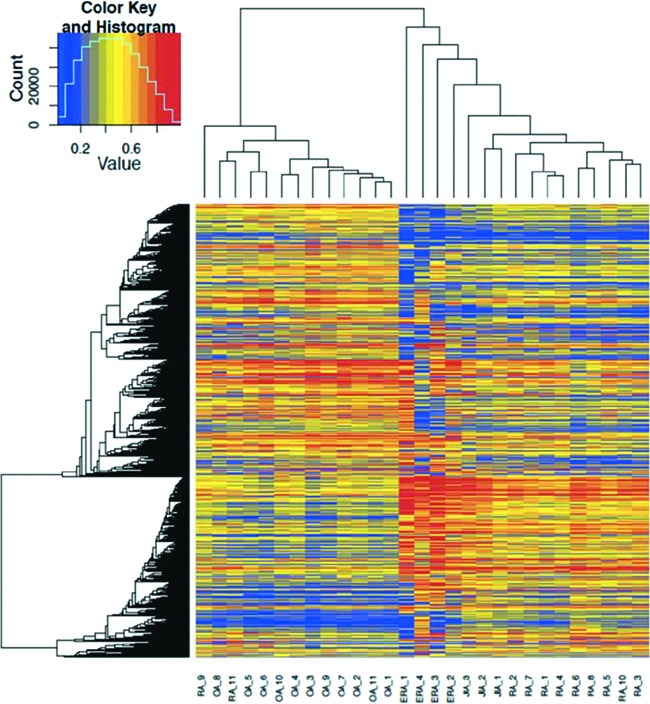
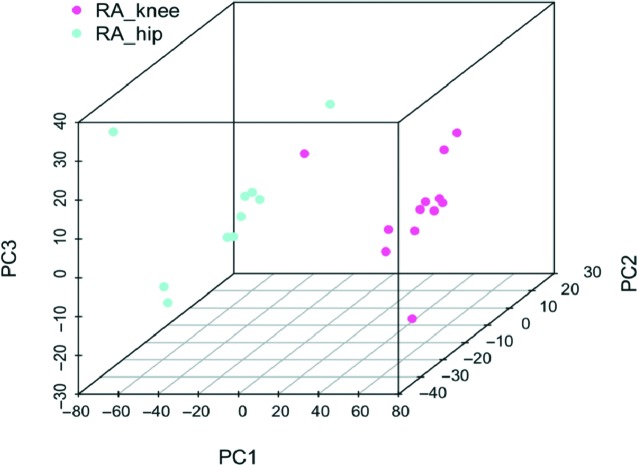
Rheumatoid arthritis is a synovial inflammatory disease marked by joint infiltration by immune cells and damage to the extracellular matrix. Although genetics plays a critical role in heritability and its pathogenesis, the relative lack of disease concordance in identical twins suggests that noncoding influences can affect risk and severity. Environmental stress, which can be reflected in the genome as altered epigenetic marks, also contributes to gene regulation and contributes to disease mechanisms. Studies on DNA methylation suggest that synovial cells, most notably fibroblast-like synoviocytes, are imprinted in rheumatoid arthritis with epigenetic marks and subsequently assume an aggressive phenotype. Even more interesting, the synoviocyte marks are not only disease specific but can vary depending on the joint of origin. Understanding the epigenetic landscape using unbiased methods can potentially identify nonobvious pathways and genes that that are responsible for synovial inflammation as well as the diversity of responses to targeted agents. The information can also be leveraged to identify novel therapeutic approaches.
Conflict of interest statement
Potential Conflicts of Interest: This work was funded in part by grants from the Rheum-atology Research Foundation, the Arthritis Foundation, the National Institute of Arthritis and Musculoskeletal and Skin Diseases (R01 AR065466). Dr. Firestein has received grant funding from Gilead Sciences and Janssen Pharmaceuticals; and he has received consulting income from Roche and Janssen Pharmaceuticals.
Figures
References
-
- Firestein GS. Kelley and Firestein’s Textbook of Rheumatology. 10th ed. Philadelphia, Pennsylvania: Elsevier; Etiology and pathogenesis of rheumatoid arthritis. 2016 1115–66.
-
- Hill JA, Southwood S, Sette A, Jevnikar AM, Bell DA, et al. Cutting edge: the conversion of arginine to citrulline allows for a high-affinity peptide interaction with the rheumatoid arthritis-associated HLA-DRB1*0401 MHC class II molecule. J Immunol. 2003;171:538–41. - PubMed
-
- Aho K, Koskenvuo M, Tuominen J, Kaprio J. Occurrence of rheumatoid arthritis in a nationwide series of twins. J Rheumatol. 1986;13:899–902. - PubMed
MeSH terms
Grants and funding
LinkOut - more resources
Full Text Sources
Medical