


The evolution of non-communicable diseases policies in post-apartheid South Africa
- PMID: 30168397
- PMCID: PMC6117625
- DOI: 10.1186/s12889-018-5832-8
The evolution of non-communicable diseases policies in post-apartheid South Africa
Abstract
Background: Redressing structural inequality within the South African society in the post-apartheid era became the central focus of the democratic government. Policies on social and economic transformation were guided by the government's blueprint, the Reconstruction and Development Programme. The purpose of this paper is to trace the evolution of non-communicable disease (NCD) policies in South Africa and the extent to which the multi-sectoral approach was utilised, while explicating the underlying rationale for "best buy" interventions adopted to reduce and control NCDs in South Africa. The paper critically engages with the political and ideological factors that influenced design of particular NCD policies.
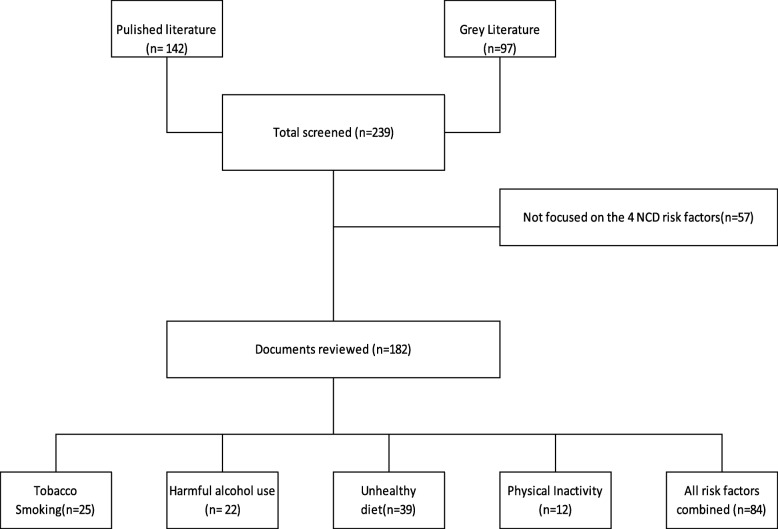
Methods: Through a case study design, policies targeting specific NCD risk factors (tobacco smoking, unhealthy diets, harmful use of alcohol and physical inactivity) were assessed. This involved reviewing documents and interviewing 44 key informants (2014-2016) from the health and non-health sectors. Thematic analysis was used to draw out the key themes that emerged from the key informant interviews and the documents reviewed.
Results: South Africa had comprehensive policies covering all the major NCD risk factors starting from the early 1990's, long before the global drive to tackle NCDs. The plethora of NCD policies is attributable to the political climate in post-apartheid South Africa that set a different trajectory for the state that was mandated to tackle entrenched inequalities. However, there has been an increase in prevalence of NCD risk factors within the general population. About 60% of women and 30% of men are overweight or obese. While a multi-sectoral approach is part of public policy discourse, its application in the implementation of NCD policies and programmes is a challenge.
Conclusions: NCD prevalence remains high in South Africa. There is need to adopt the multi-sectoral approach in the implementation of NCD policies and programmes.
Keywords: Key informants; Multi-sectoral approach; Non-communicable diseases; Policy analysis; South Africa.
Conflict of interest statement
Ethics approval and consent to participate
The study was approved by the Human Science Council Research Ethics Committee (REC 2/19/02/2014). The study participants involved in this study provided verbal and written consent before they were interviewed.
Consent for publication
Not applicable.
Competing interests
The authors declare that they have no competing interests.
Publisher’s Note
Springer Nature remains neutral with regard to jurisdictional claims in published maps and institutional affiliations.
Figures
References
-
- World Health Organization (WHO) Noncommunicable diseases: fact sheet. Geneva: World Health Organization; 2017.
-
- Hofman K. Non-communicable diseases in South Africa: a challenge to economic development. Afr Med J. 2014;104(10):1–4. - PubMed
-
- World Health Organization (WHO) Non-communicable Disease Prevention and Control, Risk Factor Reduction, Mental Health and Injury and Violence. Geneva: World Health Organization; 2016.
MeSH terms
LinkOut - more resources
Full Text Sources
Other Literature Sources
