


Psychoactive substance use among first-year students in a Botswana University: pattern and demographic correlates
- PMID: 30170569
- PMCID: PMC6119309
- DOI: 10.1186/s12888-018-1844-2
Psychoactive substance use among first-year students in a Botswana University: pattern and demographic correlates
Abstract
Background: Substance use amongst university students is a recognized problem worldwide. Few studies have been carried out in this group in Botswana. These studies have been mostly limited to the use of alcohol and tobacco. Therefore, this study was designed to investigate the pattern of general substance use, its association with psychological distress and common socio-demographic factors among first-year undergraduates in a Botswana University.
Methods: A total of 401 students were interviewed using a modified W.H.O. student drug use questionnaire and the 12 item General Health Questionnaire (GHQ12) to assess the pattern of psychoactive substance use and its relationship with psychological distress amongst university students in Botswana.
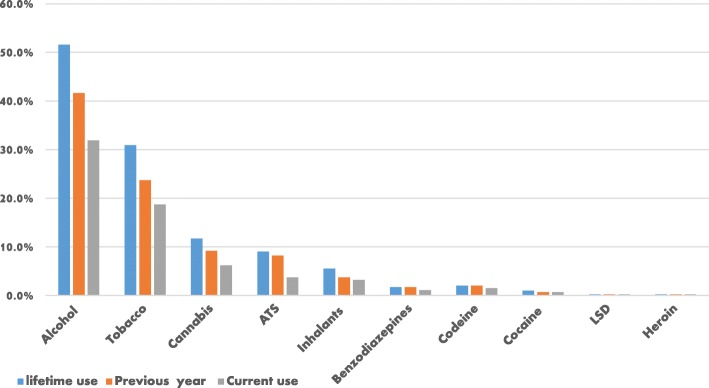
Results: Alcohol was the most (31.9%) commonly used psychoactive substance. Age of debut for most psychoactive substances was between the ages of 15-18 years. Current use of alcohol (p = 0.045), amphetamine-type stimulants (p = 0.004) and benzodiazepines (p = 0.021) were associated with significant psychological distress. A positive relationship was observed between low participation in religious activities and substance use (OR = 4.63, 95%CI: 2.03-10.51), while a negative association was observed between not having a friend who uses drugs and substance use (OR = 0.44, 95%CI: 0.19-0.99).
Conclusions: There is a significant substance abuse problem in the undergraduate population in Botswana. Our findings followed the global trend, with alcohol being the most commonly used substance. Religious participation demonstrates potential to be one of the solutions to this problem, but how to harness its seemingly protective influences is a field for further study.
Keywords: Botswana; Psychological distress; Risk factors; Substance use; University students.
Conflict of interest statement
Ethics approval and consent to participate
Ethical approval was obtained from the University of Botswana ethical committee (UBR/RES/IRB/1628). The purpose of the study was thoroughly explained to every eligible participant, and a written informed consent was obtained from everyone who agreed to participate in the study.
Consent for publication
Not applicable
Competing interests
The authors declare that they have no competing interests.
Publisher’s Note
Springer Nature remains neutral with regard to jurisdictional claims in published maps and institutional affiliations.
Figures
References
-
- Sadock BJ, Sadock VA. Kaplan & Sadock’s Synopsis of Psychiatry: Behavioural Sciences/Clinical Psychiatry. 9th edition. Philadelphia: Lippincott Williams & Wilkins; 2003.
-
- World Health Organization. Global health risks: mortality and burden of disease attributable to selected major risks. Geneva: World health Organization; 2009. Available from http://www.who.int/healthinfo/global_burden_disease/GlobalHealthRisks_re...
-
- Babalola EO, Ogunwale A, Akinhanmi A. Pattern of psychoactive substance use among university students in south-western Nigeria. J Behav Health 2013;2(4):334–342. Available from: doi: 10.5455/jbh.20130921013013
-
- Armstrong TD, Costello EJ. Community studies on adolescent substance use, abuse, or dependence and psychiatric comorbidity. J Consult Clin Psychol 2002;70(6):1224. Available from: doi: 10.1037/0022-006X.70.6.1224 - PubMed
MeSH terms
Substances
LinkOut - more resources
Full Text Sources
Other Literature Sources
Medical
