


Hypertension: The most important non communicable disease risk factor in India
- PMID: 30170654
- PMCID: PMC6116711
- DOI: 10.1016/j.ihj.2018.02.003
Hypertension: The most important non communicable disease risk factor in India
Abstract
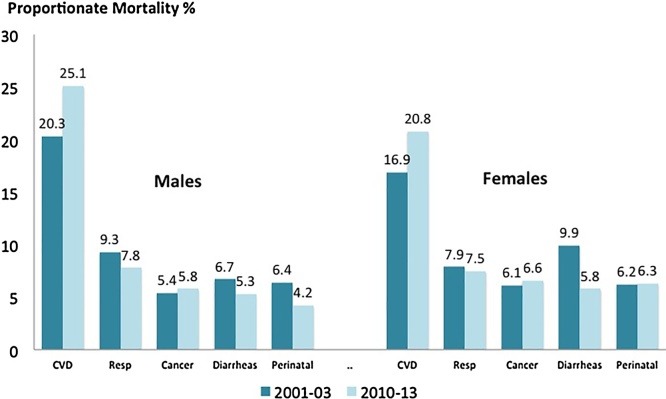
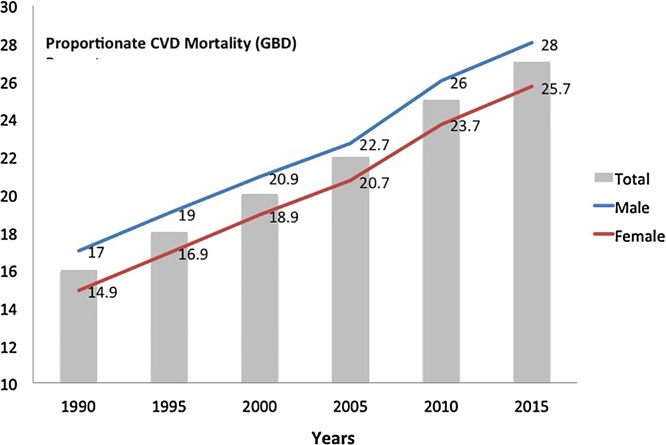
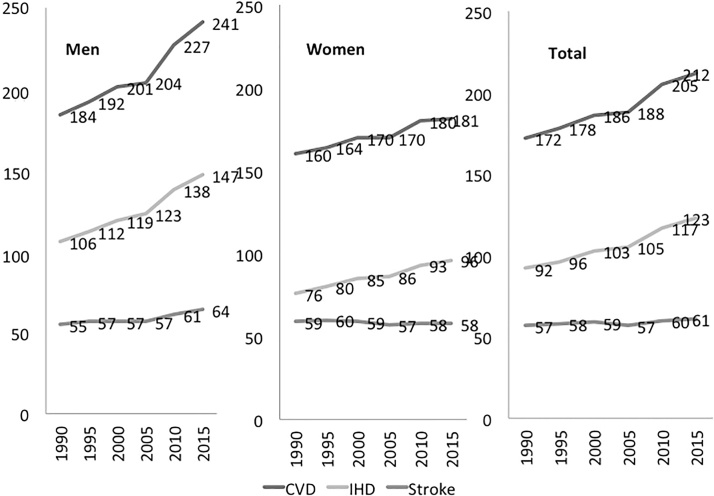
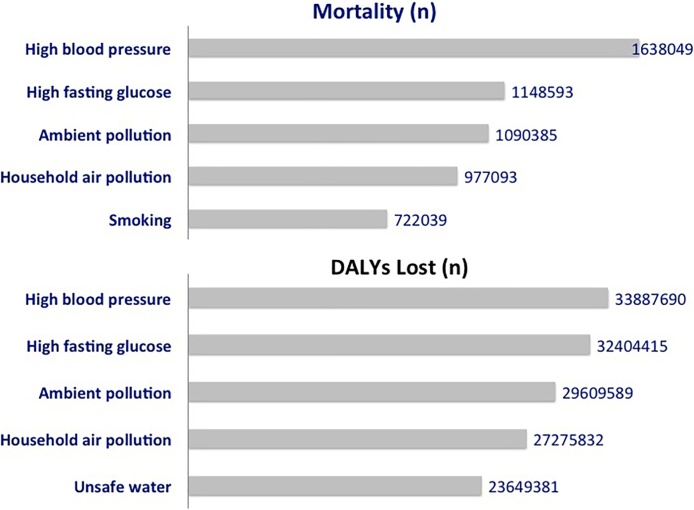
Non-communicable diseases are important causes of mortality and morbidity in India. Data from the Registrar General of India, World Health Organization and Global Burden of Disease (GBD) Study have reported that cardiovascular diseases (CVD) are the most important causes of death and disability. Age-adjusted mortality from these conditions has increased by 31% in last 25 years. Case-control studies have reported that hypertension is most important risk factor for CVD in India. GBD Study has estimated that hypertension led to 1.6 million deaths and 33.9 million disability-adjusted life years in 2015 and is most important cause of disease burden in India. Intensive public health effort is required to increase its awareness, treatment and control. UN Sustainable Development Goals highlight the importance of high rates of hypertension control for achieving target of 1/3 reduction in non-communicable disease mortality by 2030. It is estimated that better hypertension control can prevent 400-500,000 premature deaths in India.
Keywords: Cardiovascular disease; Global burden of disease study; Hypertension; India; Non-Communicable disease.
Copyright © 2018. Published by Elsevier B.V.
Figures
References
-
- Dreze J., Sen A. Penguin; 2012. An Uncertain Glory: India and Its Contradictions.
-
- Patel V., Chatterji S., Chisholm D. Chronic diseases and injuries in India. Lancet. 2011;377:413–428. - PubMed
-
- Registrar General of India . Registrar General of India, Ministry of Home Affairs; New Delhi: 2009. Report on Causes of Deaths in India 2001–2003.
Publication types
MeSH terms
LinkOut - more resources
Full Text Sources
Other Literature Sources
Medical
