


Antibiotic-Resistant Escherichia coli and Class 1 Integrons in Humans, Domestic Animals, and Wild Primates in Rural Uganda
- PMID: 30171005
- PMCID: PMC6193383
- DOI: 10.1128/AEM.01632-18
Antibiotic-Resistant Escherichia coli and Class 1 Integrons in Humans, Domestic Animals, and Wild Primates in Rural Uganda
Abstract
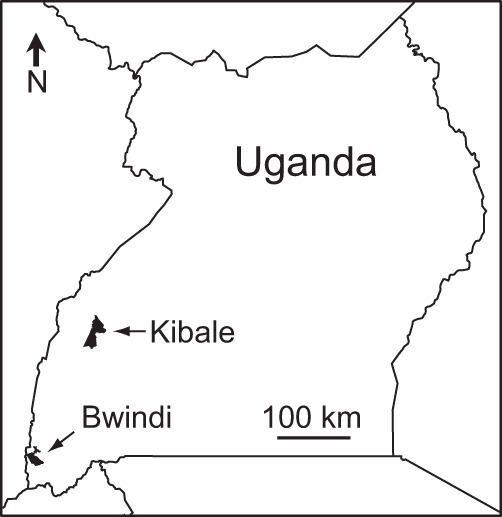
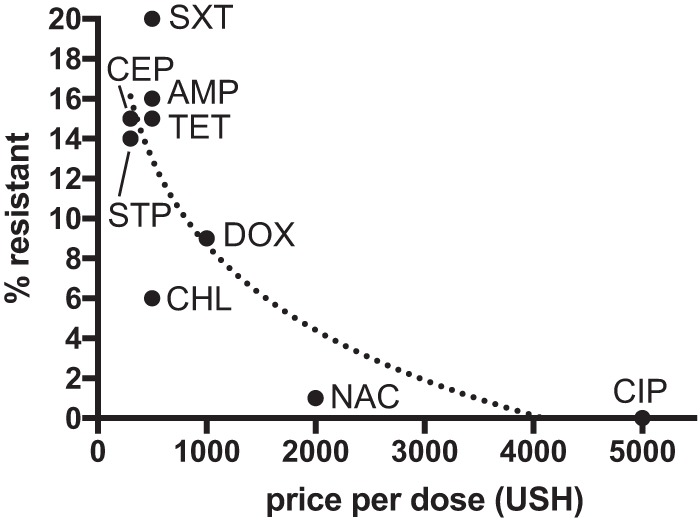
Antibiotic resistance is a global concern, although it has been studied most extensively in developed countries. We studied Escherichia coli and class 1 integrons in western Uganda by analyzing 1,685 isolates from people, domestic animals, and wild nonhuman primates near two national parks. Overall, 499 isolates (29.6%) were resistant to at least one of 11 antibiotics tested. The frequency of resistance reached 20.3% of isolates for trimethoprim-sulfamethoxazole but was nearly zero for the less commonly available antibiotics ciprofloxacin (0.4%), gentamicin (0.2%), and ceftiofur (0.1%). The frequency of resistance was 57.4% in isolates from people, 19.5% in isolates from domestic animals, and 16.3% in isolates from wild nonhuman primates. Isolates of livestock and primate origin displayed multidrug resistance patterns identical to those of human-origin isolates. The percentage of resistant isolates in people was higher near Kibale National Park (64.3%) than near Bwindi Impenetrable National Park (34.6%), perhaps reflecting local socioeconomic or ecological conditions. Across antibiotics, resistance correlated negatively with the local price of the antibiotic, with the most expensive antibiotics (nalidixic acid and ciprofloxacin) showing near-zero resistance. Among phenotypically resistant isolates, 33.2% harbored class 1 integrons containing 11 common resistance genes arranged into nine distinct gene cassettes, five of which were present in isolates from multiple host species. Overall, these results show that phenotypic resistance and class 1 integrons are distributed broadly among E. coli isolates from different host species in this region, where local socioeconomic and ecological conditions may facilitate widespread diffusion of bacteria or resistance-conferring genetic elements.IMPORTANCE Antibiotic resistance is a global problem. This study, conducted in rural western Uganda, describes antibiotic resistance patterns in Escherichia coli bacteria near two forested national parks. Resistance was present not only in people, but also in their livestock and in nearby wild nonhuman primates. Multidrug resistance and class 1 integrons containing genes that confer resistance were common and were similar in people and animals. The percentage of resistant isolates decreased with increasing local price of the antibiotic. Antibiotic resistance in this setting likely reflects environmental diffusion of bacteria or their genes, perhaps facilitated by local ecological and socioeconomic conditions.
Keywords: Africa; Escherichia coli; antibiotic resistance; class 1 integrons; primates; protected areas.
Copyright © 2018 American Society for Microbiology.
Figures
References
-
- World Health Organization. 2014. Antimicrobial resistance: global report on surveillance 2014. World Health Organization, Geneva, Switzerland.
-
- Kisakye A, Makumbi I, Nansera D, Lewis R, Braka F, Wobudeya E, Chaplain D, Nalumansi E, Mbabazi W, Gessner BD. 2009. Surveillance for Streptococcus pneumoniae meningitis in children aged <5 years: implications for immunization in Uganda. Clin Infect Dis 48(Suppl 2):S153–S161. doi: 10.1086/596495. - DOI - PubMed
Publication types
MeSH terms
Substances
LinkOut - more resources
Full Text Sources
Other Literature Sources
Medical
