


Retrospective detection and phylogenetic analysis of swine acute diarrhoea syndrome coronavirus in pigs in southern China
- PMID: 30171801
- PMCID: PMC7168530
- DOI: 10.1111/tbed.13008
Retrospective detection and phylogenetic analysis of swine acute diarrhoea syndrome coronavirus in pigs in southern China
Abstract
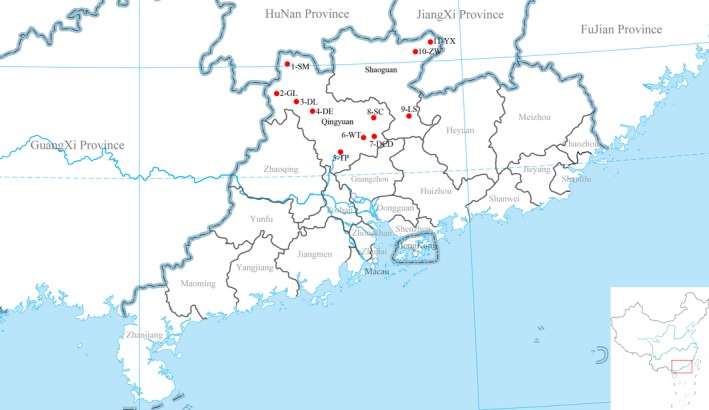
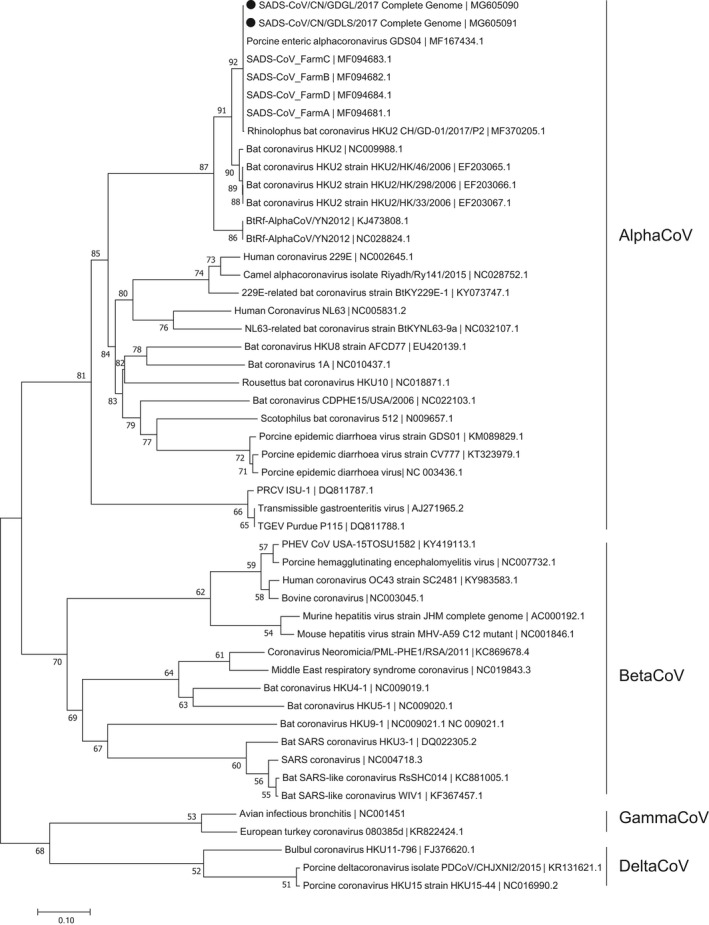
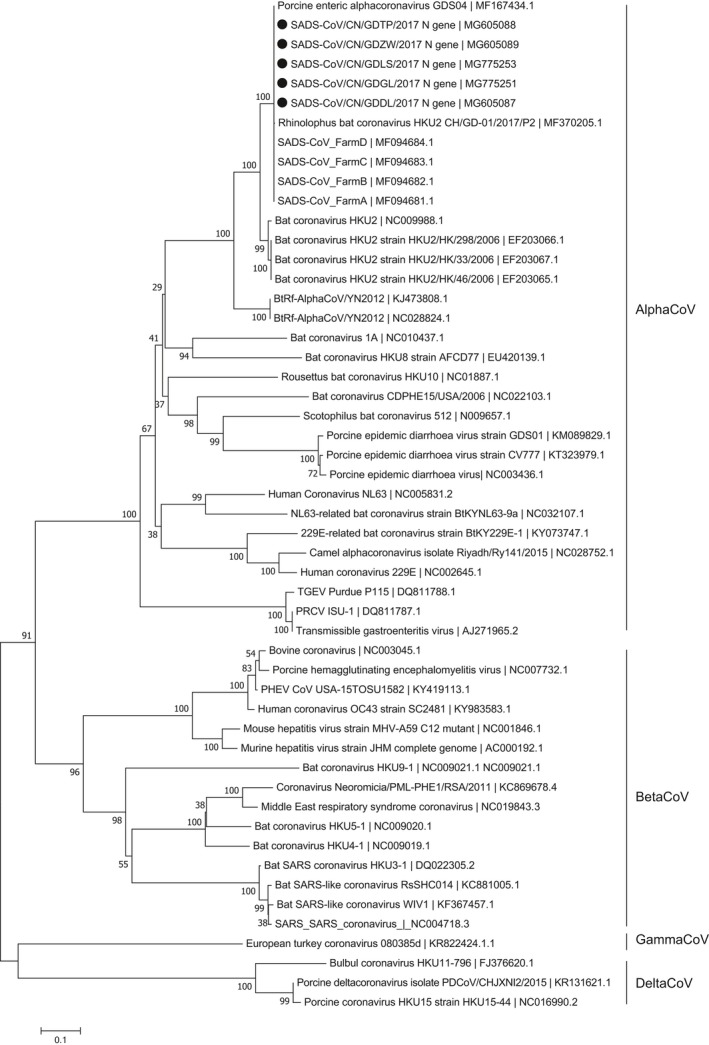
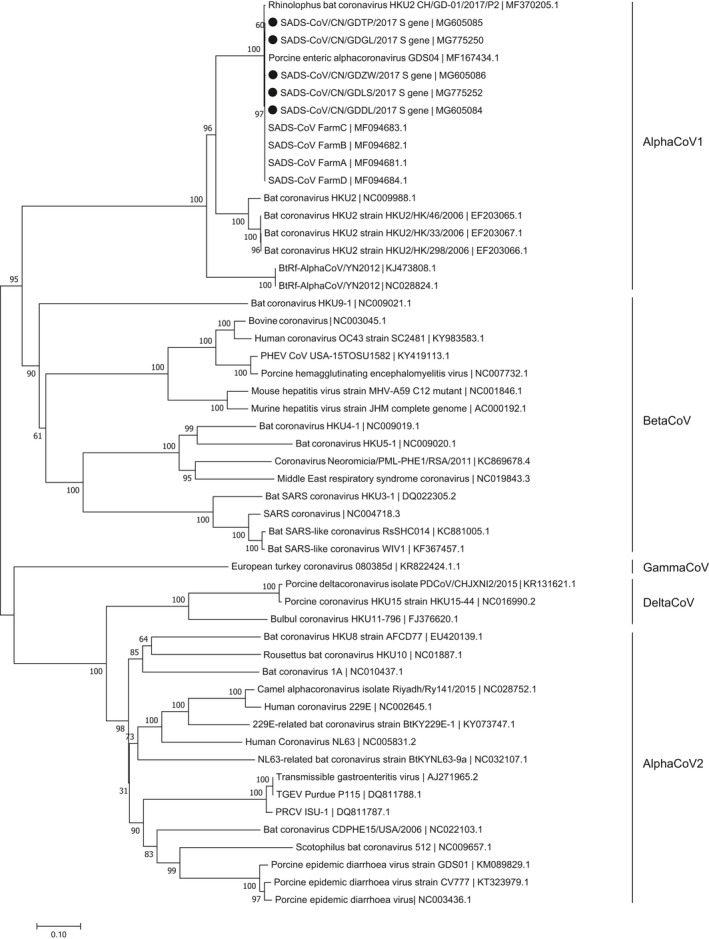
Swine acute diarrhoea syndrome coronavirus (SADS-CoV), a novel coronavirus, was first discovered in southern China in January 2017 and caused a large scale outbreak of fatal diarrheal disease in piglets. Here, we conducted a retrospective investigation of 236 samples from 45 swine farms with a clinical history of diarrheal disease to evaluate the emergence and the distribution of SADS-CoV in pigs in China. Our results suggest that SADS-CoV has emerged in China at least since August 2016. Meanwhile, we detected a prevalence of SADS-CoV (43.53%), porcine deltacoronavirus (8.83%), porcine epidemic diarrhoea virus (PEDV) (78.25%), rotavirus (21.77%), and transmissible gastroenteritis virus (0%), and we also found the co-infection of SADS-CoV and PEDV occurred most frequently with the rate of 17.65%. We screened and obtained two new complete genomes, five N and five S genes of SADS-CoV. Phylogenetic analysis based on these sequences revealed that all SADS-CoV sequences in this study clustered with previously reported SADS-CoV strains to form a well defined branch that grouped with the bat coronavirus HKU2 strains. This study is the first retrospective investigation for SADS-CoV and provides the epidemiological information of this new virus in China, which highlights the urgency to develop effective measures to control SADS-CoV.
Keywords: Swine Acute Diarrhoea Syndrome Coronavirus; phylogenetic analysis; prevalence; retrospective detection.
© 2018 Blackwell Verlag GmbH.
Conflict of interest statement
The authors declare no conflict of interests with any organization.
Figures
References
-
- Drummond, A. , Pybus, O. , Rambaut, A. , Forsberg, R. , & Rodrigo, A. (2003). Measurably evolving populations. Trends in Ecology & Evolution, 18, 481–488. 10.1016/S0169-5347(03)00216-7 - DOI
MeSH terms
Substances
Supplementary concepts
Associated data
- Actions
- Actions
- Actions
- Actions
- Actions
- Actions
- Actions
- Actions
- Actions
- Actions
- Actions
- Actions
- Actions
- Actions
- Actions
- Actions
Grants and funding
LinkOut - more resources
Full Text Sources
Other Literature Sources
