


Risk of falls in patients with knee osteoarthritis undergoing total knee arthroplasty: A systematic review and best evidence synthesis
- PMID: 30174378
- PMCID: PMC6115537
- DOI: 10.1016/j.jor.2018.08.026
Risk of falls in patients with knee osteoarthritis undergoing total knee arthroplasty: A systematic review and best evidence synthesis
Erratum in
-
Erratum regarding missing Declaration of Competing Interest statements in previously published articles.J Orthop. 2020 Dec 15;24:292. doi: 10.1016/j.jor.2020.12.005. eCollection 2021 Mar-Apr. J Orthop. 2020. PMID: 33994701 Free PMC article.
Abstract
Objectives: Falls occur frequently in patients with impaired ambulation and may dramatically affect the elderly population. Aim was to document the incidence of falls in knee osteoarthritis (OA) patients undergoing total knee arthroplasty (TKA), and to identify factors and treatments that may influence the risk of falls.
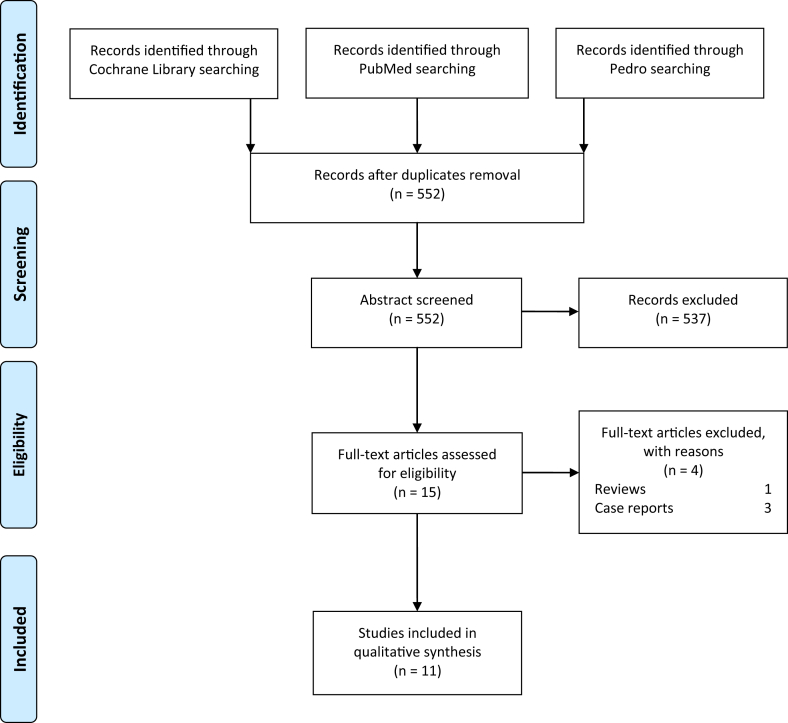
Methods: A systematic literature search was conducted on three medical electronic databases, PubMed, PeDRO, and Cochrane Collaboration. The Preferred Reporting Items for Systematic Reviews and Meta-analysis guidelines were used. Risk of bias analysis and best evidence synthesis were performed. The main aspects related to falls were analyzed: prevalence, risk factors, correlation with clinical outcome, effect of treatments.
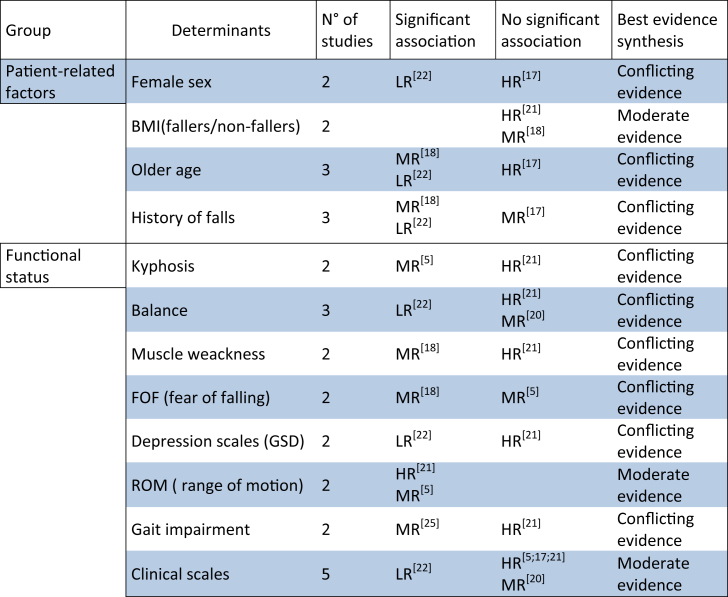
Results: The systematic review identified 11 papers on 1237 patients. Pre-operative fall prevalence ranged from 23% to 63%, while post-operative values ranged from 12% to 38%. Moderate evidence was found on no influence of clinical scales, no BMI differences between "faller" and "non-faller", and on influence of limited pre-operative range of motion. Conflicting evidence was found for sex, history of previous falls, age, kyphosis, muscle weakness, fear of falling, depression, balance, gait impairment. No evidence was found for the effectiveness of surgical or rehabilitative strategies on falls reduction.
Conclusions: OA patients undergoing TKA are at high risk of falls, which is reduced but still present after surgery. Although some risk factors were identified, there are no studies demonstrating the possibility of reducing the incidence of this deleterious event, which warrants further research efforts to better manage this fragile population of elderly patients.
Figures
References
-
- Heiden T.L., Lloyd D.G., Ackland T.R. Knee extension and flexion weakness in people with knee osteoarthritis: is antagonist cocontraction a factor? J Orthop Sports Phys Ther. 2009;39(11):807–815. - PubMed
-
- Deirmengian C.A., Lonner J.H. What's new in adult reconstructive knee surgery. J Bone Joint Surg Am. 2013;95(2):184–190. - PubMed
-
- Bruyere O. Health-related quality of life after total knee or hip replacement for osteoarthritis: a 7-year prospective study. Arch Orthop Trauma Surg. 2012;132(11):1583–1587. - PubMed
Publication types
LinkOut - more resources
Full Text Sources
Other Literature Sources
