


Estimating Typhoid Fever Risk Associated with Lack of Access to Safe Water: A Systematic Literature Review
- PMID: 30174699
- PMCID: PMC6076975
- DOI: 10.1155/2018/9589208
Estimating Typhoid Fever Risk Associated with Lack of Access to Safe Water: A Systematic Literature Review
Abstract
Background: Unsafe water is a well-known risk for typhoid fever, but a pooled estimate of the population-level risk of typhoid fever resulting from exposure to unsafe water has not been quantified. An accurate estimation of the risk from unsafe water will be useful in demarcating high-risk populations, modeling typhoid disease burden, and targeting prevention and control activities.
Methods: We conducted a systematic literature review and meta-analysis of observational studies that measured the risk of typhoid fever associated with drinking unimproved water as per WHO-UNICEF's definition or drinking microbiologically unsafe water. The mean value for the pooled odds ratio from case-control studies was calculated using a random effects model. In addition to unimproved water and unsafe water, we also listed categories of other risk factors from the selected studies.
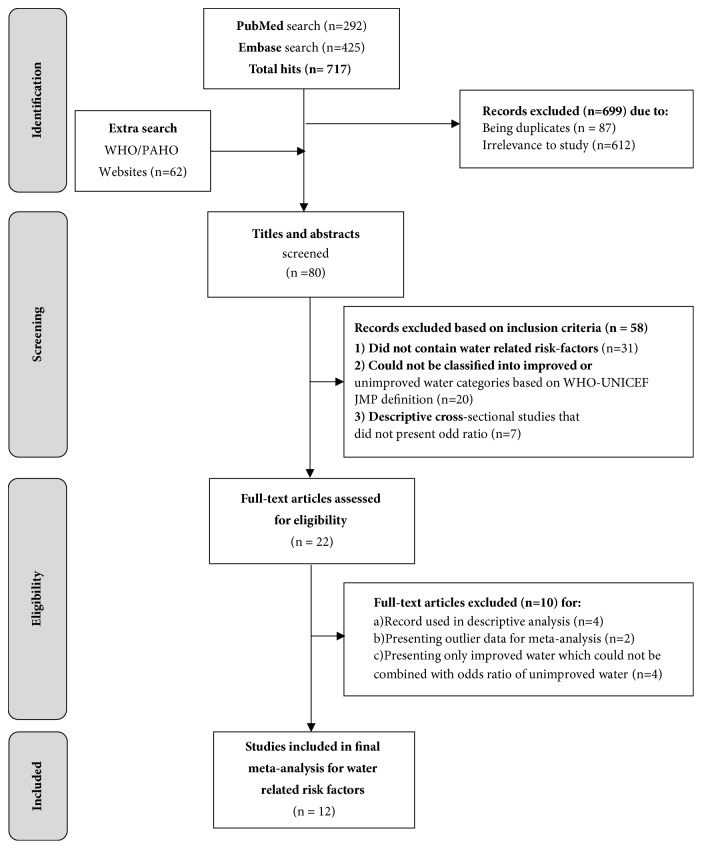
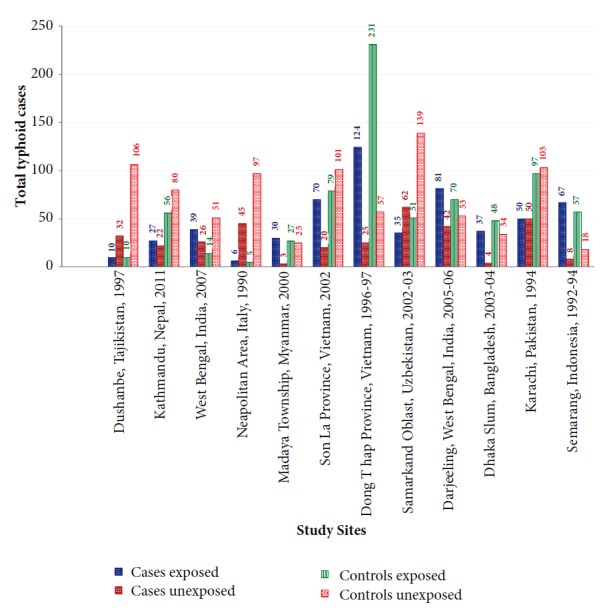
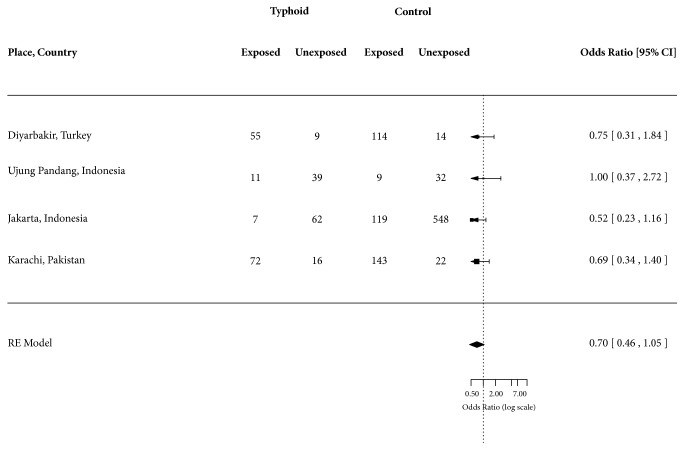
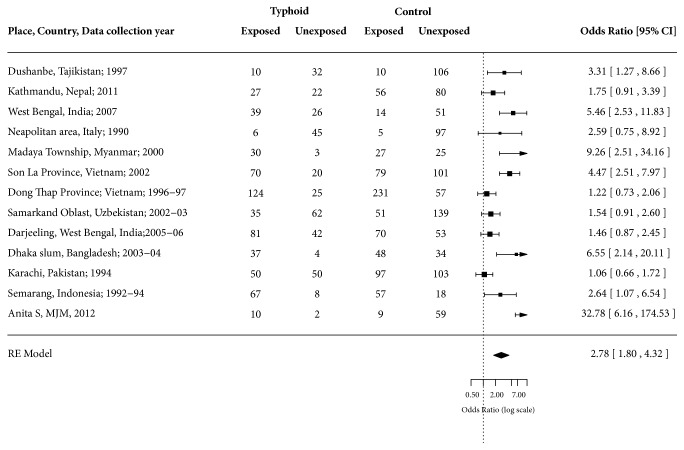
Results: The search of published studies from January 1, 1990, to December 31, 2013 in PubMed, Embase, and World Health Organization databases provided 779 publications, of which 12 case-control studies presented the odds of having typhoid fever for those exposed to unimproved or unsafe versus improved drinking water sources. The odds of typhoid fever among those exposed to unimproved or unsafe water ranged from 1.06 to 9.26 with case weighted mean of 2.44 (95% CI: 1.65-3.59). Besides water-related risk, the studies also identified other risk factors related to socioeconomic aspects, type of food consumption, knowledge and awareness about typhoid fever, and hygiene practices.
Conclusions: In this meta-analysis, we have quantified the pooled risk of typhoid fever among people exposed to unimproved or unsafe water which is almost two and a half times more than people who were not exposed to unimproved or unsafe water. However, caution should be exercised in applying the findings from this study in modeling typhoid fever disease burden at country, regional, and global levels as improved water does not always equate to safe water.
Figures
References
-
- WHO. Typhoid vaccines: WHO position paper. Weekly epidemiological record. 2008;83(6):49–59. - PubMed
-
- WHO. Background document:The diagnosis, treatment and prevention of typhoid fever. Geneva, Switzerland: 2003.
-
- WHO. Guidelines for drinking-water quality. 2nd. Vol. 3. Surveillance and control of community supplies; 1997.
-
- WHO-UNICEF. Types of drinking-water sources and sanitation, WHO/UNICEF Joint Monitoring Programme (JMP) for Water Supply and Sanitation. http://www.wssinfo.org/definitions-methods/watsan-categories.
Publication types
MeSH terms
Substances
LinkOut - more resources
Full Text Sources
Other Literature Sources
Medical
