


A people-centred perspective on climate change, environmental stress, and livelihood resilience in Bangladesh
- PMID: 30174739
- PMCID: PMC6106091
- DOI: 10.1007/s11625-016-0379-z
A people-centred perspective on climate change, environmental stress, and livelihood resilience in Bangladesh
Abstract
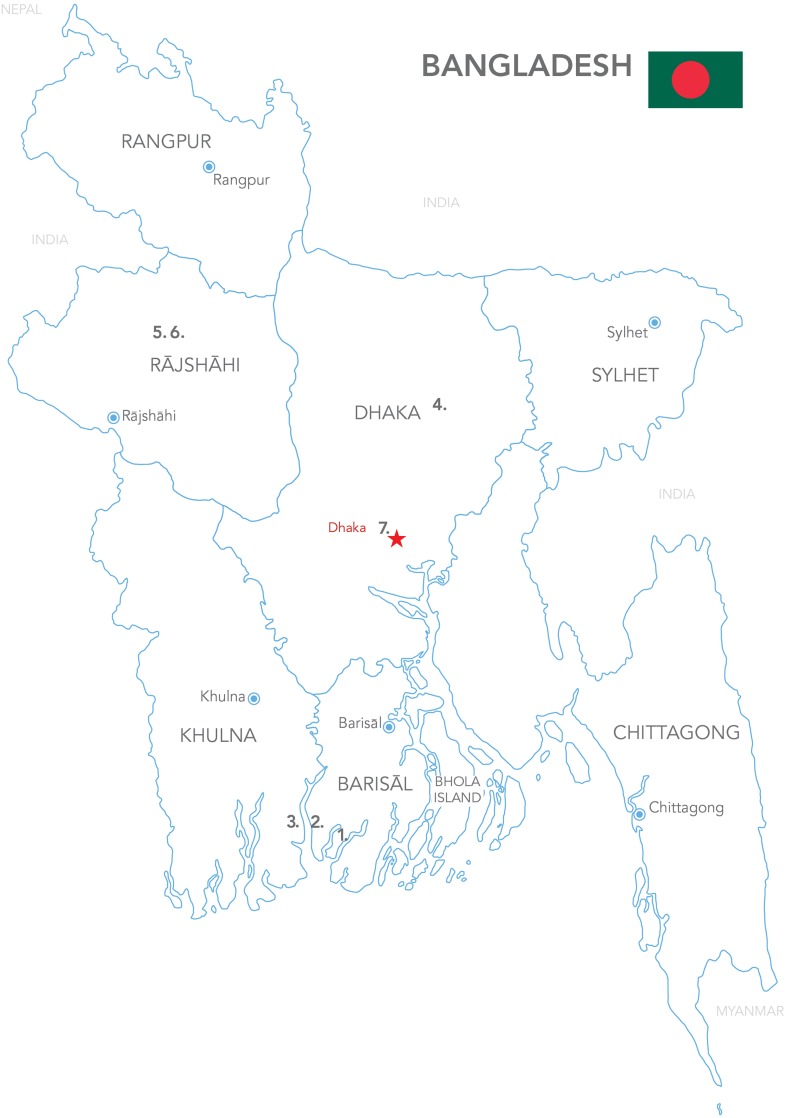
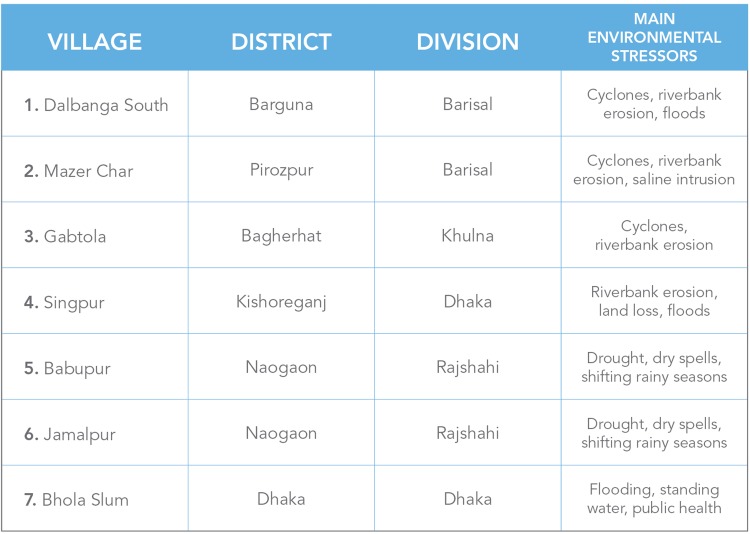
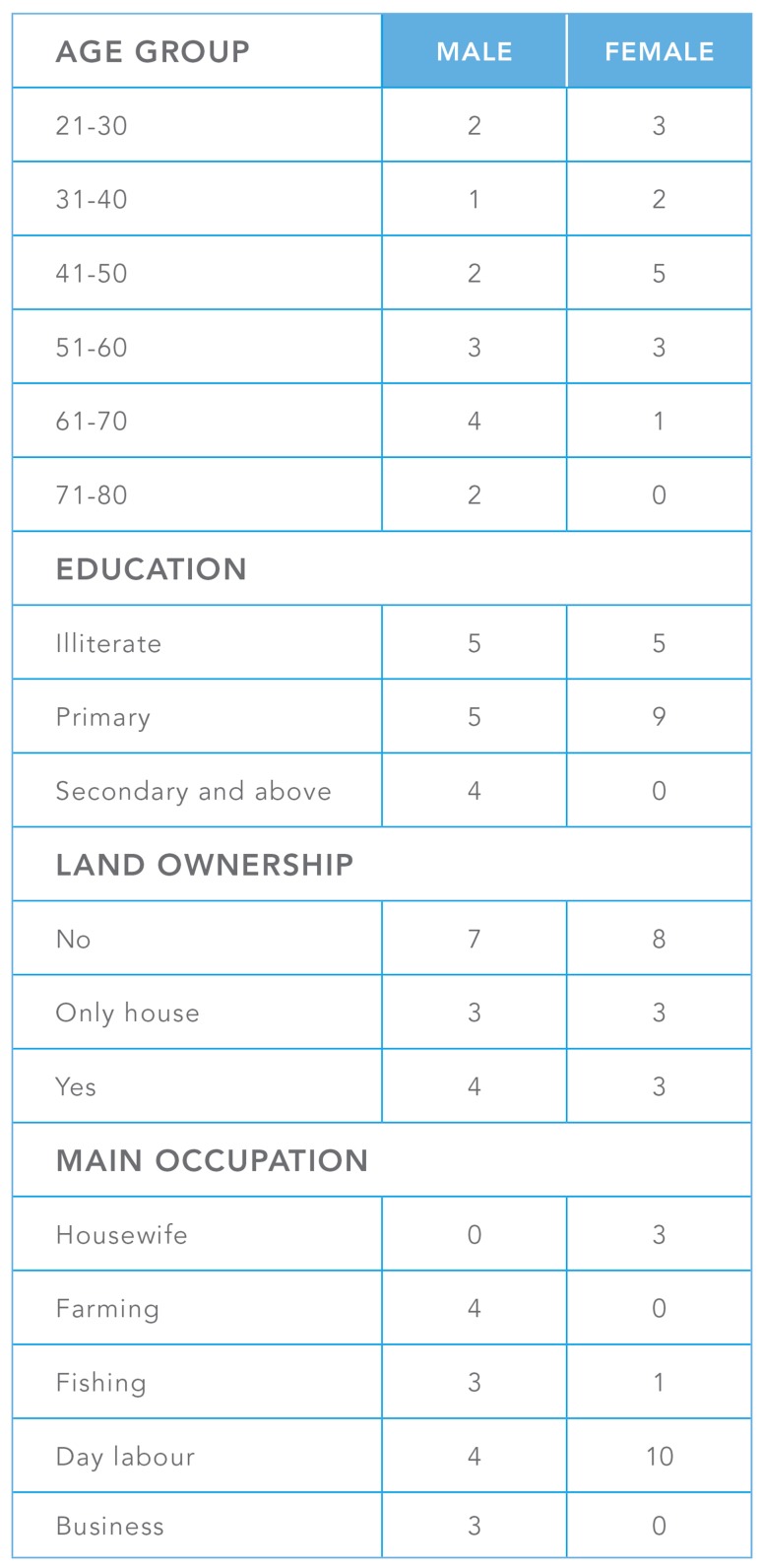
The Ganges-Brahmaputra delta enables Bangladesh to sustain a dense population, but it also exposes people to natural hazards. This article presents findings from the Gibika project, which researches livelihood resilience in seven study sites across Bangladesh. This study aims to understand how people in the study sites build resilience against environmental stresses, such as cyclones, floods, riverbank erosion, and drought, and in what ways their strategies sometimes fail. The article applies a new methodology for studying people's decision making in risk-prone environments: the personal Livelihood History interviews (N = 28). The findings show how environmental stress, shocks, and disturbances affect people's livelihood resilience and why adaptation measures can be unsuccessful. Floods, riverbank erosion, and droughts cause damage to agricultural lands, crops, houses, and properties. People manage to adapt by modifying their agricultural practices, switching to alternative livelihoods, or using migration as an adaptive strategy. In the coastal study sites, cyclones are a severe hazard. The study reveals that when a cyclone approaches, people sometimes choose not to evacuate: they put their lives at risk to protect their livelihoods and properties. Future policy and adaptation planning must use lessons learned from people currently facing environmental stress and shocks.
Keywords: Adaptation; Climate change; Livelihood resilience; Natural disasters; People-centred research.
Figures
References
-
- Adger WN. Climate change, human well-being and insecurity. N Political Econ. 2010;15(2):275–292. doi: 10.1080/13563460903290912. - DOI
-
- Adger WN, Huq S, Brown K, Conway D, Hulme M. Adaptation to climate change in the developing world. Progr Dev Stud. 2003;3(3):179–195. doi: 10.1191/1464993403ps060oa. - DOI
-
- Ahmed AU, Hasan SR, Etzold B, Neelrom S. Rainfall, food security, and human mobility: case study Bangladesh. UNU-EHS Report 2. Bonn: UNU-EHS; 2012.
-
- Alam K, Rahman MH. Women in natural disasters: a case study from southern coastal region of Bangladesh. Int J Disaster Risk Reduct. 2014;8:68–82. doi: 10.1016/j.ijdrr.2014.01.003. - DOI
-
- Ayeb-Karlsson S, Tanner T, van der Geest K, Warner K, et al. Livelihood resilience in a changing world—6 global policy recommendations for a more sustainable future. UNU-EHS Working Paper 22. Bonn: UNU-EHS; 2015.
LinkOut - more resources
Full Text Sources
Other Literature Sources