Does the motor unit synchronization induced by vibration enhance maximal voluntary isometric contraction force? A randomized controlled double-blind trial
- PMID: 30179211
- PMCID: PMC6146196
Does the motor unit synchronization induced by vibration enhance maximal voluntary isometric contraction force? A randomized controlled double-blind trial
Abstract
Objectives: Motor unit synchronization has been proposed as a potential mechanism underlying muscle strength gains for vibration training, but it has yet to be definitely demonstrated. Aim of this study was to determine whether motor unit synchronization induced by vibration has an effect on isometric muscle strength.
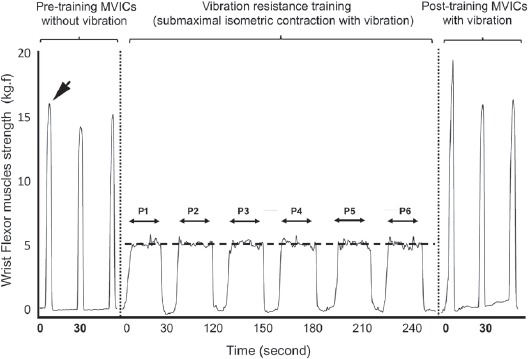
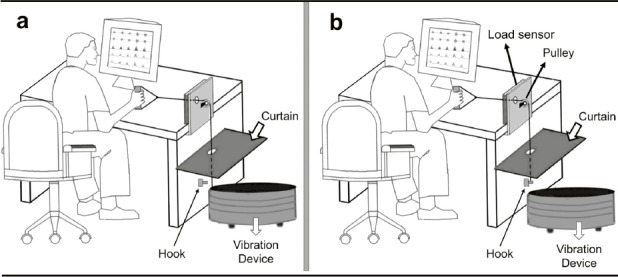
Methods: Thirty-six healthy volunteers were randomized into two groups: the vibration and the control (sham vibration) groups. Two sets of test measurements and vibration resistance training between the two sets were applied to the right wrist flexors. The maximal voluntary isometric contraction force, and flexor carpi radialis EMG activity were recorded in the first (without vibratory stimulation) and the second (with vibratory stimulation) set.
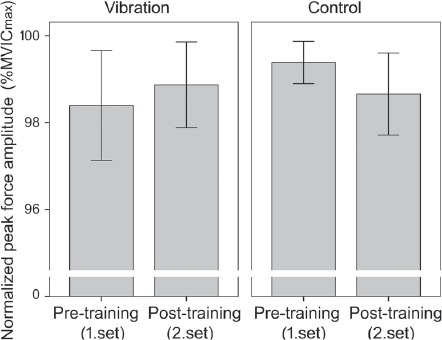
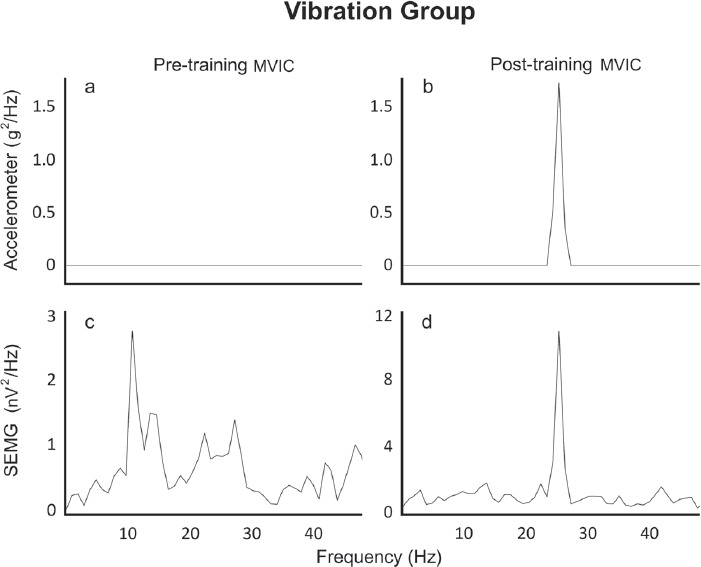
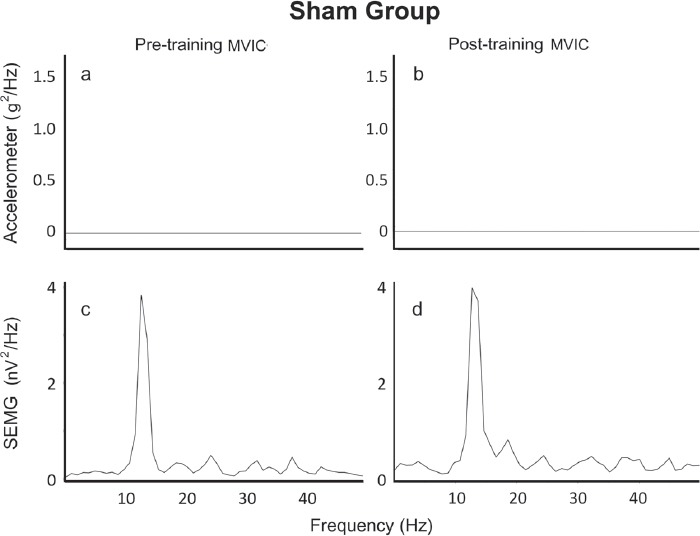
Results: There was no difference in the normalized peak force between the first and the second set in the vibration group (p=0.554). Motor units fired with maximal voluntary isometric contraction synchronized at the vibration frequency (25 Hz) during vibration in all participants of the vibration group.
Conclusion: The present study indicates that vibration-induced motor unit synchronization does not have a significant effect on the maximal voluntary isometric contraction force..
Conflict of interest statement
The authors have no conflict of interest.
Figures
References
-
- Mileva KN, Naleem AA, Biswas SK, Marwood S, Bowtell JL. Acute effects of a vibration-like stimulus during knee extension exercise. Med Sci Sports Exerc. 2006;38(7):1317–28. - PubMed
-
- Luo J, McNamara B, Moran K. The use of vibration training to enhance muscle strength and power. Sports Med. 2005;35(1):23–41. - PubMed
-
- Issurin VB, Liebermann DG, Tenenbaum G. Effect of vibratory stimulation training on maximal force and flexibility. J Sports Sci. 1994;12(6):561–6. - PubMed
-
- Costantino C, Galuppo L, Romiti D. Short-term effect of local muscle vibration treatment versus sham therapy on upper limb in chronic post-stroke patients: a randomized controlled trial. Eur J Phys Rehabil Med. 2017;53:32–40. - PubMed