


Sequence and structural variation in the genome of the Biomphalaria glabrata embryonic (Bge) cell line
- PMID: 30180879
- PMCID: PMC6122571
- DOI: 10.1186/s13071-018-3059-2
Sequence and structural variation in the genome of the Biomphalaria glabrata embryonic (Bge) cell line
Erratum in
-
Correction to: Sequence and structural variation in the genome of the Biomphalaria glabrata embryonic (Bge) cell line.Parasit Vectors. 2018 Oct 29;11(1):566. doi: 10.1186/s13071-018-3135-7. Parasit Vectors. 2018. PMID: 30373629 Free PMC article.
Abstract
Background: The aquatic pulmonate snail Biomphalaria glabrata is a significant vector and laboratory host for the parasitic flatworm Schistosoma mansoni, an etiological agent for the neglected tropical disease schistosomiasis. Much is known regarding the host-parasite interactions of these two organisms, and the B. glabrata embryonic (Bge) cell line has been an invaluable resource in these studies. The B. glabrata BB02 genome sequence was recently released, but nothing is known of the sequence variation between this reference and the Bge cell genome, which has likely accumulated substantial genetic variation in the ~50 years since its isolation.
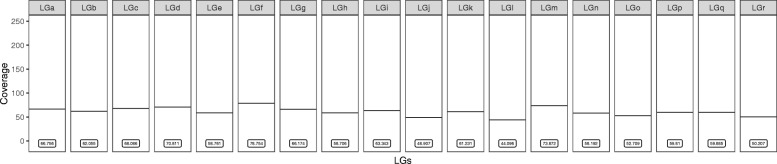
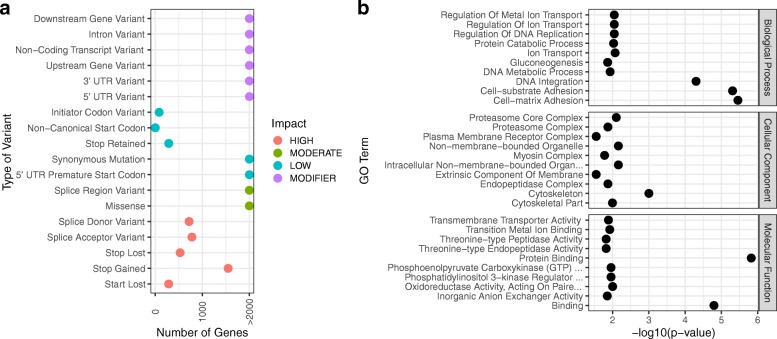
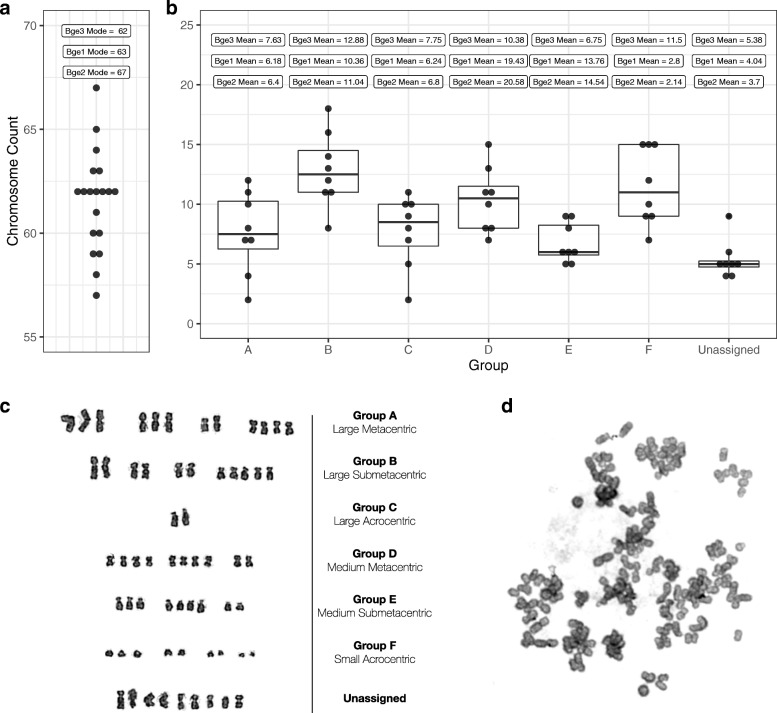
Results: Here, we report the genome sequence of our laboratory subculture of the Bge cell line (designated Bge3), which we mapped to the B. glabrata BB02 reference genome. Single nucleotide variants (SNVs) were predicted and focus was given to those SNVs that are most likely to affect the structure or expression of protein-coding genes. Furthermore, we have highlighted and validated high-impact SNVs in genes that have often been studied using Bge cells as an in vitro model, and other genes that may have contributed to the immortalization of this cell line. We also resolved representative karyotypes for the Bge3 subculture, which revealed a mixed population exhibiting substantial aneuploidy, in line with previous reports from other Bge subcultures.
Conclusions: The Bge3 genome differs from the B. glabrata BB02 reference genome in both sequence and structure, and these are likely to have significant biological effects. The availability of the Bge3 genome sequence, and an awareness of genomic differences with B. glabrata, will inform the design of experiments to understand gene function in this unique in vitro snail cell model. Additionally, this resource will aid in the development of new technologies and molecular approaches that promise to reveal more about this schistosomiasis-transmitting snail vector.
Keywords: Bge; Biomphalaria glabrata; Genome sequence; Karyotype; Schistosoma mansoni; Variant calling.
Conflict of interest statement
Ethics approval and consent to participate
Not applicable.
Consent for publication
Not applicable.
Competing interests
The authors declare that they have no competing interests.
Publisher’s Note
Springer Nature remains neutral with regard to jurisdictional claims in published maps and institutional affiliations.
Figures

References
-
- Larson MK, Bender RC, Bayne CJ. Resistance of Biomphalaria glabrata 13-16-R1 snails to Schistosoma mansoni PR1 is a function of haemocyte abundance and constitutive levels of specific transcripts in haemocytes. Int J Parasitol. 2014;44:343–353. doi: 10.1016/j.ijpara.2013.11.004. - DOI - PMC - PubMed
MeSH terms
Grants and funding
LinkOut - more resources
Full Text Sources
Other Literature Sources
Molecular Biology Databases
Research Materials
