Review
. 2018 Sep 15;201(6):1615-1624.
doi: 10.4049/jimmunol.1800631.

The Intestinal Virome and Immunity

Affiliations
Review

The Intestinal Virome and Immunity

Jessica A Neil et al. J Immunol. .

Abstract

The composition of the human microbiome is considered a major source of interindividual variation in immunity and, by extension, susceptibility to diseases. Intestinal bacteria have been the major focus of research. However, diverse communities of viruses that infect microbes and the animal host cohabitate the gastrointestinal tract and collectively constitute the gut virome. Although viruses are typically investigated as pathogens, recent studies highlight a relationship between the host and animal viruses in the gut that is more akin to host-microbiome interactions and includes both beneficial and detrimental outcomes for the host. These viruses are likely sources of immune variation, both locally and extraintestinally. In this review, we describe the components of the gut virome, in particular mammalian viruses, and their ability to modulate host responses during homeostasis and disease.


Figures

Figure 1
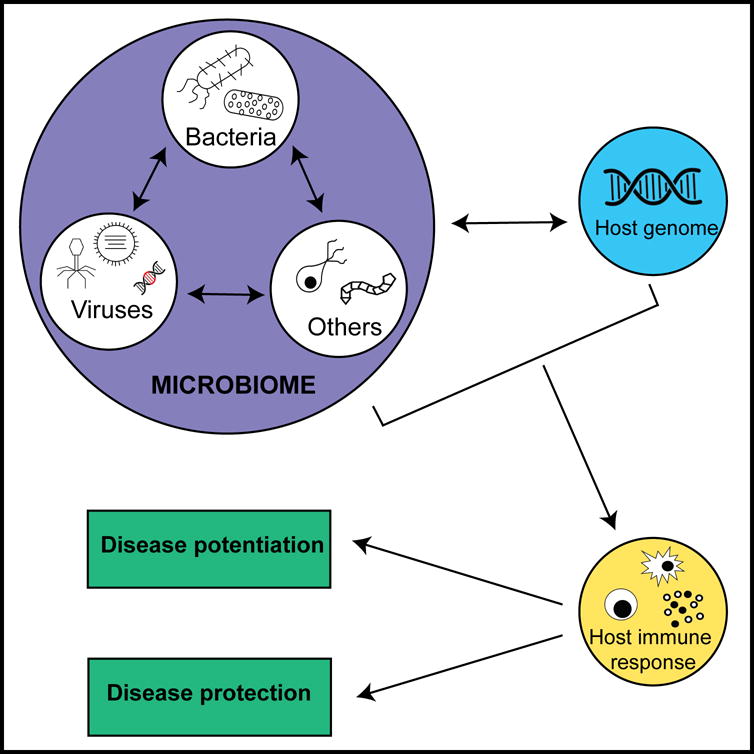
Figure 1. Virus-microbiome and virus-host genome interactions in immune variation
The host microbiome is a complex network of viruses, bacteria and other organisms (fungi, archaea, protozoans and helminths) that reside in the human body. The virome is comprised of animal viruses, bacteriophages and endogenous retroviruses. The gastrointestinal tract is inhabited by vast numbers of viruses and is an important site for virus-microbiome interactions and virus-host genome interactions. Intestinal bacteria interact with the virome by harboring bacteriophages and facilitating infection of barrier cells by animal viruses. Although typically investigated as pathogens, this review highlights how animal viruses in the gut serve as immune modulators that potentially explains inter-individual differences in disease susceptibility. The responses induced by various virus-microbiome and virus-host genome interactions likely alter the magnitude and function of the immune response to either the detriment or benefit of the host leading to either potentiation or protection from disease.

References

    1. Krishnamurthy SR, Wang D. Origins and challenges of viral dark matter. Virus Res. 2017;239:136–142. - PubMed
    1. Zhang YZ, Shi M, Holmes EC. Using Metagenomics to Characterize an Expanding Virosphere. Cell. 2018;172:1168–1172. - PubMed
    1. Minot S, Sinha R, Chen J, Li H, Keilbaugh SA, Wu GD, Lewis JD, Bushman FD. The human gut virome: inter-individual variation and dynamic response to diet. Genome Res. 2011;21:1616–1625. - PMC - PubMed
    1. Reyes A, Haynes M, Hanson N, Angly FE, Heath AC, Rohwer F, Gordon JI. Viruses in the faecal microbiota of monozygotic twins and their mothers. Nature. 2010;466:334–338. - PMC - PubMed
    1. Carding SR, Davis N, Hoyles L. Review article: the human intestinal virome in health and disease. Aliment Pharmacol Ther. 2017;46:800–815. - PMC - PubMed

Publication types