Review
. 2018 Nov;18(11):681-695.
doi: 10.1038/s41568-018-0050-3.

Polyamine metabolism and cancer: treatments, challenges and opportunities

Affiliations
Review

Polyamine metabolism and cancer: treatments, challenges and opportunities

Robert A Casero Jr et al. Nat Rev Cancer. 2018 Nov.

Abstract

Advances in our understanding of the metabolism and molecular functions of polyamines and their alterations in cancer have led to resurgence in the interest of targeting polyamine metabolism as an anticancer strategy. Increasing knowledge of the interplay between polyamine metabolism and other cancer-driving pathways, including the PTEN-PI3K-mTOR complex 1 (mTORC1), WNT signalling and RAS pathways, suggests potential combination therapies that will have considerable clinical promise. Additionally, an expanding number of promising clinical trials with agents targeting polyamines for both therapy and prevention are ongoing. New insights into molecular mechanisms linking dysregulated polyamine catabolism and carcinogenesis suggest additional strategies that can be used for cancer prevention in at-risk individuals. In addition, polyamine blocking therapy, a strategy that combines the inhibition of polyamine biosynthesis with the simultaneous blockade of polyamine transport, can be more effective than therapies based on polyamine depletion alone and may involve an antitumour immune response. These findings open up new avenues of research into exploiting aberrant polyamine metabolism for anticancer therapy.


Conflict of interest statement

Competing interests

The authors receive US National Institutes of Health grant support (R.A.C.) and are patent holders (R.A.C. and A.E.P.).T.M.S. declares no competing interests.

Figures

Fig. 1
Fig. 1. The polyamine metabolic pathway and ATP and methionine salvage pathways.
a | Arginase 1 (ARG1) produces ornithine from the amino acid arginine as part of the urea cycle. Ornithine decarboxylase (ODC) is a rate-limiting step in polyamine biosynthesis and produces the diamine 1,4-diaminobutane (putrescine). Decarboxylated S-adenosylmethionine (dcAdoMet) is the aminopropyl donor for spermidine synthase (SPDSY) and spermine synthase (SPMSY) for the synthesis of spermidine and spermine, respectively. Spermidine/spermine N1-acetyltransferase 1 (SSAT) catalyses the transfer of the acetyl group of acetyl-CoA to either spermidine or spermine, which can then either be excreted from the cell or serve as substrates for polyamine oxidase (PAOX). PAOX is a peroxisomal enzyme capable of catalyzing N1-acetylated polyamines. 3-Acetylaminopropanal (3-AAP) is a product of oxidation of the acetylated polyamines by PAOX. Spermine oxidase (SMOX) is a cytosolic and nuclear amine oxidase that directly oxidizes spermine to produce spermidine. 3-Aminopropanal (3-AP) is a product of the oxidation of spermine by SMOX. b | S-adenosylmethionine decarboxylase (AdoMetDC) is the second rate-limiting enzyme in polyamine biosynthesis and produces the aminopropyl donor dcAdoMet. Once decarboxylated, dcAdoMet cannot be used in methyl-transfer reactions. 5′-Methylthioadenosine (MTA) is the product resulting from the loss of the aminopropyl group of dcAdoMet in spermidine and spermine synthesis. 5′-methylthioadenosine phosphorylase (MTAP) converts MTA into adenine and 5-methylthioribose-1-phosphate. Adenine is converted to AMP by adenine phosphoribosyltransferase (APRT) using phosphoribosyl pyrophosphate (PRPP) as a phosphoribosyl donor and is converted to ATP by successive phosphorylation reactions using inorganic phosphate (Pi) as the donor. Methionine is salvaged from 5-methylthioribose-1-phosphate through a series of enzymatic steps, resulting in a substrate that can be combined with ATP to form S-adenosylmethionine (AdoMet) by the action of methionine adenosyltransferase 2 (MAT2). Ado, adenosine.
Fig. 2
Fig. 2. Hypusination of eukaryotic initiation factor 5A isoform 1 plays critical roles in both normal and neoplastic cell proliferation.
Ornithine decarboxylase (ODC) is a transcriptional target of the MYC oncogene in both normal and neoplastic cells. MYC-driven tumours rely on increased biomass creation (specifically proteins) to support proliferation, and MYC targets include ribosome components, tRNAs and initiation and elongation factors, including eukaryotic initiation factor 5A isoform 1 (eIF5A). Thus, the simultaneous increase in spermidine available for eIF5A modification enables translation. Several oncogenes, including those of the RAS family and BCR–ABL, have been implicated in leading to increased expression of eIF5A in multiple cancers. With increased ODC, polyamines, including spermidine, the substrate for deoxyhypusine synthase (DHS), are increased. Deoxyhypusine hydroxylase (DOHH) then forms the active hypusinated form of eIF5A. Hypusinated eIF5A facilitates the translation of polyproline tracks and prevents ribosome stalling on specific mRNAs in addition to promoting the translation necessary for cell growth in both normal and tumour tissue. This absolute requirement of spermidine in hypusination of eIF5A may represent its essential requirement for cell proliferation. Furthermore, oncogene-driven upregulation of hypusinated eIF5A could potentially lead to a skewing of protein translation towards a hypusine-dependent translatome. eIF5A has also recently been implicated in enhancing nonsense-mediated mRNA decay,,. The polyamine putrescine may also contribute to protein synthesis via its effects on mTOR complex 1 (mTORC1) and the eukaryotic translation initiation factor 4E (eIF4FE) cap-binding translation initiation complex. Figure adapted with permission from REF., Wiley.
Fig. 3
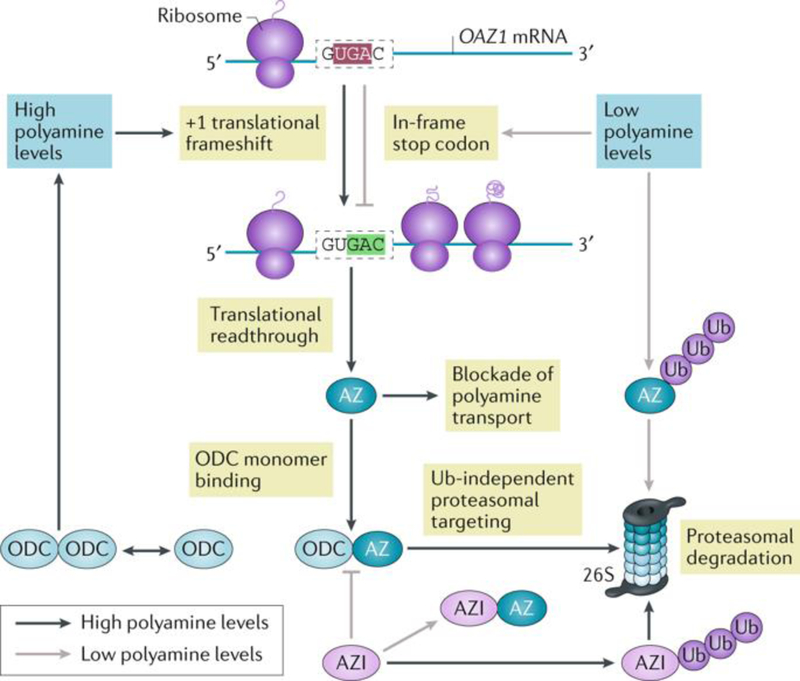
Fig. 3. Regulation of ornithine decarboxylase by antizyme 1.
Ornithine decarboxylase (ODC) is active as a homodimer, but ODC monomers have higher affinity for ODC antizyme 1 (AZ). When intracellular polyamine concentrations are high, a+1 frameshift occurs (marked in green), leading to translational readthrough. OAZ1 mRNA is translated into full-length AZ that can then bind to ODC monomers, preventing ODC activity and chaperoning the ODC monomers to the 26S proteasome for degradation in an ubiquitin (Ub)-independent manner. AZ also inhibits polyamine transport through an unknown mechanism. When intracellular polyamine concentrations are low, full-length AZ is not translated owing to an upstream, in-frame stop codon (marked in red) in its mRNA and thus does not inhibit ODC or block polyamine transport. AZ binding to ODC can be blocked by the inactive ODC homologue, antizyme inhibitor (AZI). Both AZ and AZI, unlike ODC, are polyubiquitylated and degraded by the 26S proteasome. Tendencies when intracellular polyamine concentrations are high are indicated as black arrows, and tendencies when intracellular polyamine concentrations are low are indicated as grey arrows.Figure adapted with permission from REF., Portland Press.
Fig. 4
Fig. 4. mTOR complex 1 controls polyamine metabolism.
mTOR complex 1 (mTORC1) stabilizes pro-S-adenosylmethionine (AdoMet) decarboxylase (pro-AdoMetDC), leading to increased AdoMetDC and increased polyamine biosynthesis in prostate cancer. PTEN is a tumour suppressor that is frequently mutated or lost in prostate cancer. The loss of PTEN function results in aberrant response to growth factor (GF) stimuli through the PI3K signalling pathway, thus activating mTORC1. Mechanistically, activated mTORC1 indirectly blocks the proteasomal degradation of pro-AdoMetDC and leads to phosphorylation of the proenzyme at S298 (indicated by dotted arrow), thus stabilizing it further. The proenzyme then self-processes to the pyruvate-containing and active holoenzyme, thus facilitating the increased polyamine production necessary for neoplastic growth. dcAdoMet, decarboxylated S-adenosylmethionine; MLST8, mammalian lethal with SEC13 protein 8; RAPTOR, regulatory-associated protein of mTOR.Figure adapted from REF., Springer Nature Limited.
Fig. 5
Fig. 5. Polyamine analogue-based nanoparticles with drug cargo as antitumour therapy.
A proposed mechanism by which polyamine analogue-based nanoparticles deliver miR-34a mimic and inhibit tumour cell growth by altering polyamine metabolism and targeting p53-regulated genes is shown. a | Polyamine prodrugs (PaPs) condense microRNA (miRNA) into nanoparticles. b | The nanoparticles enter the cell by endocytosis. Upon endosomal escape, the particles disassemble in the cellular reducing environment, releasing the parent polyamine analogue and miR-34a mimic. Polyamine biosynthesis decreases, and polyamine catabolism increases. Increased polyamine catabolism in combination with the miR-34a mimic (which inhibits BCL2 translation) leads to increased apoptosis by simultaneously depleting polyamines while blocking oncogenic miR-34a targets, including the anti-apoptotic protein BCL-2. BENSpm, N1,N11-bis(ethyl)norspermine; GSH, glutathione (reduced); SMOX, spermine oxidase; SSAT, spermidine/spermine N1-acetyltransferase 1.Figure adapted with permission from REF., Elsevier.
None

References

    1. Pegg AE & Casero RA Jr. Current status of the polyamine research field. Methods Mol. Biol 720, 3–35 (2011). - PMC - PubMed
    1. Terui Y et al. Polyamines protect nucleic acids against depurination. Int. J. Biochem. Cell Biol 99, 147–153 (2018). - PubMed
    1. Kurata HT, Akrouh A, Li JB, Marton LJ & Nichols CG Scanning the topography of polyamine blocker binding in an inwardly rectifying potassium channel. J. Biol. Chem 288, 6591–6601 (2013). - PMC - PubMed
    1. Rao JN et al. Polyamines regulate intestinal epithelial restitution through TRPC1-mediated Ca(2)+ signaling by differentially modulating STIM1 and STIM2. Am. J. Physiol. Cell Physiol 303, C308–C317 (2012). - PMC - PubMed
    1. Murray-Stewart TR, Woster PM & Casero RA Jr. Targeting polyamine metabolism for cancer therapy and prevention. Biochem. J 473, 2937–2953 (2016). - PMC - PubMed

Publication types