


Redefining environmental exposure for disease etiology
- PMID: 30181901
- PMCID: PMC6119193
- DOI: 10.1038/s41540-018-0065-0
Redefining environmental exposure for disease etiology
Abstract
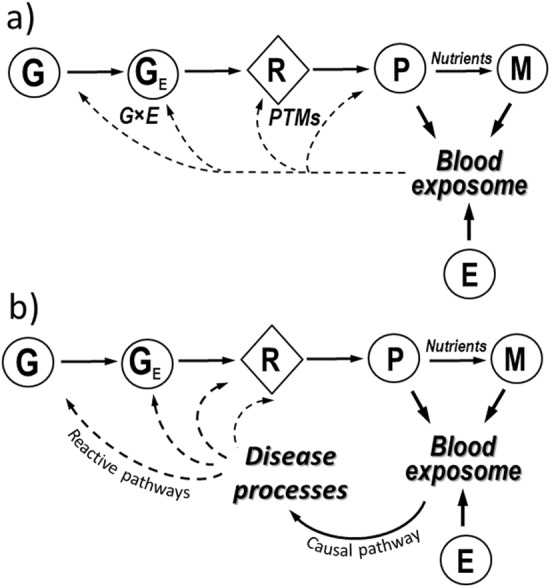
Etiological studies of human exposures to environmental factors typically rely on low-throughput methods that target only a few hundred chemicals or mixtures. In this Perspectives article, I outline how environmental exposure can be defined by the blood exposome-the totality of chemicals circulating in blood. The blood exposome consists of chemicals derived from both endogenous and exogenous sources. Endogenous chemicals are represented by the human proteome and metabolome, which establish homeostatic networks of functional molecules. Exogenous chemicals arise from diet, vitamins, drugs, pathogens, microbiota, pollution, and lifestyle factors, and can be measured in blood as subsets of the proteome, metabolome, metals, macromolecular adducts, and foreign DNA and RNA. To conduct 'exposome-wide association studies', blood samples should be obtained prospectively from subjects-preferably at critical stages of life-and then analyzed in incident disease cases and matched controls to find discriminating exposures. Results from recent metabolomic investigations of archived blood illustrate our ability to discover potentially causal exposures with current technologies.
Conflict of interest statement
The author declares no competing interests.
Figures
References
Grants and funding
LinkOut - more resources
Full Text Sources
Other Literature Sources
