


Activation of the JAK/STAT3 and PI3K/AKT pathways are crucial for IL-6 trans-signaling-mediated pro-inflammatory response in human vascular endothelial cells
- PMID: 30185178
- PMCID: PMC6125866
- DOI: 10.1186/s12964-018-0268-4
Activation of the JAK/STAT3 and PI3K/AKT pathways are crucial for IL-6 trans-signaling-mediated pro-inflammatory response in human vascular endothelial cells
Abstract
Background: IL-6 classic signaling is linked to anti-inflammatory functions while the trans-signaling is associated with pro-inflammatory responses. Classic signaling is induced via membrane-bound IL-6 receptor (IL-6R) whereas trans-signaling requires prior binding of IL-6 to the soluble IL-6R. In both cases, association with the signal transducing gp130 receptor is compulsory. However, differences in the downstream signaling mechanisms of IL-6 classic- versus trans-signaling remains largely elusive.
Methods: In this study, we used flow cytometry, quantitative PCR, ELISA and immuno-blotting techniques to investigate IL-6 classic and trans-signaling mechanisms in Human Umbilical Vein Endothelial Cells (HUVECs).
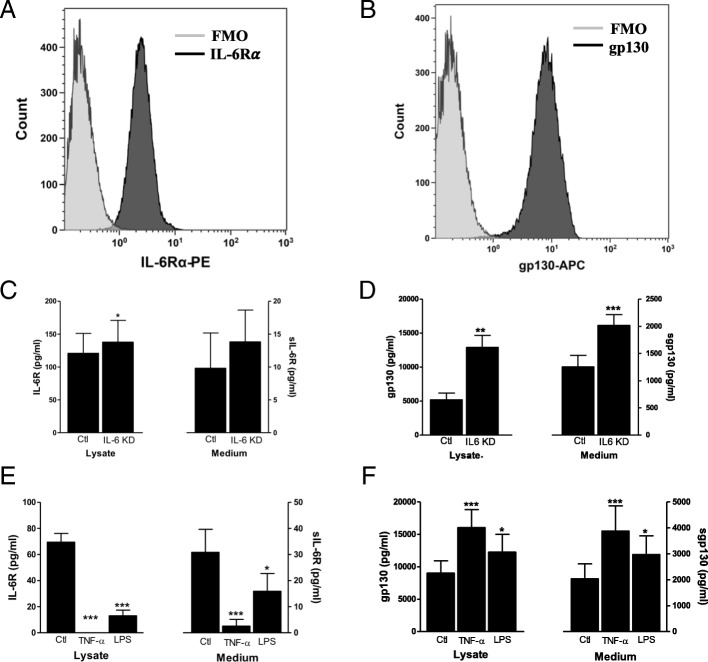
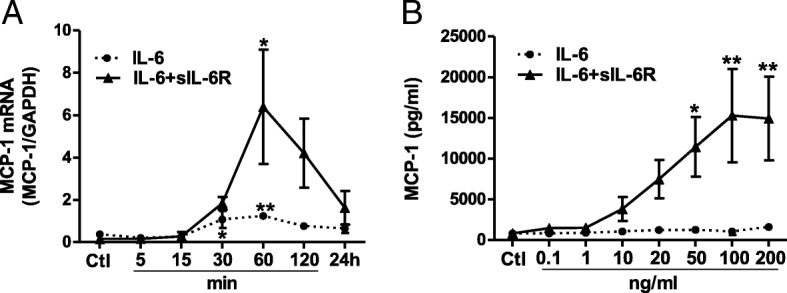
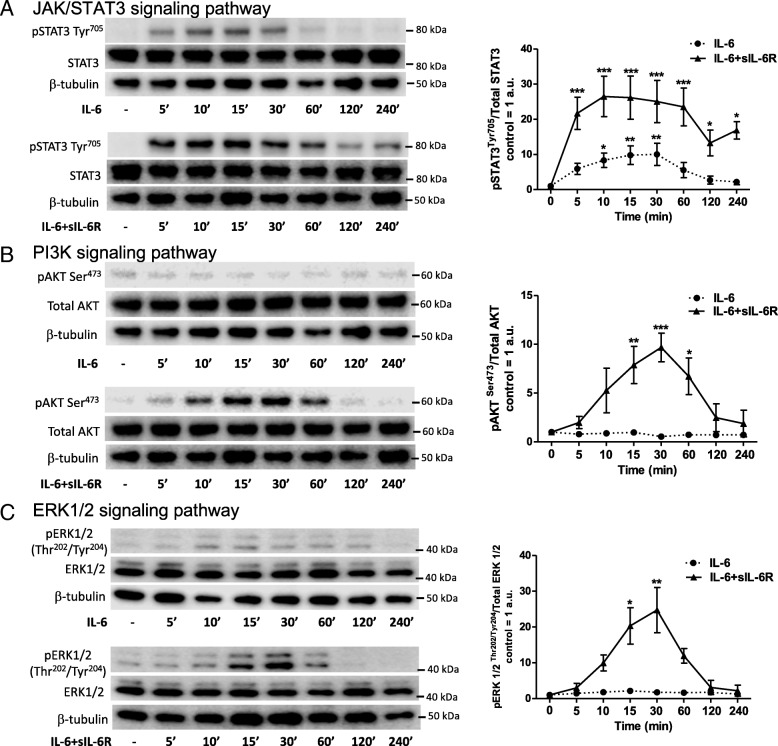
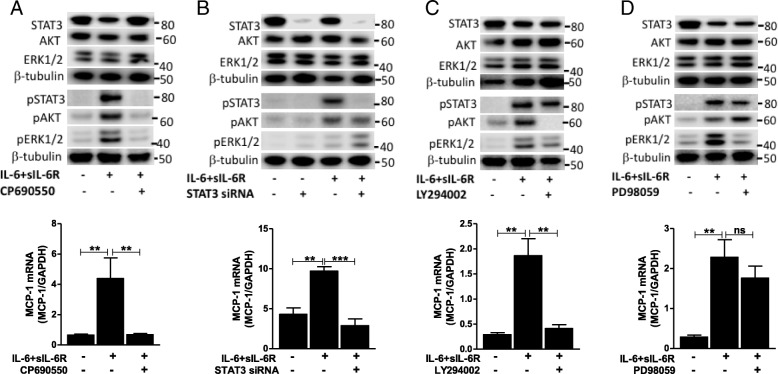
Results: We show that both IL-6R and gp130 are expressed on the surface of human vascular endothelial cells, and that the expression is affected by pro-inflammatory stimuli. In contrast to IL-6 classic signaling, IL-6 trans-signaling induces the release of the pro-inflammatory chemokine Monocyte Chemoattractant Protein-1 (MCP-1) from human vascular endothelial cells. In addition, we reveal that the classic signaling induces activation of the JAK/STAT3 pathway while trans-signaling also activates the PI3K/AKT and the MEK/ERK pathways. Furthermore, we demonstrate that MCP-1 induction by IL-6 trans-signaling requires simultaneous activation of the JAK/STAT3 and PI3K/AKT pathways.
Conclusions: Collectively, our study reports molecular differences in IL-6 classic- and trans-signaling in human vascular endothelial cells; and elucidates the pathways which mediate MCP-1 induction by IL-6 trans-signaling.
Keywords: Endothelium; HUVECs; Interleukin-6 signaling; Monocyte chemoattractant Protein-1; Pro-inflammatory cytokines.
Conflict of interest statement
Consent for publication
Not applicable
Competing interests
The authors declare that they have no competing interests.
Publisher’s Note
Springer Nature remains neutral with regard to jurisdictional claims in published maps and institutional affiliations.
Figures
References
-
- Suzuki M, Hashizume M, Yoshida H, Mihara M. Anti-inflammatory mechanism of tocilizumab, a humanized anti-IL-6R antibody: effect on the expression of chemokine and adhesion molecule. Rheumatol Int. 2010;30:309–15. 10.1007/s00296-009-0953-0. - PubMed
Publication types
MeSH terms
Substances
Grants and funding
LinkOut - more resources
Full Text Sources
Other Literature Sources
Molecular Biology Databases
Research Materials
Miscellaneous
