


Elimination of the error signal in the superior colliculus impairs saccade motor learning
- PMID: 30185563
- PMCID: PMC6156644
- DOI: 10.1073/pnas.1806215115
Elimination of the error signal in the superior colliculus impairs saccade motor learning
Abstract
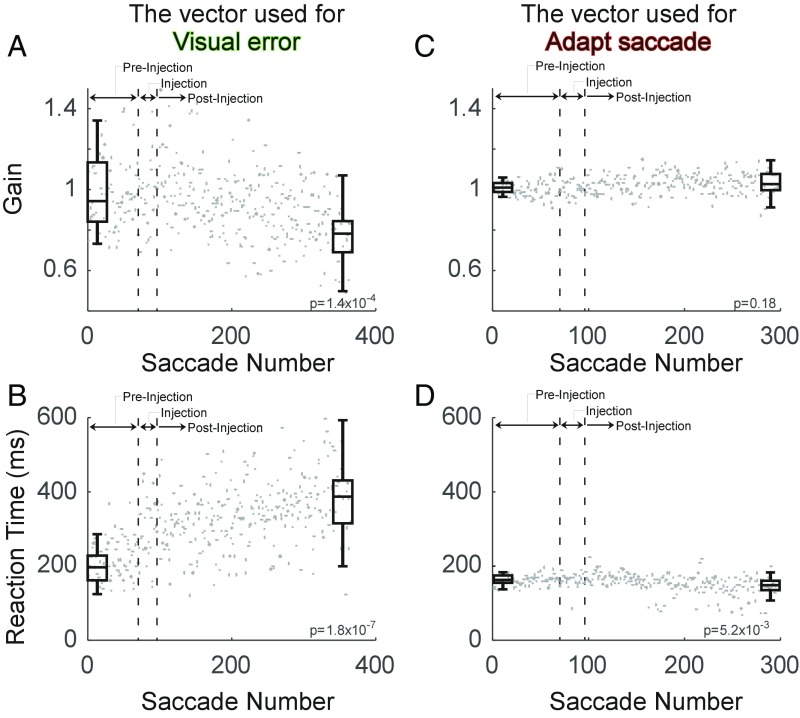
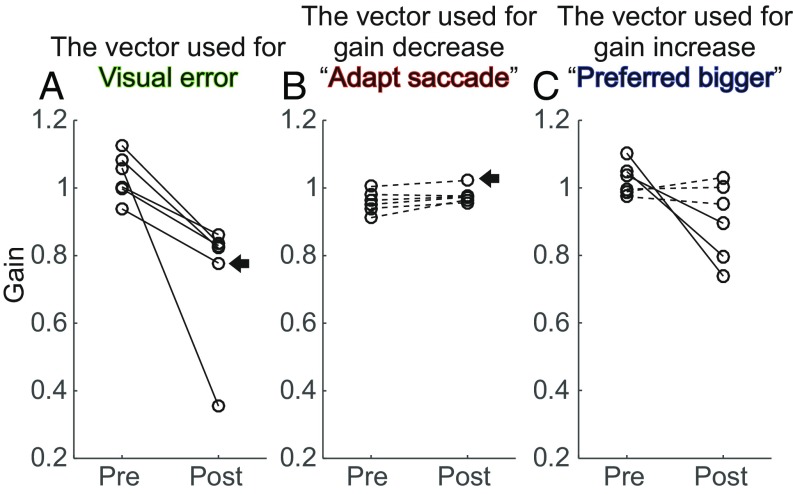
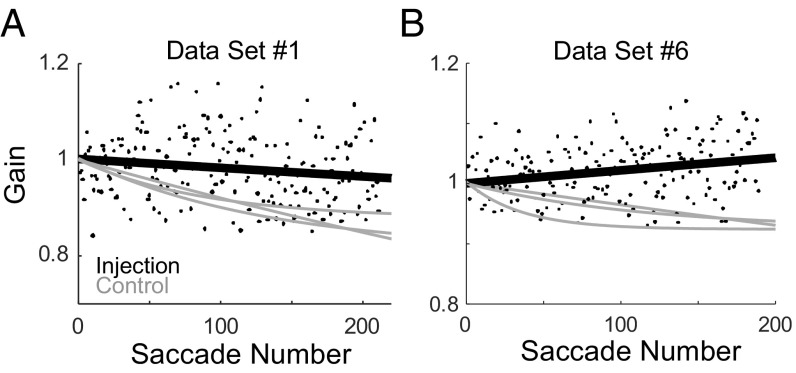
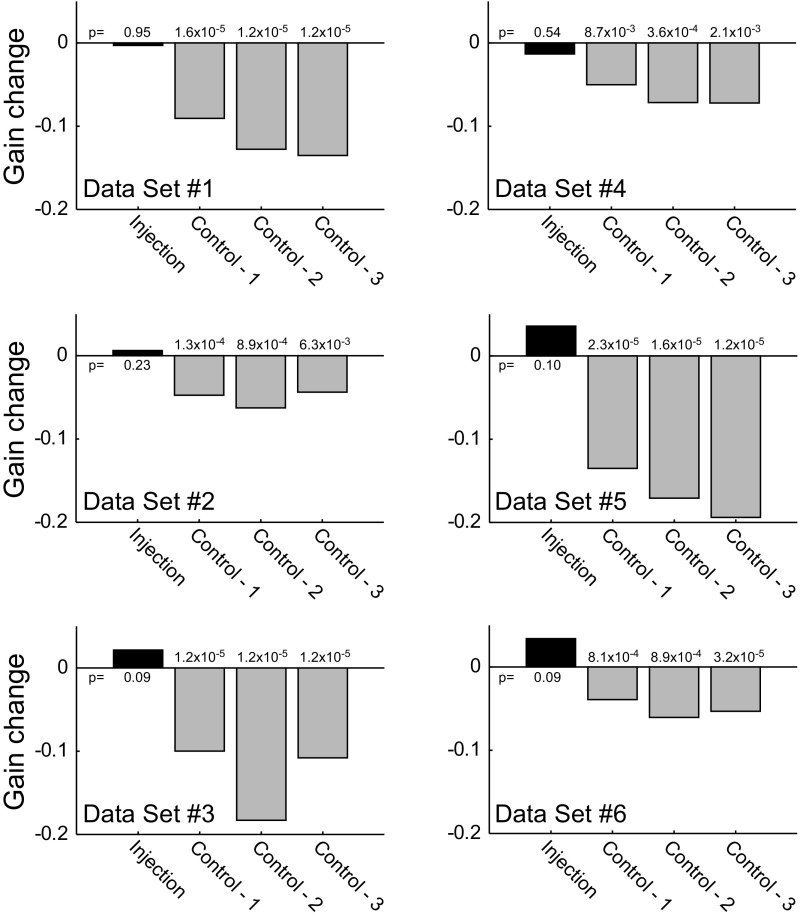
When movements become dysmetric, the resultant motor error induces a plastic change in the cerebellum to correct the movement, i.e., motor adaptation. Current evidence suggests that the error signal to the cerebellum is delivered by complex spikes originating in the inferior olive (IO). To prove a causal link between the IO error signal and motor adaptation, several studies blocked the IO, which, unfortunately, affected not only the adaptation but also the movement itself. We avoided this confound by inactivating the source of an error signal to the IO. Several studies implicate the superior colliculus (SC) as the source of the error signal to the IO for saccade adaptation. When we inactivated the SC, the metrics of the saccade to be adapted were unchanged, but saccade adaptation was impaired. Thus, an intact rostral SC is necessary for saccade adaptation. Our data provide experimental evidence for the cerebellar learning theory that requires an error signal to drive motor adaptation.
Keywords: cerebellum; error signal; motor learning; saccade; superior colliculus.
Copyright © 2018 the Author(s). Published by PNAS.
Conflict of interest statement
The authors declare no conflict of interest.
Figures

References
-
- Albus JS. A theory of cerebellar function. Math Biosci. 1971;10:25–61.
-
- Ito M. Bases and implications of learning in the cerebellum—Adaptive control and internal model mechanism. Prog Brain Res. 2005;148:95–109. - PubMed
-
- Demer JL, Robinson DA. Effects of reversible lesions and stimulation of olivocerebellar system on vestibuloocular reflex plasticity. J Neurophysiol. 1982;47:1084–1107. - PubMed
-
- de’Sperati C, Lopiano L, Montarolo PG. Lesions of the inferior olive do not affect long- or short-term habituation of the acoustic startle response in rats. Neurosci Lett. 1989;100:164–168. - PubMed
Publication types
MeSH terms
Substances
Grants and funding
LinkOut - more resources
Full Text Sources
Other Literature Sources
