


Perspectives on involvement in the peer-review process: surveys of patient and public reviewers at two journals
- PMID: 30185581
- PMCID: PMC6129098
- DOI: 10.1136/bmjopen-2018-023357
Perspectives on involvement in the peer-review process: surveys of patient and public reviewers at two journals
Abstract
Objective: In 2014/2015, The BMJ and Research Involvement and Engagement (RIE) became the first journals to routinely include patients and the public in the peer review process of journal articles. This survey explores the perspectives and early experiences of these reviewers.
Design: A cross-sectional survey.
Setting and participants: Patient and public reviewers for The BMJ and RIE who have been invited to review.
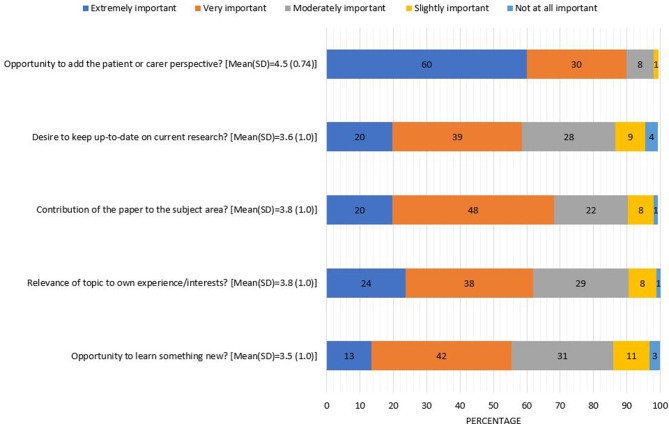
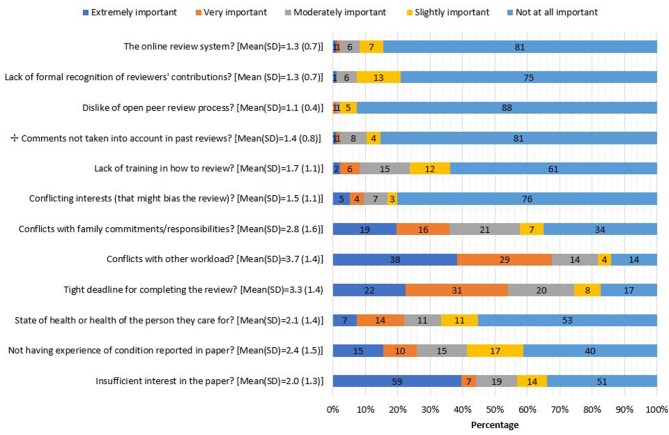
Results: The response rate was 69% (157/227) for those who had previously reviewed and 31% (67/217) for those who had not yet reviewed. Reviewers described being motivated to review by the opportunity to include the patient voice in the research process, influence the quality of the biomedical literature and ensure it meets the needs of patients. Of the 157 who had reviewed, 127 (81%) would recommend being a reviewer to other patients and carers. 144 (92%) thought more journals should adopt patient and public review. Few reviewers (16/224, 7%) reported concerns about doing open review. Annual acknowledgement on the journals' websites was welcomed as was free access to journal information. Participants were keen to have access to more online resources and training to improve their reviewing skills. Suggestions on how to improve the reviewing experience included: allowing more time to review; better and more frequent communication; a more user-friendly process; improving guidance on how to review including videos; improving the matching of papers to reviewers' experience; providing more varied sample reviews and brief feedback on the usefulness of reviews; developing a sense of community among reviewers; and publicising of the contribution that patient and public review brings.
Conclusions: Patient and public reviewers shared practical ideas to improve the reviewing experience and these will be reviewed to enhance the guidance and support given to them.
Keywords: patients, public, patient and public involvement; peer review.
© Author(s) (or their employer(s)) 2018. Re-use permitted under CC BY-NC. No commercial re-use. See rights and permissions. Published by BMJ.
Conflict of interest statement
Competing interests: SaS and TR are employed by The BMJ; AP is the patient editor (Research and Evaluation) at The BMJ; SoS and RS are the coeditors in chief of the Research Involvement and Engagement; AD and RRH are patient and public reviewers for The BMJ; JE is a patient research advocate and an editorial board member of Research Involvement and Engagement; EF is employed by BMC, part of Springer Nature, which publishes Research Involvement and Engagement. All authors support the call for greater public involvement in research.
Figures
References
-
- Wager E, Jefferson T. Shortcomings of peer review in biomedical journals. Learned Publishing 2001;14:257–63. 10.1087/095315101753141356 - DOI
-
- Jefferson T, Alderson P, Wager E, et al. Effects of editorial peer review: a systematic review. JAMA 2002;287:2784–6. - PubMed
-
- Nicholas D, Watkinson A, Jamali HR, et al. Peer review: still king in the digital age. Learned Publishing 2015;28:15–21. 10.1087/20150104 - DOI
MeSH terms
LinkOut - more resources
Full Text Sources
Other Literature Sources
