


The Coincidence of Newly Diagnosed Type 1 Diabetes Mellitus with IgM Antibody Positivity to Enteroviruses and Respiratory Tract Viruses
- PMID: 30186878
- PMCID: PMC6116462
- DOI: 10.1155/2018/8475341
The Coincidence of Newly Diagnosed Type 1 Diabetes Mellitus with IgM Antibody Positivity to Enteroviruses and Respiratory Tract Viruses
Abstract
Objective: Viruses trigger and promote islet cell destruction and cause type 1 diabetes mellitus (T1DM). However, the existence of a cause-and-effect relationship is under debate. The aim of this study is to investigate the sero-epidemiological and molecular evidence on enteroviruses and respiratory viruses in patients with newly diagnosed T1DM during the cold season.
Design: Forty children newly diagnosed with T1DM and 30 healthy children who presented to the clinic over the course of a year were included in the study. The IgM antibodies against enteroviruses and respiratory viruses were studied using the indirect immunofluorescence assay (IFA) test, and no CBV4-specific RNA was detected in the children. The onset times of T1DM were classified into fall-winter and spring-summer seasons and separated into cold, moderate, or warm months in terms of temperature.
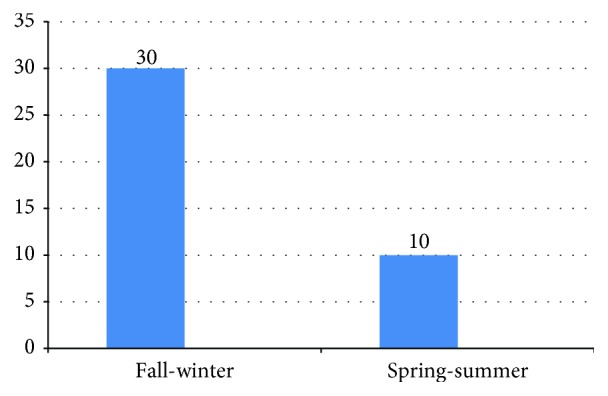
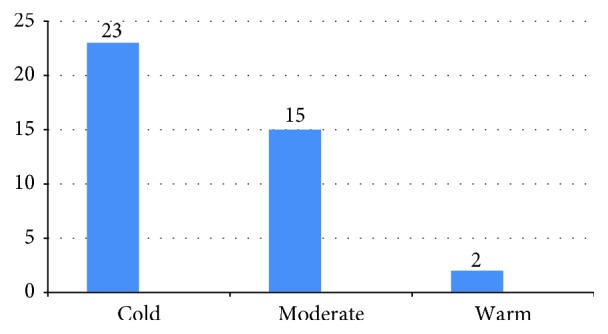
Results: The percentages of viral IgM antibodies against most common viruses were detected in the patients as follows: influenza B (IVB) (70%), echovirus 7 (ECHO7) (45%), parainfluenza virus 4 (PIV4) (40%), coxsackievirus A7 (CAV7) (27.5%), and H3N2 (22.5%). Compared with the control group, the above viruses had a significant association with T1DM (p ≤ 0.001, p ≤ 0.001, p = 0.035, p = 0.003, and p = 0.023, resp.). CBV4-specific RNA was not detected in any serum. A total of 75% and 95% patients were diagnosed with T1DM in the fall-winter seasons and cold-moderate months, respectively.
Conclusion: Our study demonstrates the significant association between T1DM and the presence of IgM antibodies against IVB, ECHO7, PIV4, CAV7, and H3N2, and the majority of newly diagnosed T1DM appeared in the fall-winter season. It suggests that enteroviruses and respiratory viruses, in addition to seasonal variation, could play a role in the etiopathogenesis and clinical onset of T1DM.
Figures
References
-
- Hober D., Sane F., Jaïdane H., Riedweg K., Goffard A., Desailloud R. Immunology in the clinic review series; focus on type 1 diabetes and viruses: role of antibodies enhancing the infection with coxsackievirus-B in the pathogenesis of type 1 diabetes. Clinical & Experimental Immunology. 2012;168(1):47–51. doi: 10.1111/j.1365-2249.2011.04559.x. - DOI - PMC - PubMed
-
- Valdés C., Unanue N., Hernández M., et al. Is there a link between influenza and type I diabetes? Increased incidence of TID during the pandemic H1N1 influenza of 2009 in Chile. Pediatric endocrinology reviews. 2013;11(2):161–166. - PubMed
MeSH terms
Substances
LinkOut - more resources
Full Text Sources
Other Literature Sources
Medical
