. 2018 Nov 1;315(5):L787-L798.
doi: 10.1152/ajplung.00009.2018. Epub 2018 Sep 6.

High molecular weight hyaluronan ameliorates allergic inflammation and airway hyperresponsiveness in the mouse

Affiliations

High molecular weight hyaluronan ameliorates allergic inflammation and airway hyperresponsiveness in the mouse

Collin G Johnson et al. Am J Physiol Lung Cell Mol Physiol. .

Abstract

Allergic asthma is a major cause of morbidity in both pediatric and adult patients. Recent research has highlighted the role of hyaluronan (HA), an extracellular matrix glycosaminoglycan, in asthma pathogenesis. Experimental allergic airway inflammation and clinical asthma are associated with an increase of shorter fragments of HA (sHA), which complex with inter-α-inhibitor heavy chains (HCs) and induce inflammation and airway hyperresponsiveness (AHR). Importantly, the effects of sHA can be antagonized by the physiological counterpart high molecular weight HA (HMWHA). We used a mouse model of house dust mite-induced allergic airway inflammation and demonstrated that instilled HMWHA ameliorated allergic airway inflammation and AHR, even when given after the establishment of allergic sensitization and after challenge exposures. Furthermore, instilled HMWHA reduced the development of HA-HC complexes and the activation of Rho-associated, coiled-coil containing protein kinase 2. We conclude that airway application of HMWHA is a potential treatment for allergic airway inflammation.

Keywords: airway hyperresponsiveness; allergic asthma; hyaluronan; inflammation; treatment.


Conflict of interest statement

No conflicts of interest, financial or otherwise, are declared by the authors.

Figures
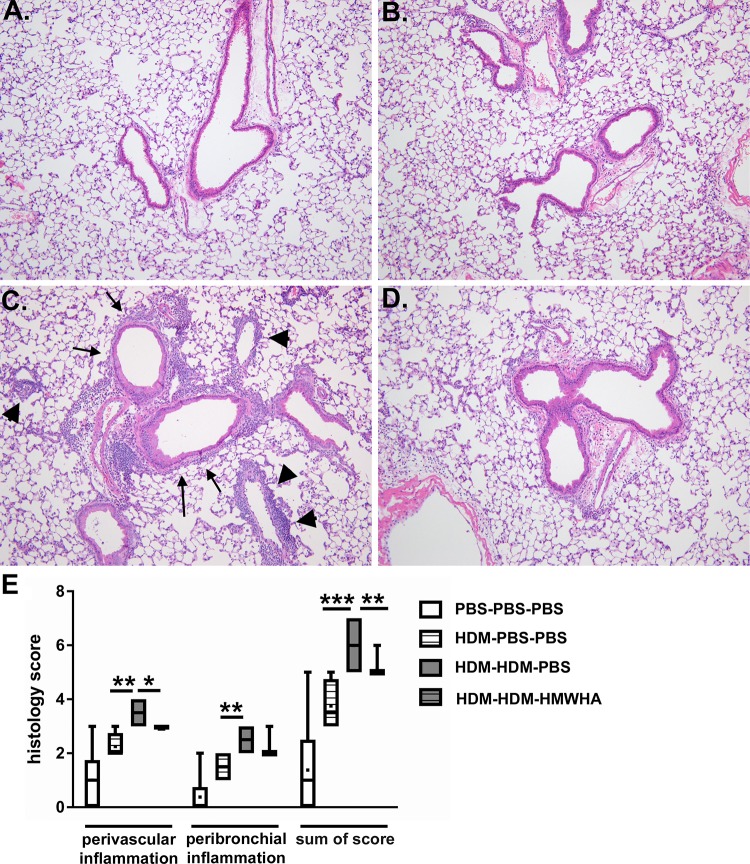
Fig. 1.
Fig. 1.
Histological inflammation after house dust mite (HDM) exposure. Sham-treated mice show no inflammation (A), and mice that were sensitized to HDM but not challenged have only mildly increased inflammation (B). HDM sensitization and exposure leads to significant perivascular (arrowheads) and peribronchial (arrows) cell infiltration (C), but treatment with high molecular weight hyaluronan (HMWHA) after HDM exposure reduces this infiltration (D). E: semiquantitative assessment of the perivascular and peribronchial inflammation confirms a significant decrease of inflammation in the HDM-HDM-HMWHA group compared with HDM-HDM-PBS. All groups have significantly increased scores compared with the PBS-PBS-PBS group (associations not depicted to avoid crowding). n = 8 mice per group. *P < 0.05, **P < 0.01, and ***P < 0.001; ANOVA with Holm-Sidak multiple comparison adjustment.
Fig. 2.
Fig. 2.
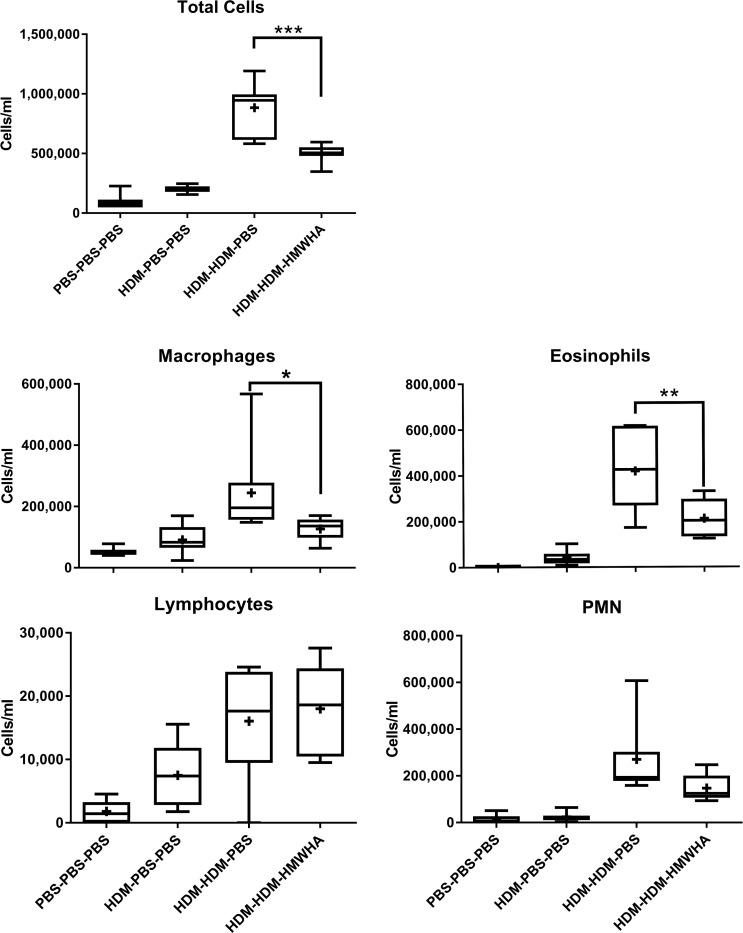
Cellular inflammation in whole lung lavage fluid. Treatment with high molecular weight hyaluronan (HMWHA) significantly reduces cell influx into the airway compartment. HMWHA reduces eosinophils and macrophages significantly, whereas there is a nonsignificant trend for the reduction of polymorphonuclear cells. There is no obvious effect on lymphocyte influx into the airway compartment. n = 8 mice per group. *P < 0.05, **P < 0.01, and ***P < 0.001; ANOVA with Tukey’s multiple comparison adjustment. PMN, polymorphonuclear neutrophils.
Fig. 3.
Fig. 3.
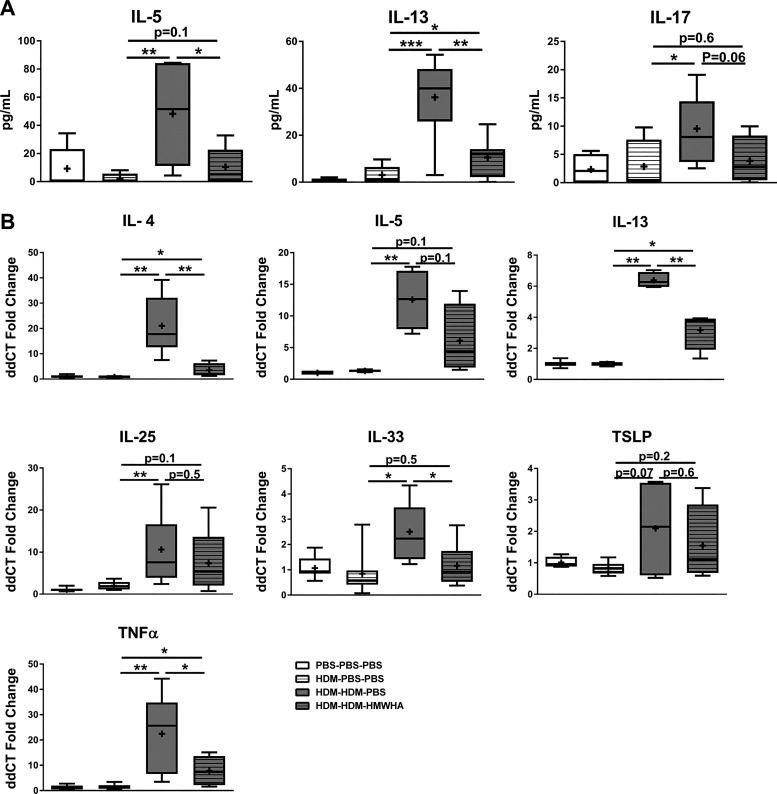
Proinflammatory cytokines are reduced after high molecular weight hyaluronan (HMWHA) treatment in house dust mite (HDM)-sensitized/exposed mice. There are significant reductions in lung lavage proteins (A) and lung tissue gene expression assayed by real-time RT-PCR (B). n = 8 mice per group. *P < 0.05, **P < 0.01, and ***P < 0.001; ANOVA with Tukey’s multiple comparison adjustment.
Fig. 4.
Fig. 4.
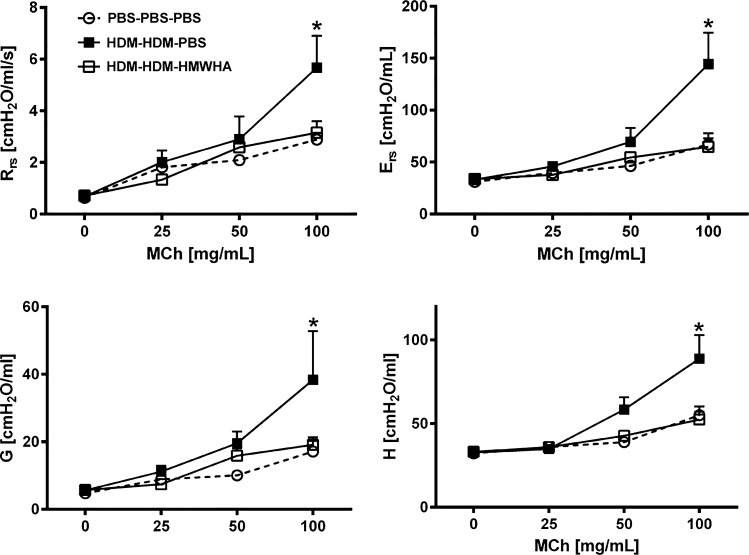
Inflammatory airway hyperresponsiveness is reduced after treatment with high molecular weight hyaluronan (HMWHA). HMWHA leads to total lung resistance (Rrs) and elastance (Ers) values that are as low as those of sham-treated mice. The difference is driven by reductions in peripheral tissue resistance (G) and elastance (H). n = 8 mice per group. *P < 0.05; ANOVA with Tukey’s multiple comparison adjustment. MCh, methacholine.
Fig. 5.
Fig. 5.
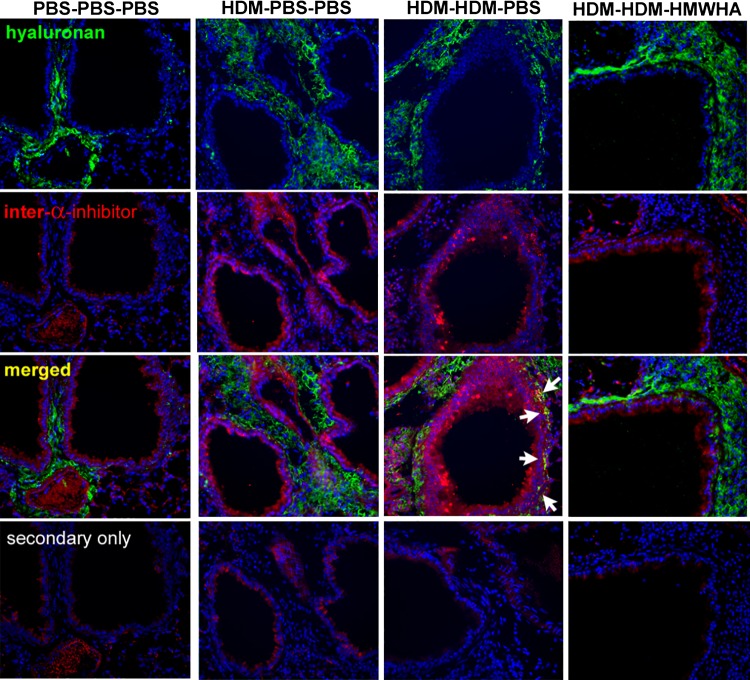
Immunohistochemistry staining for hyaluronan (HA) and inter-α-inhibitor increased peribronchial deposition of HA-heavy chain complexes after house dust mite (HDM) sensitization and exposure (arrows), which is reduced after high molecular weight HA (HMWHA) treatment. Note that peribronchial HA deposition is still present.
Fig. 6.
Fig. 6.
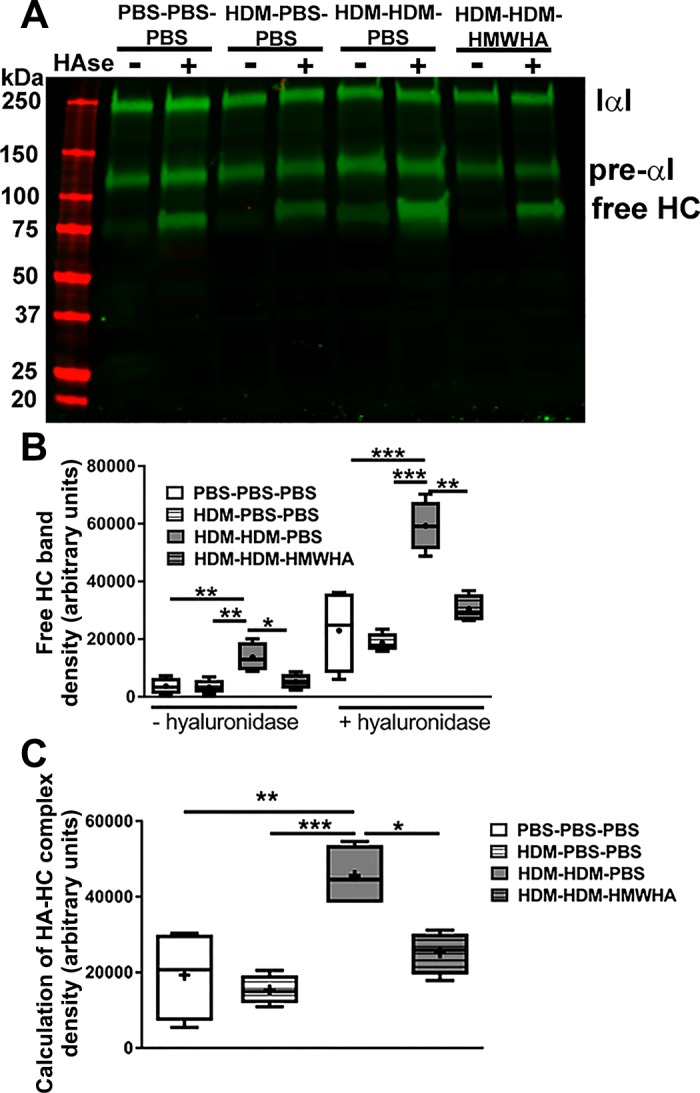
High molecular weight hyaluronan (HMWHA) reduces HA-heavy chain (HC) complexes after HDM exposure. A: semiquantitative assessment of HA-HC abundance by detection of free HC after treatment with Streptomyces hyaluronidase. HCs previously bound to HA (which cannot enter the gel because of HA size) are now detectable as free HC. Note the presence of free HC before hyaluronidase treatment in tissue of mice sensitized and exposed to house dust mites (HDMs). HMW treatment of these mice leads to a reduction in free HCs. B: densitometry demonstrates a reduction in free HCs in HMWHA-treated mice, before and after hyaluronidase treatment. C: calculation of HA-HC complexes in each sample was done by subtracting the density values of the [−hyaluronidase] free HC in B from the density values of the [+hyaluronidase] free HC in B. These calculations show that HA-HC complexes are reduced in HMWHA-treated mice. n = 4 mice per group. *P < 0.05, **P < 0.01, and ***P < 0.001; ANOVA with Tukey’s multiple comparison adjustment.
Fig. 7.
Fig. 7.
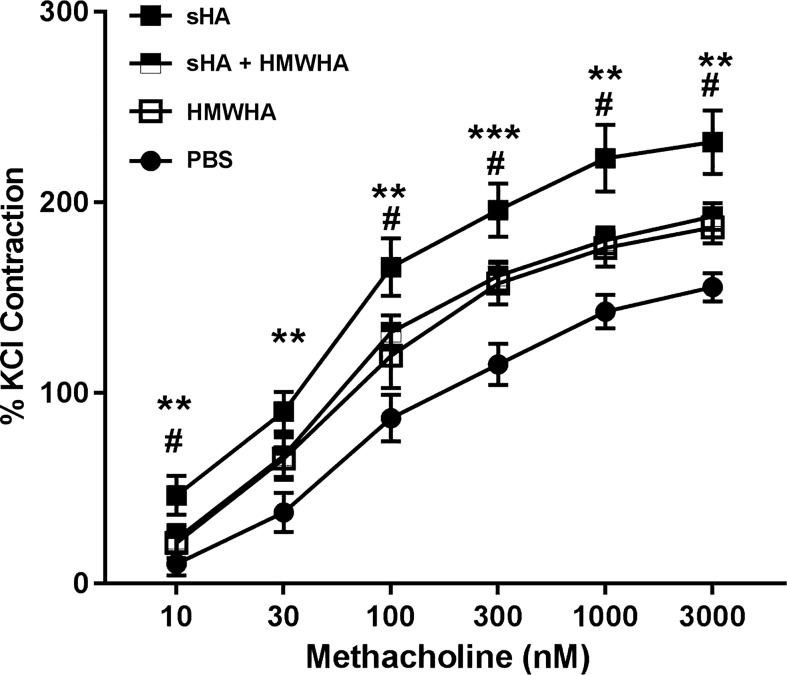
Shorter fragments of hyaluronan (sHA)-induced airway hyperresponsiveness in airway smooth muscle (tracheal ring assay) is ameliorated by high molecular weight HA (HMWHA). n = 8–12 tracheal rings per group. **P < 0.01; ***P < 0.001, sHA compared with HMWHA or PBS; and #P < 0.05, sHA compared with sHA + HMWHA. ANOVA with Holm-Sidak multiple comparison adjustment.
Fig. 8.
Fig. 8.
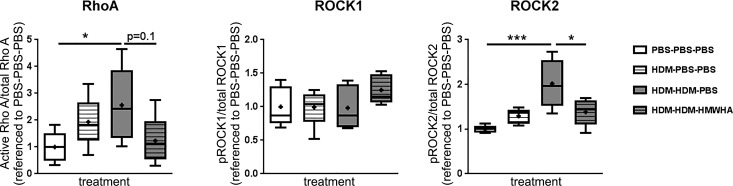
High molecular weight hyaluronan (HMWHA) treatment ameliorates Rho-associated, coiled-coil containing protein kinase (ROCK)2 activation in vivo. Quantitation of RhoA, ROCK1, and ROCK2 activation in whole lung lysates shows an increase of RhoA activation with house dust mite (HDM) treatment, which is partly ameliorated by HMWHA. ROCK1 is not affected by HDM or HMWHA treatment. In contrast, ROCK2 is significantly increased by HDM, and HMWHA significantly reduces this change. n = 5 mice per condition. *P < 0.05 and ***P < 0.001; ANOVA with Dunnett’s multiple comparison adjustment.
Fig. 9.
Fig. 9.
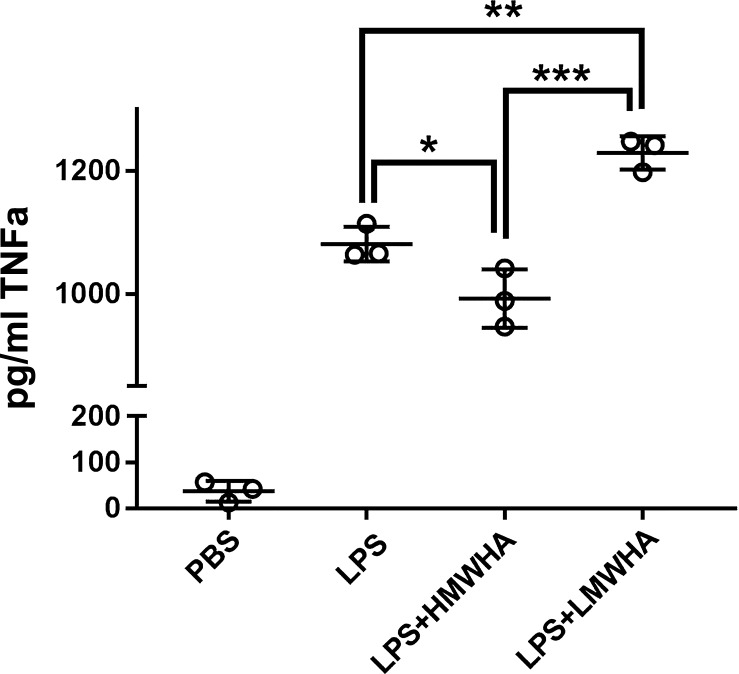
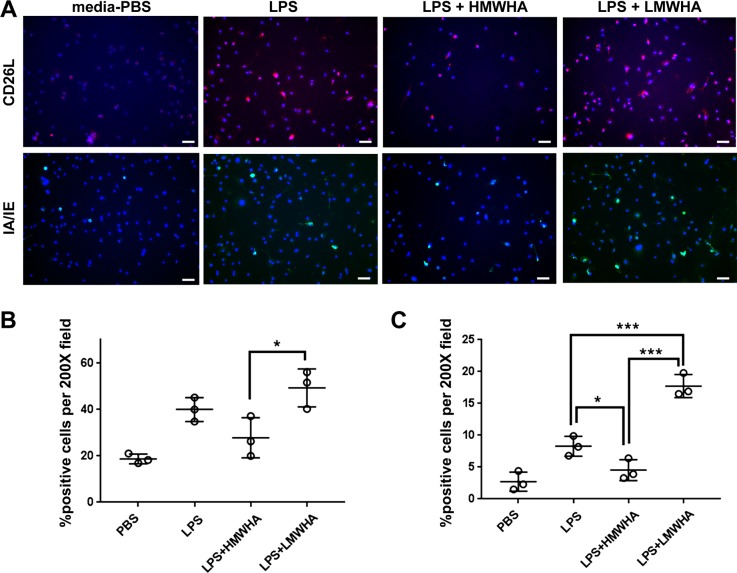
Low molecular weight hyaluronan (LMWHA) promotes, whereas high MWHA (HMWHA) inhibits, dendritic cell expression of TNFα after LPS exposure. n = 3 wells per experimental condition. * P < 0.05, **P < 0.01, and ***P < 0.001; ANOVA with Holm-Sidak multiple comparison adjustment.
Fig. 10.
Fig. 10.
Low molecular weight hyaluronan (LMWHA) promotes, whereas high MWHA (HMWHA) inhibits, dendritic cell expression of surface activation markers after LPS exposure. A: representative images from 3 wells per experimental condition. ×200 magnification. Scale bar = 50 µm length. B: quantification of CD26L-positive cells from 3 wells per experimental condition. C: quantification of IA/IE-positive cells from 3 wells per experimental condition. *P < 0.01 and ***P < 0.001; ANOVA with Holm-Sidak multiple comparison adjustment.

References

    1. Adair JE, Stober V, Sobhany M, Zhuo L, Roberts JD, Negishi M, Kimata K, Garantziotis S. Inter-alpha-trypsin inhibitor promotes bronchial epithelial repair after injury through vitronectin binding. J Biol Chem 284: 16922–16930, 2009. doi:10.1074/jbc.M808560200. - DOI - PMC - PubMed
    1. Akinbami LJ, Moorman JE, Bailey C, Zahran HS, King M, Johnson CA, Liu X. Trends in asthma prevalence, health care use, and mortality in the United States, 2001-2010. NCHS Data Brief 94: 1–8, 2012. - PubMed
    1. Akinbami LJ, Moorman JE, Liu X. Asthma prevalence, health care use, and mortality: United States, 2005-2009. Natl Health Stat Report 32: 1–14, 2011. - PubMed
    1. Allegra L, Abraham WM, Fasano V, Petrigni G. Methacholine challenge in asthmatics is protected by aerosolised hyaluronan at high (1,000 kDa) but not low (300 kDa) molecular weight. G Ital Mal Torace 62: 297–301, 2008.
    1. Allegra L, Della Patrona S, Petrigni G. Hyaluronic acid: perspectives in lung diseases. Handb Exp Pharmacol 207: 385–401, 2012. doi:10.1007/978-3-642-23056-1_17. - DOI - PubMed

Publication types

LinkOut - more resources