


Randomized controlled trial of a brief cognitive-behavioral strategies intervention for the pain, fatigue, and sleep disturbance symptom cluster in advanced cancer
- PMID: 30189462
- PMCID: PMC6279506
- DOI: 10.1002/pon.4883
Randomized controlled trial of a brief cognitive-behavioral strategies intervention for the pain, fatigue, and sleep disturbance symptom cluster in advanced cancer
Abstract
Objective: Patients receiving treatment for advanced cancer suffer significant symptom burden, including co-occurring pain, fatigue, and sleep disturbance. There is limited evidence for effective interventions targeting this common symptom cluster.
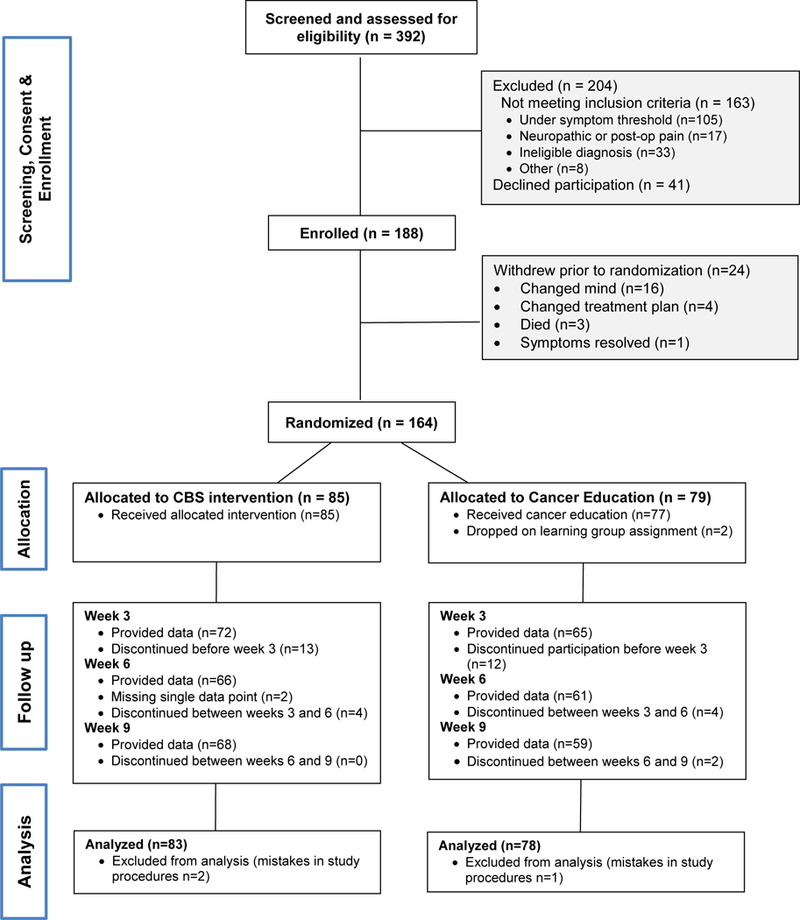
Methods: A randomized controlled trial of a brief cognitive-behavioral strategies (CBS) intervention was conducted. A sample of 164 patients with advanced cancer receiving chemotherapy practiced imagery, relaxation, and distraction exercises or listened to cancer education recordings (attention-control) to manage co-occurring pain, fatigue, and sleep disturbance over a 9-week period. Symptom cluster severity, distress, and interference with daily life were measured at baseline and 3, 6, and 9 weeks. We also evaluated the moderating influence of imaging ability and number of concurrent symptoms, and mediating effects of changes in stress, anxiety, outcome expectancy, and perceived control over symptoms.
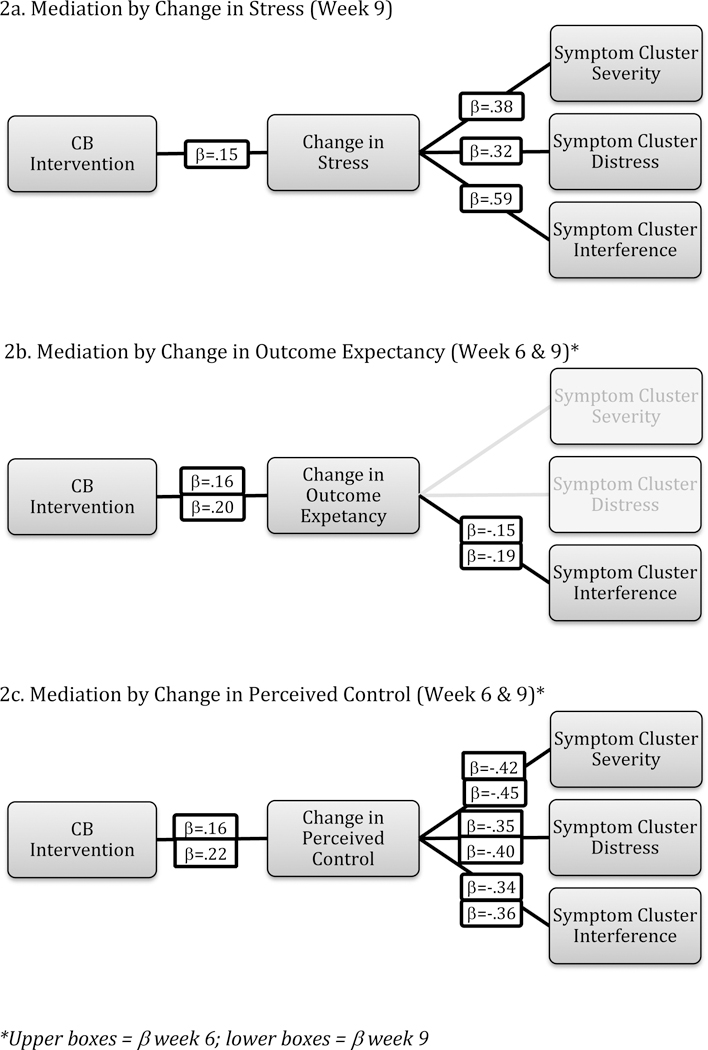
Results: Compared with the cancer education condition, participants receiving the CBS intervention reported less symptom cluster distress at week 6 (M = 1.82 vs 2.15 on a 0-4 scale, P < .05). No other group differences were statistically significant. The number of concurrent symptoms moderated the intervention effect on symptom cluster interference. Changes in stress, outcome expectancy, and perceived control mediated the extent of intervention effects on symptom outcomes, primarily at weeks 6 and 9.
Conclusions: The brief CBS intervention had limited effects in this trial. However, findings regarding potential mediators affirm hypothesized mechanisms and provide insight into ways to strengthen future interventions to reduce the suffering associated with co-occurring pain, fatigue, and sleep disturbance.
Keywords: cancer; fatigue; imagery; oncology; pain; relaxation; sleep; symptom cluster.
© 2018 John Wiley & Sons, Ltd.
Conflict of interest statement
The authors have no conflicts of interest to declare.
Figures
References
-
- Kirkova J, Walsh D, Rybicki L, Davis MP, Aktas A, Jin T, et al. Symptom severity and distress in advanced cancer. Pall Med, 2010. April; 24(3):330–339. - PubMed
-
- Beck SL, Dudley WN, Barsevick A. Pain, sleep disturbance, and fatigue in patients with cancer: Using a mediation model to test a symptom cluster. Oncol Nurs Forum 2005. May 10;32(3):E48–55. - PubMed
-
- Cheng KKF, Lee DTF. Effects of pain, fatigue, insomnia, and mood disturbance on functional status and quality of life of elderly patients with cancer. Crit Rev Oncol Hematol 2011. May;78(2):127–137. - PubMed
-
- Dodd MJ, Miaskowski C, Paul SM. Symptom clusters and their effect on the functional status of patients with cancer. Oncol Nurs Forum 2001. April;28(3):465–470. - PubMed
Publication types
MeSH terms
Grants and funding
LinkOut - more resources
Full Text Sources
Other Literature Sources
Medical
