


Push-Out Bond Strength and SEM Evaluation in Roots Filled with Two Different Techniques Using New and Conventional Sealers
- PMID: 30189631
- PMCID: PMC6163187
- DOI: 10.3390/ma11091620
Push-Out Bond Strength and SEM Evaluation in Roots Filled with Two Different Techniques Using New and Conventional Sealers
Abstract
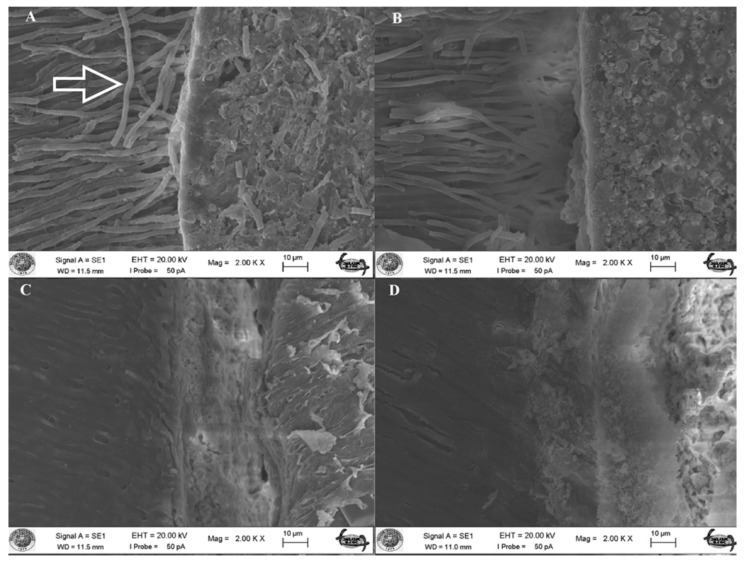
The aim of this study was to evaluate the influence of calcium-silicate-based sealer (Endosequence-BC-Sealer) in roots, filled with thermo-plasticized injectable technique aided by Calamus-Flow-Delivery-System, on bond strength to radicular dentin, in comparison with conventional epoxy-resin-based sealer (AH-Plus) along with cold-lateral-compaction technique. Root canals of mandibular-premolar teeth (n = 80) were instrumented using Protaper Universal rotary files and were randomly divided into four experimental groups (n = 20) as follows: (1) AH-Plus + cold-lateral-compaction technique; (2) Endosequence-BC-Sealer + cold-lateral-compaction technique; (3) AH-Plus + thermo-plasticized injectable technique; and (4) Endosequence-BC-Sealer + thermo-plasticized injectable technique. Horizontal disc shaped samples from each group (n = 60/group) were obtained and push-out bond strength testing was performed at a cross-head speed of 0.5 mm/min. Data were analyzed statistically using nonparametric Kruskal-Wallis analysis and Mann-Whitney test (p < 0.001). The statistical analysis revealed a significant difference amongst the groups (p < 0.001). The highest bond strength values were found in group 1 compared with all the other experimental groups (p < 0.001), whereas the lowest bond strength values were found in group 4 (p < 0.001). It was concluded that thermo-plasticized injectable technique with Calamus-Flow-Delivery-System lowered the bond strengths of the sealers, especially Endosequence-BC-Sealer. Therefore, this technique is not recommended to calcium-silicate-based sealers. Further studies are needed to confirm the findings of this study.
Keywords: Calamus Flow Delivery System; Endosequence-BC-Sealer; bond strength; obturation materials; push-out test.
Conflict of interest statement
The authors declare no conflict of interest.
Figures
References
Grants and funding
LinkOut - more resources
Full Text Sources
Other Literature Sources
