


Exercise-Induced Oxidative Stress and the Effects of Antioxidant Intake from a Physiological Viewpoint
- PMID: 30189660
- PMCID: PMC6162669
- DOI: 10.3390/antiox7090119
Exercise-Induced Oxidative Stress and the Effects of Antioxidant Intake from a Physiological Viewpoint
Abstract
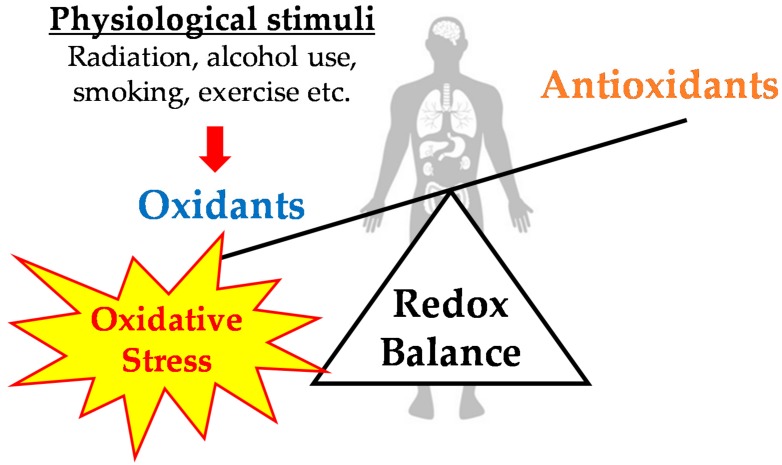
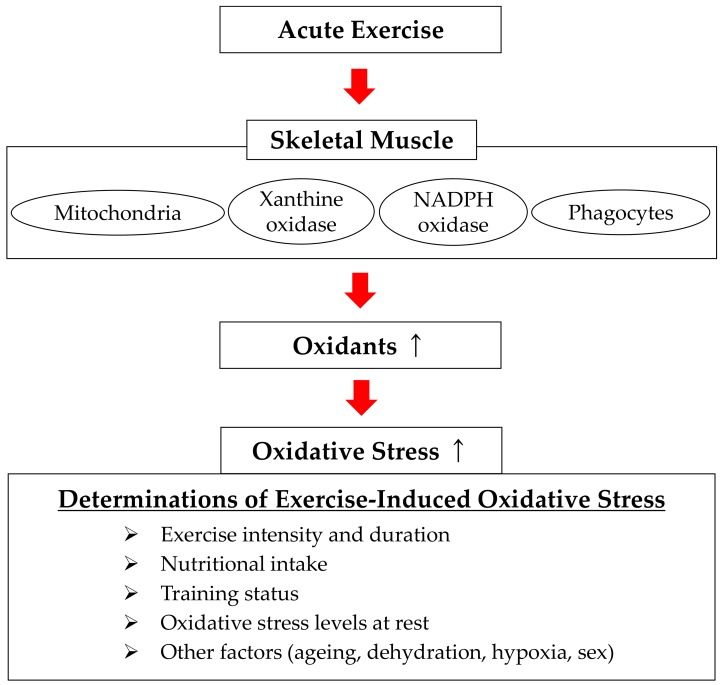
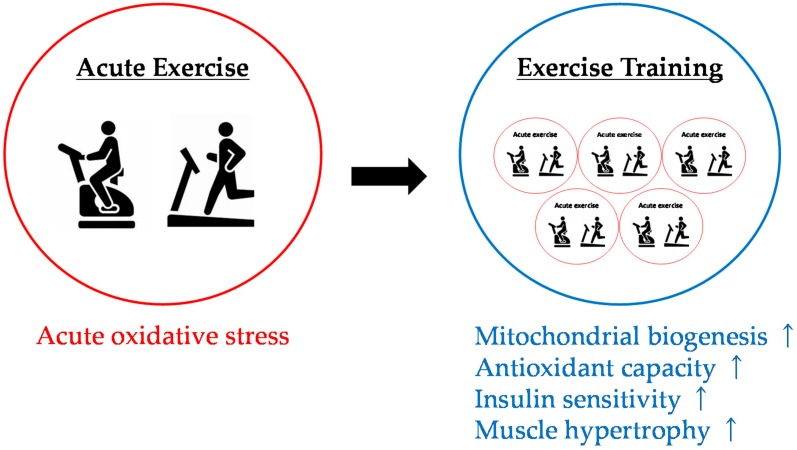
It is well established that the increase in reactive oxygen species (ROS) and free radicals production during exercise has both positive and negative physiological effects. Among them, the present review focuses on oxidative stress caused by acute exercise, mainly on evidence in healthy individuals. This review also summarizes findings on the determinants of exercise-induced oxidative stress and sources of free radical production. Moreover, we outline the effects of antioxidant supplementation on exercise-induced oxidative stress, which have been studied extensively. Finally, the following review briefly summarizes future tasks in the field of redox biology of exercise. In principle, this review covers findings for the whole body, and describes human trials and animal experiments separately.
Keywords: animal experiments; antioxidants; exercise performance; exercise-induced oxidative stress; free radicals; human trials; muscle damage; reactive oxygen species.
Conflict of interest statement
The authors declare no conflict of interest.
Figures
References
-
- Halliwell B., Gutteridge J.M.C. Free Radicals in Biology & Medicine. 5th ed. Oxford University Press; New York, NY, USA: 2007.
-
- Wyard S.J. Electron Spin Resonance Spectroscopy of Animal Tissues. Proc. Roy. Soc. A. 1968;302:355–360. doi: 10.1098/rspa.1968.0021. - DOI
-
- Morrow J.D., Awad J.A., Kato T., Takahashi K., Badr K.F., Roberts L.J., 2nd, Burk R.F. Formation of Novel Non-cyclooxygenase-Derived Prostanoids (F2-Isoprostanes) in Carbon Tetrachloride Hepatotoxicity. An Animal Model of Lipid Peroxidation. J. Clin. Investig. 1992;90:2502–2507. doi: 10.1172/JCI116143. - DOI - PMC - PubMed
Publication types
LinkOut - more resources
Full Text Sources
Other Literature Sources
