


Evaluation of Two Types of Drug Treatment with QEEG in Children with ADHD
- PMID: 30191077
- PMCID: PMC6124153
- DOI: 10.1515/tnsci-2018-0017
Evaluation of Two Types of Drug Treatment with QEEG in Children with ADHD
Abstract
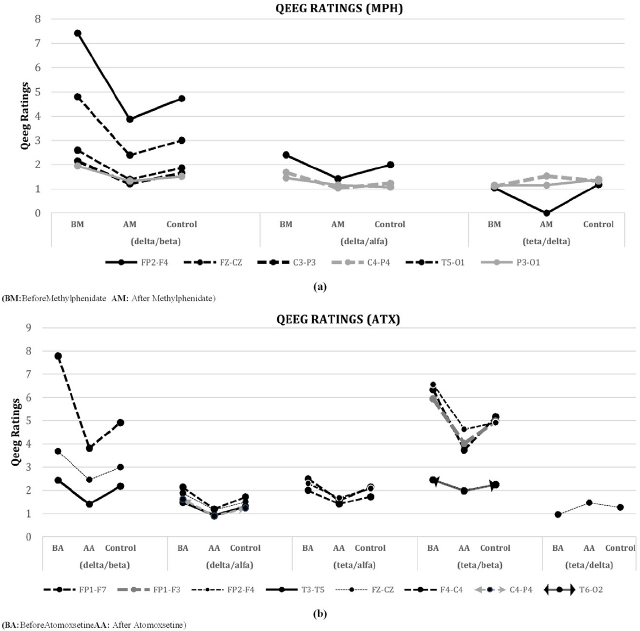
Aims: The aim of this study is to evalute the effects of methylphenidate and atomoxetine treatments on electroencephalography (EEG) signals in volunteer children diagnosed with Attention Deficit and Hyperactivity Disorder(ADHD).
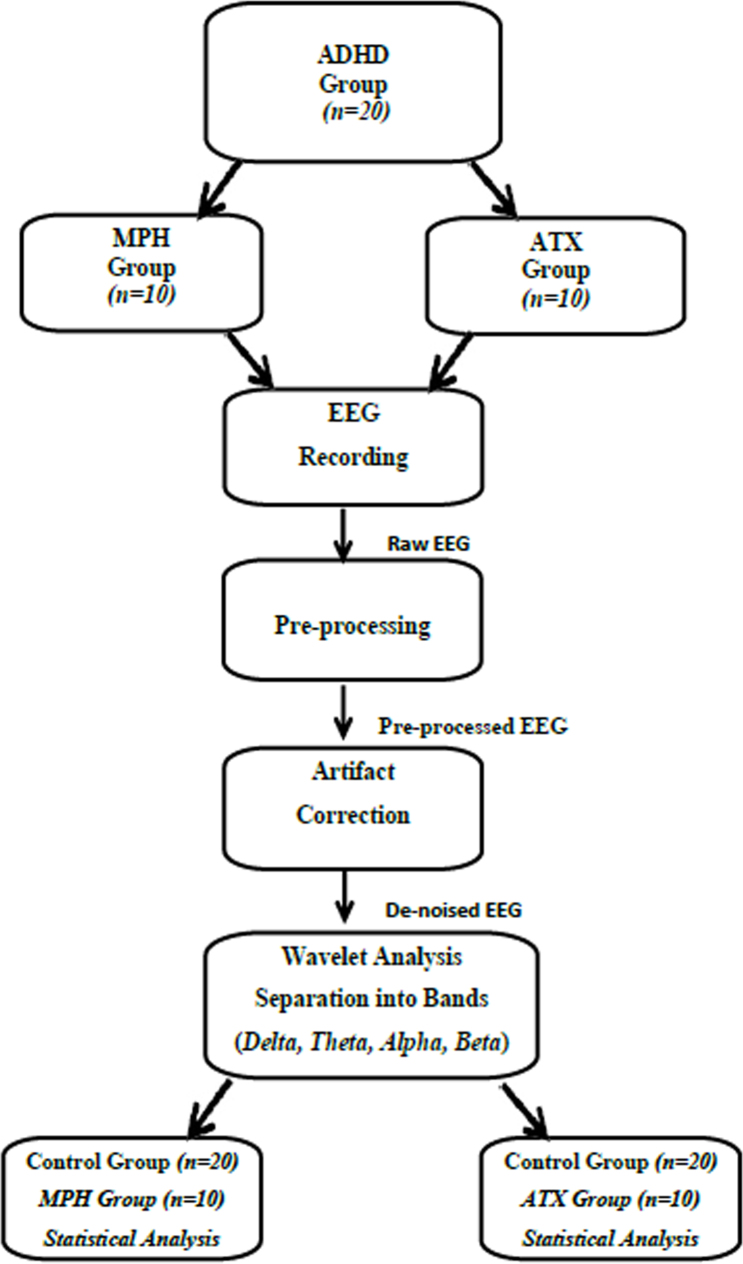
Methods: The study contained 40 children all of whom were between the ages of 7 and 17. The participants were classified into two groups as ADHD (n=20), which was in itself divided into two groups as ADHD-MPH (ADHD- Metylphenidate treatment) (n=10) and as ADHD-ATX (ADHD-Atomoxetin treatment) (n=10), and one control group (n=20). Following the first EEG recordings of the ADHD group, long-acting methylphenidate dose was applied to one ADHD group and atomoxetine dose was applied to the other ADHD group. The effect of optimal dosage is about for 4-6 weeks in general. Therefore, the response or lack of response to the treatment was evaluated three months after the beginning of the treatment.After methylphenidate and atomoxetine drug treatment, in order to obtain mean and maximum power values for delta, theta, alpha and beta band, the EEG data were analyzed.
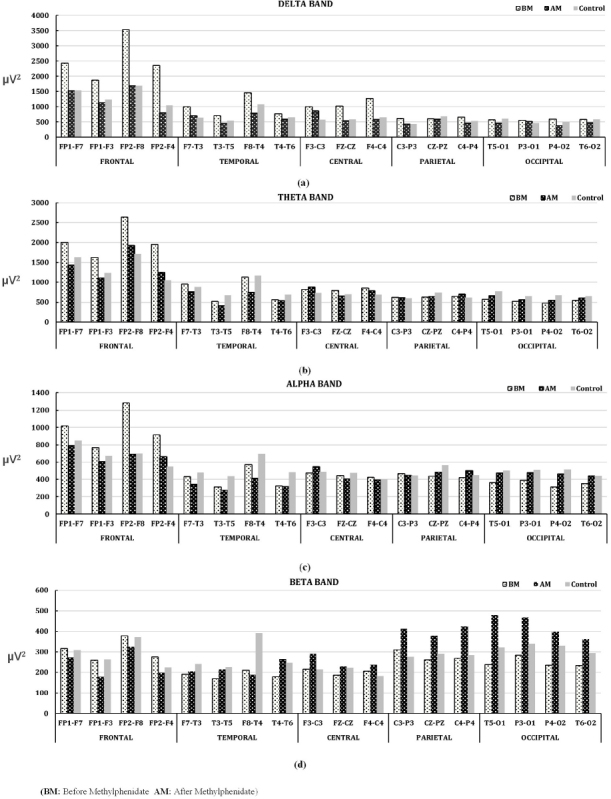
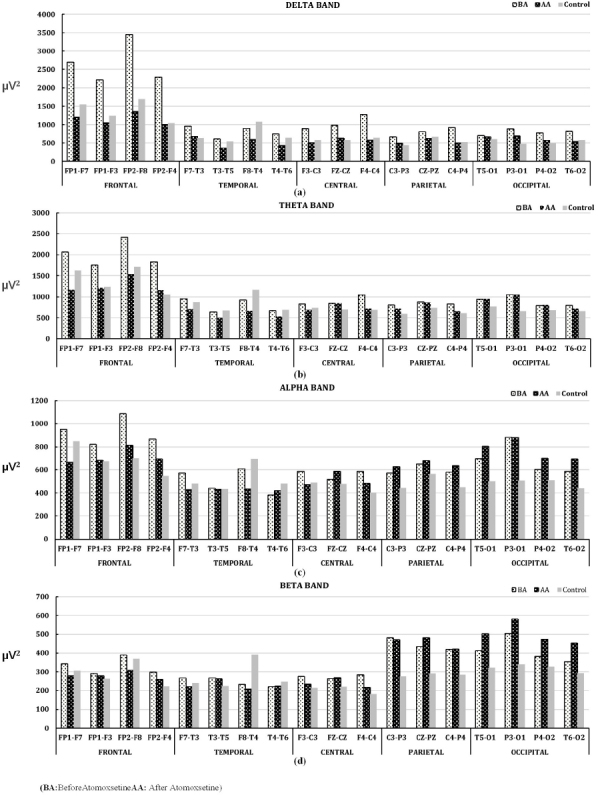
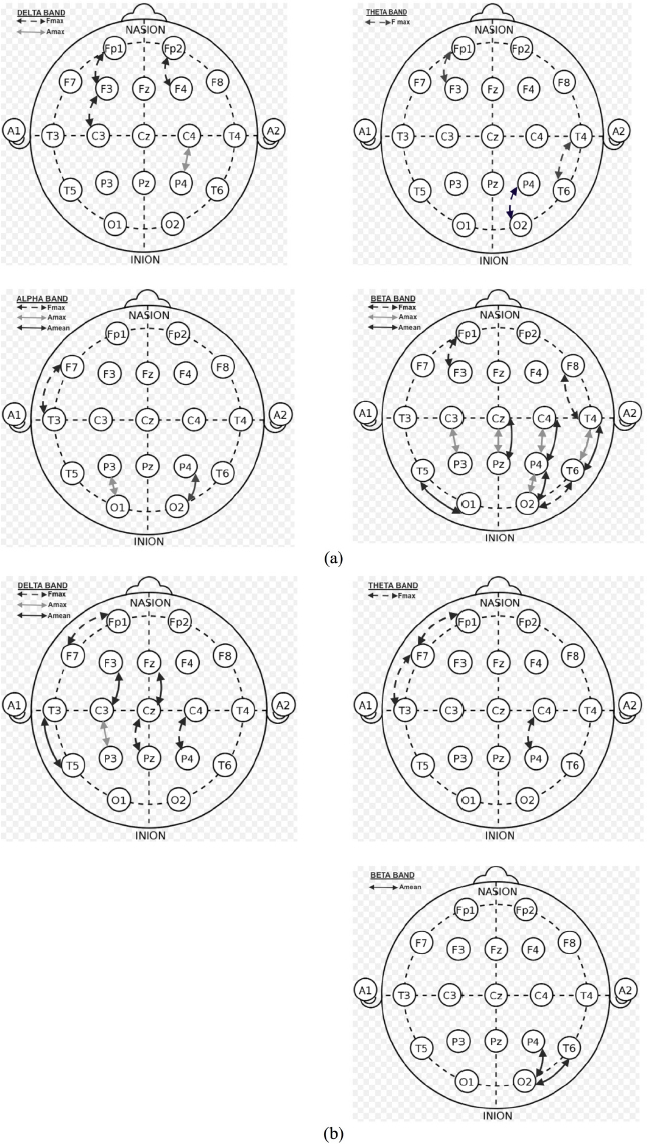
Results: The EEG power spectrum densities in all the bands yielded similar findings in both methylphenidate and atomoxetine. Although statistically significant frequency values of the electrodes were amplitude and maximally varied, in general, they appeared mostly at both frontal and temporal regions for methylphenidate and atomoxetine.
Conclusion: Especially, after atomoxetine treatment, Quantitative Electroencephalography (QEEG) rates at frontal area electrodes were found statistically more significant than methylphenidate QEEG rates. What has been researched in this study is not only whether QEEG is likely to support the diagnosis, but whether changes on QEEG by treatment may be related to the severity of ADHD as well.
Keywords: Attention-deficit hyperactivity disorder (ADHD); QEEG; drug treatment; non-stimulants; stimulants.
Figures
References
-
- Barry R.J., Clarke A.R., Hajos M., McCarthy R., Selikowitz M., Bruggemann J.M.. Acute atomoxetine effects on the EEG of children with attention-deficit/hyperactivity disorder. Neuropharmacology. 2009;57:702–70. - PubMed
-
- Barkley R. Attention-Deficit/Hyperactivity Disorder. The Guilford Press; New York: 2006. p. 770pp. A hand- book for diagnosis and treatment.
-
- Ercan E.S., Akyol Ardic U., Kabukcu Basay B., Ercan E., Basay O.. Atomoxetine response in the inattentive and combined subtypes of attention deficit hyperactivity disorder: a retrospective chart review. Atten Defic Hyperact Disord. 2013;5:377–38. - PubMed
-
- Sun L., Wang Y.F., He H., Chen J.. [Changes of the alpha competitive structure after administration of single dose methylphenidate in different subtypes of attention deficit hyperactivity disorder boys] Beijing Da Xue Xue Bao. 2007;39:289–29. - PubMed
LinkOut - more resources
Full Text Sources
Other Literature Sources