


Prevalence and correlates of obstructive sleep apnea among African Americans: the Jackson Heart Sleep Study
- PMID: 30192958
- PMCID: PMC6187109
- DOI: 10.1093/sleep/zsy154
Prevalence and correlates of obstructive sleep apnea among African Americans: the Jackson Heart Sleep Study
Abstract
Study objectives: African Americans have been under-represented in obstructive sleep apnea (OSA) research. This study determined the prevalence and correlates of OSA overall and by sex among African Americans in the Jackson Heart Sleep Study.
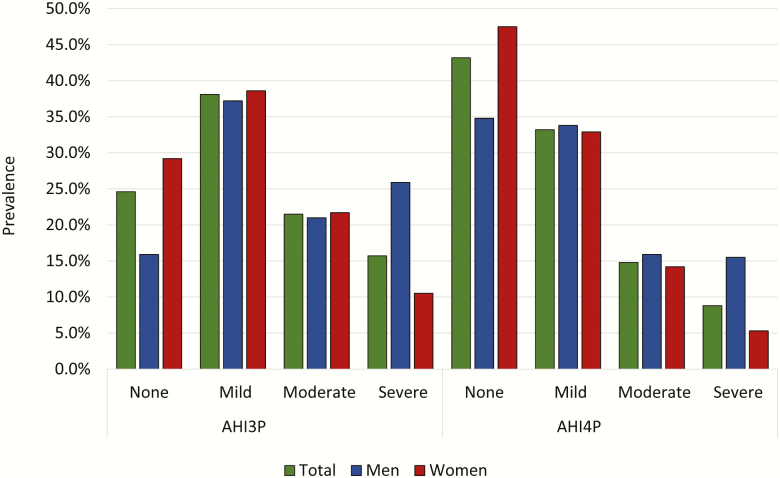
Methods: Participants (N = 852) underwent a type 3 in-home sleep apnea study, 7 day wrist actigraphy and completed standardized measurements and questionnaires. OSA was defined as an apnea-hypopnea index (AHI) of ≥15, where hypopneas were defined as ≥ 4% associated desaturation. Physician diagnosis of OSA was self-reported. Logistic regression models were fit to determine the associations of demographics, socioeconomic status, sleep symptoms, actigraphy-based sleep, body mass index (BMI), and comorbidities with OSA.
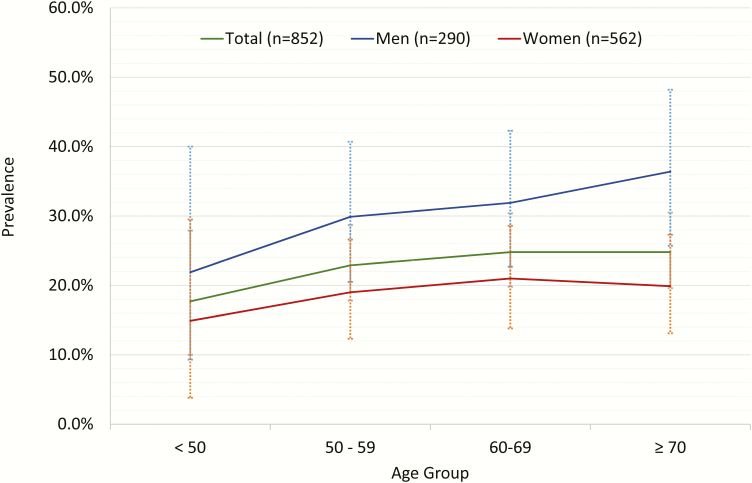
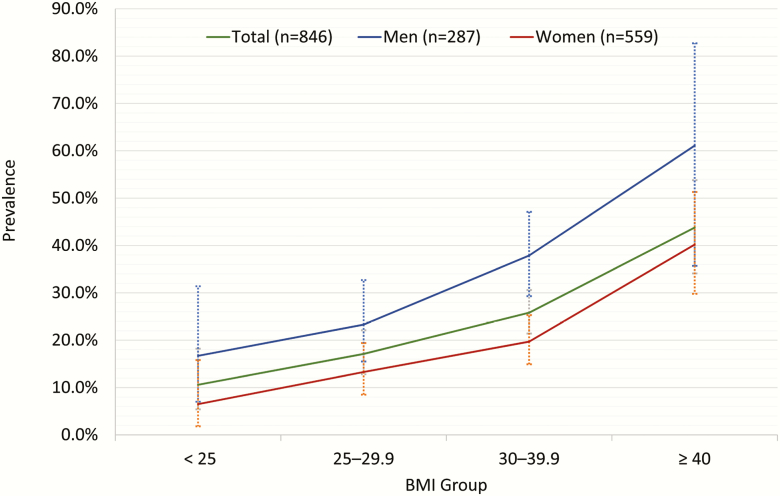
Results: Average age was 63.1 (standard deviation = 10.7), 66% were female, and mean BMI was 32.0 (6.9) kg/m2. Approximately 24% had an AHI ≥ 15; of those, 5% had a physician diagnosis of OSA. Prevalence of OSA increased across BMI categories, but not age groups. Men had a 12% higher prevalence of OSA compared with women, p < 0.01. Older age, male sex, higher BMI, larger neck circumference, and report of habitual snoring were independently associated with higher odds of OSA, all p < 0.05. Associations between sleep symptoms and OSA were similar for men and women. Sleepiness and waist circumference were not associated with OSA.
Conclusions: There was a high prevalence of objectively measured but undiagnosed OSA in this sample of African Americans. Snoring, BMI, and neck circumference were important markers of OSA for men and women. Our results suggest that screening tools that incorporate information on sleepiness and waist circumference may be suboptimal in this population.
Figures
References
-
- Rosen RC, et al. Low rates of recognition of sleep disorders in primary care: comparison of a community-based versus clinical academic setting. Sleep Med. 2001;2(1):47–55. - PubMed
-
- Altevogt BM, et al. (eds). Sleep Disorders and Sleep Deprivation: An Unmet Public Health Problem. Washington, DC: National Academies Press; 2006. - PubMed
Publication types
MeSH terms
Grants and funding
- HHSN268201300049C/HL/NHLBI NIH HHS/United States
- HHSN268201300047C/HL/NHLBI NIH HHS/United States
- K01 HL138211/HL/NHLBI NIH HHS/United States
- K01 HL138211/HL/NHLBI NIH HHS/United States
- HHSN268201300048C/HL/NHLBI NIH HHS/United States
- R35 HL135818/HL/NHLBI NIH HHS/United States
- HHSN268201300050C/HL/NHLBI NIH HHS/United States
- HHSN268201300048C/HL/NHLBI NIH HHS/United States
- R01 HL110068/HL/NHLBI NIH HHS/United States
- HHSN268201300046C/HL/NHLBI NIH HHS/United States
- UL1 TR001102/TR/NCATS NIH HHS/United States
- U54 GM115428/GM/NIGMS NIH HHS/United States
- HHSN268201300047C/HL/NHLBI NIH HHS/United States
- HHSN268201300050C/HL/NHLBI NIH HHS/United States
- T32 HL007901/HL/NHLBI NIH HHS/United States
- UL1 TR001102/TR/NCATS NIH HHS/United States
LinkOut - more resources
Full Text Sources
Other Literature Sources
