


Follistatin supplementation during in vitro embryo culture improves developmental competence of bovine embryos produced using sex-sorted semen
- PMID: 30196810
- PMCID: PMC7747478
- DOI: 10.1016/j.repbio.2018.06.004
Follistatin supplementation during in vitro embryo culture improves developmental competence of bovine embryos produced using sex-sorted semen
Abstract
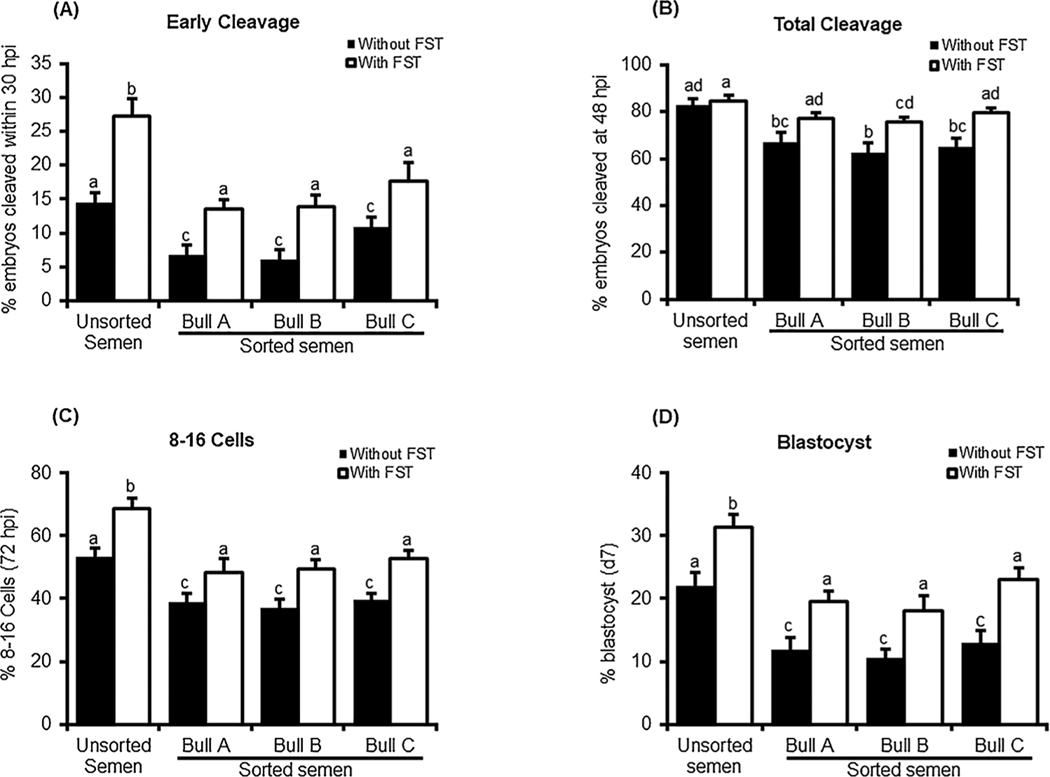
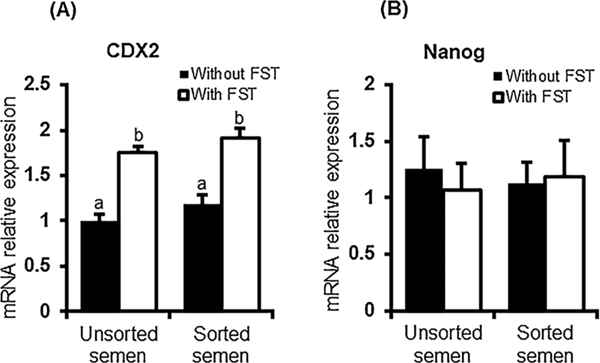
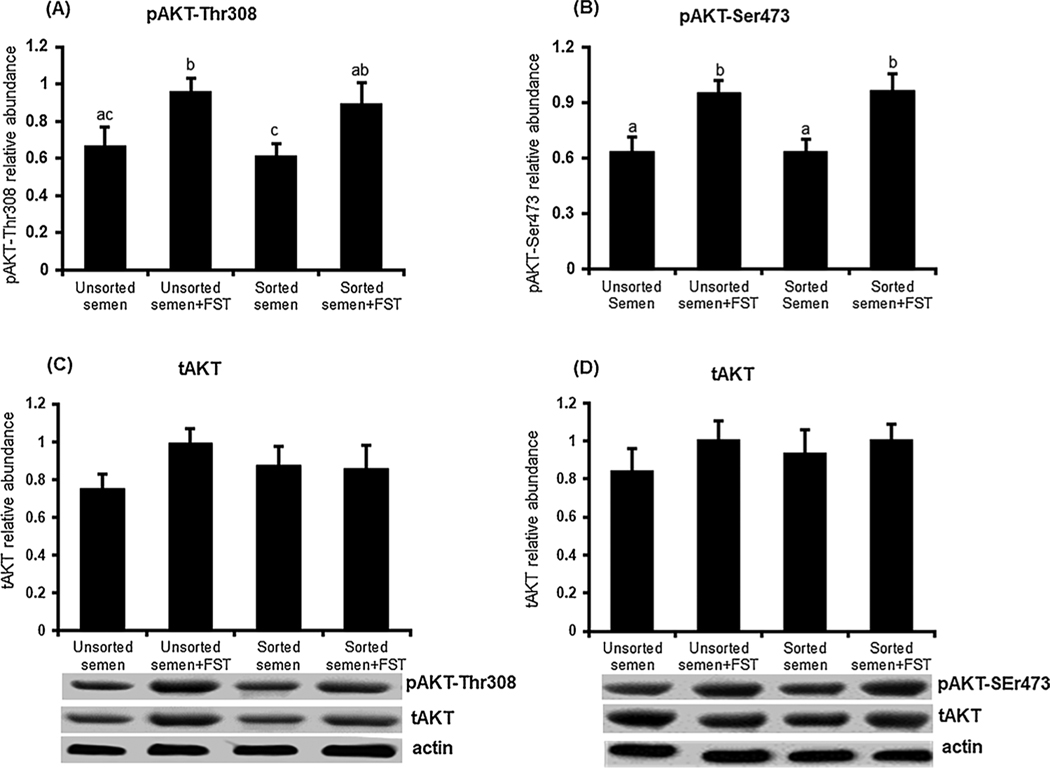
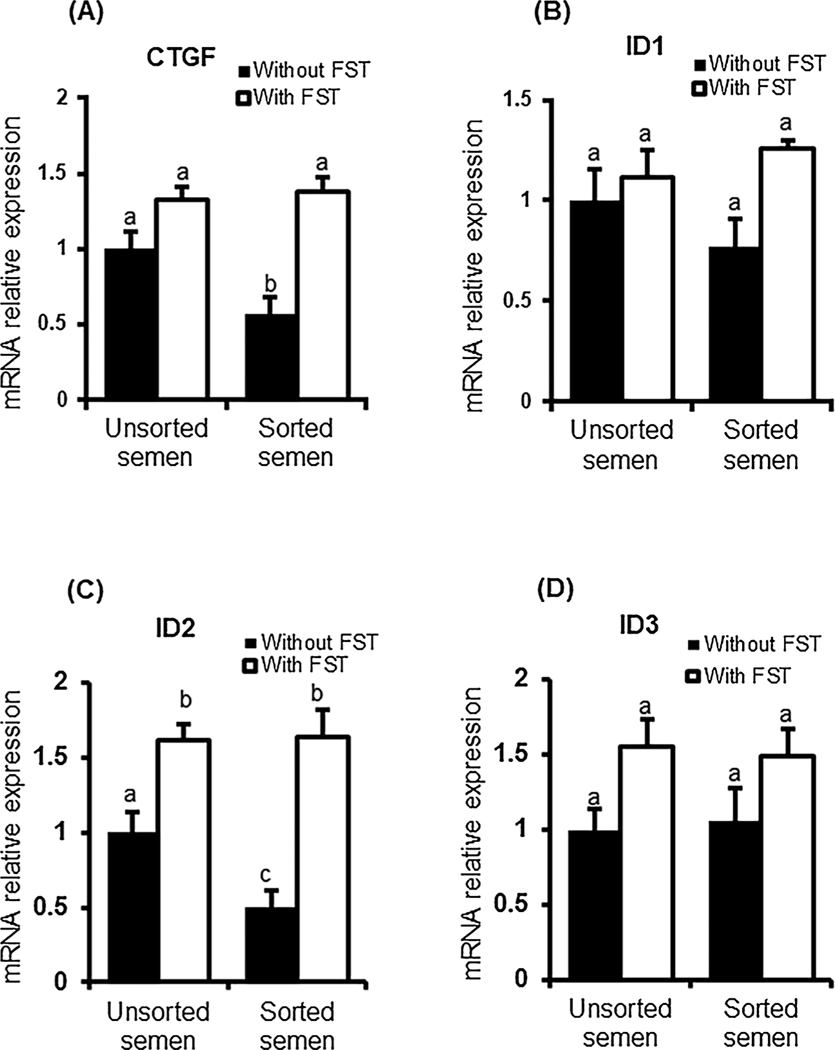
Using sex-sorted semen to produce offspring of desired sex is associated with reduced developmental competence in vitro and lower fertility rates in vivo. The objectives of the present study were to investigate the effects of exogenous follistatin supplementation on the developmental competence of bovine embryos produced with sex-sorted semen and possible link between TGF-β regulated pathways and embryotrophic actions of follistatin. Effects of follistatin on expression of cell lineage markers (CDX2 and Nanog) and downstream targets of SMAD signaling (CTGF, ID1, ID2 and ID3) and AKT phosphorylation were investigated. Follistatin was supplemented during the initial 72 h of embryo culture. Exogenous follistatin restored the in vitro developmental competence of embryos produced with sex-sorted semen to the levels of control embryos produced with unsorted semen, and comparable results were obtained using sorted semen from three different bulls. The mRNA abundance for SMAD signaling downstream target genes, CTGF (SMAD 2/3 pathway) and ID2 (SMAD 1/5 pathway), was lower in blastocysts produced using sex-sorted versus unsorted semen, but mRNA levels for CDX2, NANOG, ID1 and ID3 were similar in both groups. Follistatin supplementation restored CTGF and ID2 mRNA in blastocysts produced using sex-sorted semen to levels of control embryos. Moreover, levels of phosphorylated (p)AKT (Ser-473 and Thr-308) were similar in embryos derived from sex-sorted and unsorted semen, but follistatin treatment increased pAKT levels in both groups. Taken together, results demonstrated that follistatin improves in vitro development of embryos produced with sex-sorted semen and such effects are associated with enhanced indices of SMAD signaling.
Keywords: AKT; Bovine; Follistatin; Oocytes quality; SMAD; Sorted semen; TGF-β.
Copyright © 2018 The Authors. Published by Elsevier B.V. All rights reserved.
Conflict of interest statement
Conflict of interest statement
None of the authors has any financial or other potential conflict of interest related to this manuscript.
Figures
References
-
- Wheeler MB, Rutledge JJ, Fischer-Brown A, VanEtten T, Malusky S, Beebe DJ. Application of sexed semen technology to in vitro embryo production in cattle. Theriogenology 2006;65:219–27. - PubMed
-
- Hossein-Zadeh NG, Nejati-Javaremi A, Miraei-Ashtiani SR, Kohram H. Bio-economic evaluation of the use of sexed semen at different conception rates and herd sizes in Holstein populations. Anim Reprod Sci 2010;121:17–23. - PubMed
-
- Trigal B, Gomez E, Caamano JN, Munoz M, Moreno J, Carrocera S, et al. In vitro and in vivo quality of bovine embryos in vitro produced with sex-sorted sperm. Theriogenology 2012;78:1465–75. - PubMed
-
- Xu J, Chaubal SA, Du F. Optimizing IVF with sexed sperm in cattle. Theriogenology 2009;71:39–47. - PubMed
MeSH terms
Substances
Grants and funding
LinkOut - more resources
Full Text Sources
Other Literature Sources
Molecular Biology Databases
Research Materials
Miscellaneous
