


Staphylococcal Infection-Related Glomerulonephritis With Cryoglobulinemic Features
- PMID: 30197979
- PMCID: PMC6127436
- DOI: 10.1016/j.ekir.2018.05.010
Staphylococcal Infection-Related Glomerulonephritis With Cryoglobulinemic Features
Abstract
Introduction: Staphylococcal infection-related glomerulonephritis (GN) has been shown to represent a unique form of infection-related GN that contains IgA-dominant deposits and is often seen concurrently with the bacterial infection. Biopsies commonly reveal an endocapillary proliferative and/or exudative or mesangial proliferative GN. Rare cases have been reported to show cryoglobulin-like features, including hyaline pseudothrombi and wireloop deposits; however, detailed characterization of these cases is lacking.
Methods: The pathology archives from the University of Utah and Sharp Memorial Hospital were reviewed from January 2016 to September 2017 in search of cases with GN containing IgA-dominant deposits and features of cryoglobulinemia.
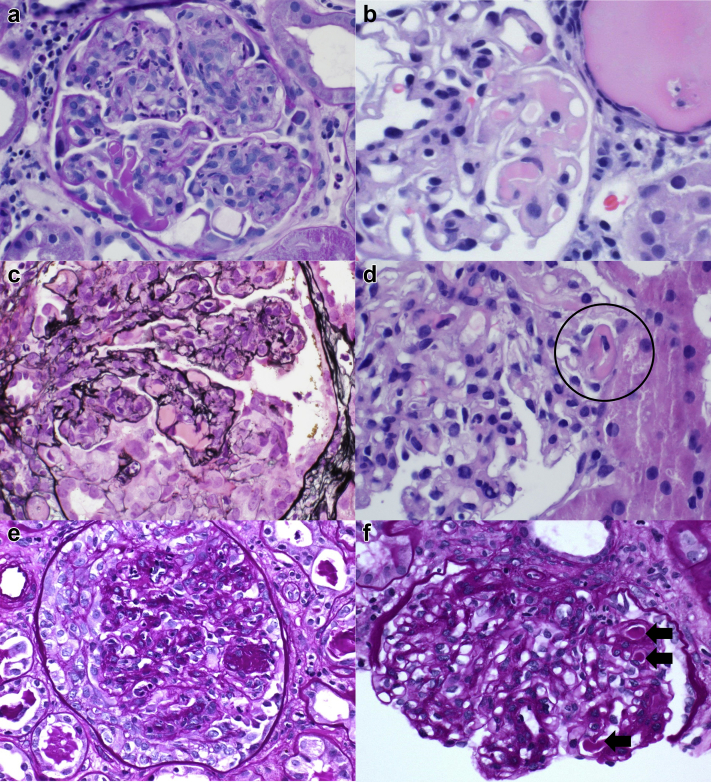
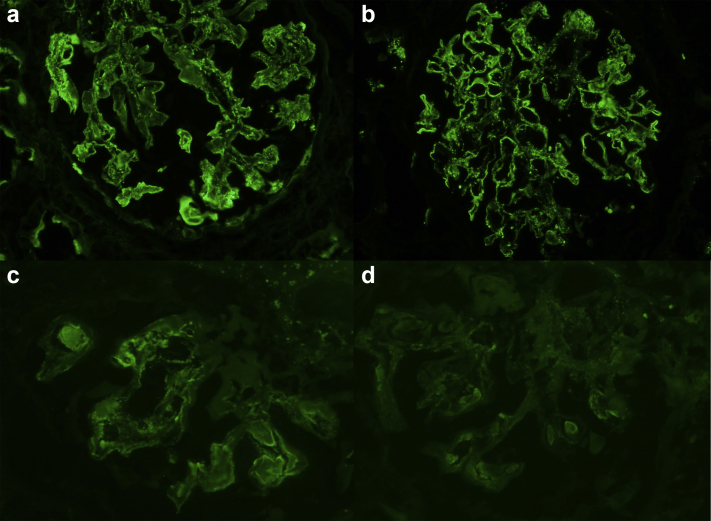
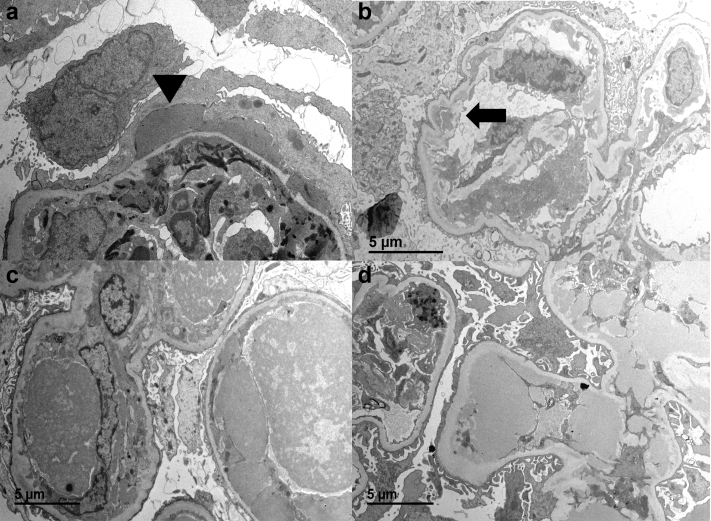
Results: Of 1965 native kidney biopsies, 5 showed IgA-dominant GN with cryoglobulinemic features. All patients had active staphylococcal infections at the time of biopsy. All presented with acute kidney injury (serum creatinine range: 1.7-6 mg/dl), and all had proteinuria and hematuria. All biopsies showed exudative GN, and 4 biopsies had focal crescents. All had focally prominent hyaline pseudothrombi with or without wireloop deposits, and all showed co-dominant staining for IgA and C3 on immunofluorescence microscopy. Serologic testing for cryoglobulinemia was performed in 3 patients and was transiently positive in 1 patient. Four patients required hemodialysis at last follow-up, whereas 1 patient returned to baseline kidney function.
Conclusion: IgA-dominant GN with cryoglobulinemic features is an uncommon but severe form of glomerular injury in patients with staphylococcal infections. Four of 5 patients had crescentic glomerular injuries, all of whom required hemodialysis at last follow-up. Patients with IgA-dominant GN with features of cryoglobulinemia should be evaluated for active staphylococcal infection.
Keywords: acute kidney injury; cryoglobulinemia; infection-related glomerulonephritis.
Figures
References
-
- Brodsky S.V., Nadasdy T. Infection-related glomerulonephritis. Contrib Nephrol. 2011;169:153–160. - PubMed
-
- Nasr S.H., Markowitz G.S., Stokes M.B. Acute postinfectious glomerulonephritis in the modern era: experience with 86 adults and review of the literature. Medicine. 2008;87:21–32. - PubMed
-
- Satoskar A.A., Nadasdy G., Plaza J.A. Staphylococcus infection-associated glomerulonephritis mimicking IgA nephropathy. Clin J Am Soc Nephrol. 2006;1:1179–1186. - PubMed
-
- Worawichawong S., Girard L., Trpkov K. Immunoglobulin A-dominant postinfectious glomerulonephritis: frequent occurrence in nondiabetic patients with Staphylococcus aureus infection. Hum Pathol. 2011;42:279–284. - PubMed
-
- Koyama A., Kobayashi M., Yamaguchi N. Glomerulonephritis associated with MRSA infection: a possible role of bacterial superantigen. Kidney Int. 1995;47:207–216. - PubMed
LinkOut - more resources
Full Text Sources
Other Literature Sources
Miscellaneous
