


Why is the inpatient cost of dying increasing in India?
- PMID: 30199546
- PMCID: PMC6130860
- DOI: 10.1371/journal.pone.0203454
Why is the inpatient cost of dying increasing in India?
Abstract
Introduction: There is an evidence of increasing inpatient expenditure for decedents. Estimates used to assess the economic burden of out-of-pocket (OOP) healthcare expenditure provide an underestimation for inpatient decedent cases. The aims of this paper are to study the trend and pattern of inpatient decedent expenditure and decipher the reasons behind the increasing cost in India.
Methods: Using three rounds of national level National Sample Survey (NSS) data on morbidity & healthcare conducted during 1995-2015 in India, total and component-wise cost of dying was estimated by the socio-demographic characteristics and types of diseases. Generalised linear model was employed to find the changing effect of inpatient decedents on inpatient expenditure on three-time points.
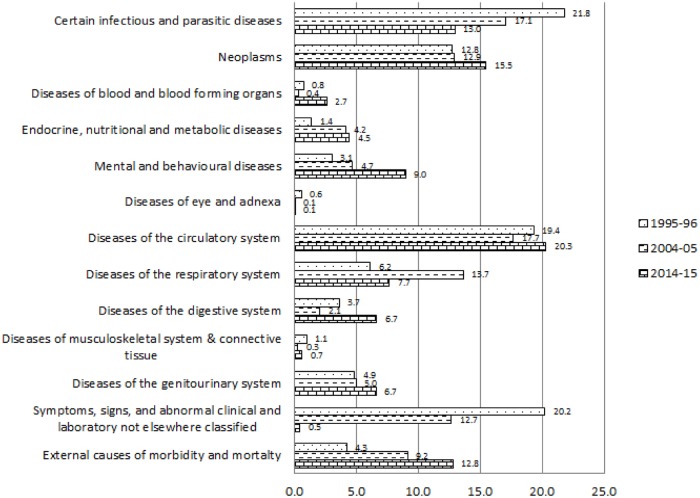
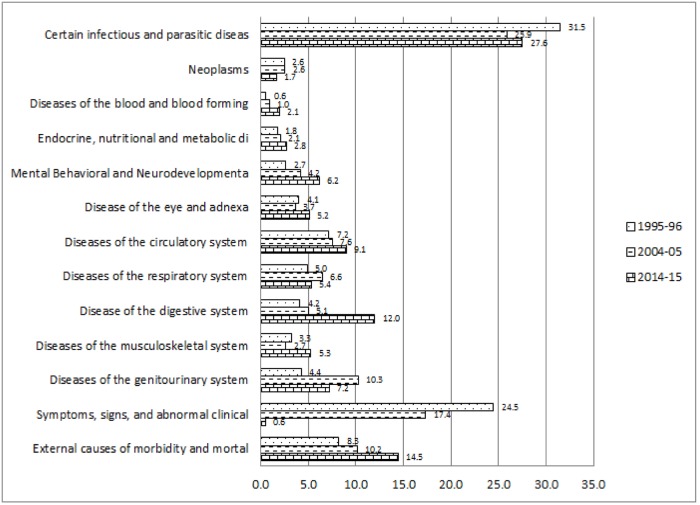
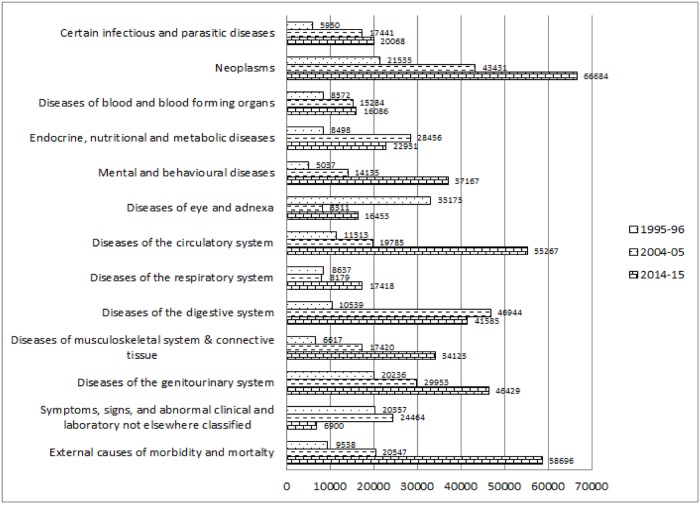
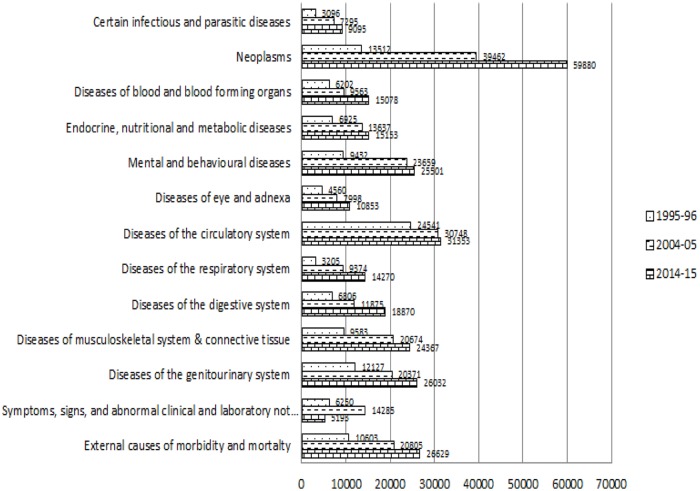
Results: More than half among inpatient decedents were elderly. Mean inpatient expenditure for neoplasm, circulatory system-related diseases and external causes of mortality and morbidity increased substantially during these two decades. Mean decedent inpatient expenditure become double, diagnostic and bed charges increased by 243%, 323% respectively during 2004-05 to 2014-15. During 2014-15 average decedents aged 15-59 years spent ₹53599 in last twelve month of their life. Controlling all other potential factors, the inpatient expenditure among decedents increased substantially between 1995-96 and 2014-15.
Discussion: Out-of-pocket inpatient health expenditure widened between survivor and decedents in between 1995-2014. Increase in the proportion of elderly, proportion of non-communicable and lifestyle-related diseases, expenses on drugs, diagnostics, bed charges largely private sector expenses were the leading reasons for increasing inpatient decedent expenditure. Age-based risk adjustment and modification of end-of-life care are strongly required, future social insurance based on the health-based value of out-of-pocket expenditure rather than their pure consumption value need to be designed to tackle the burden.
Conflict of interest statement
The authors have declared that no competing interests exist.
Figures
References
-
- Ladusingh L, Pandey A. Health expenditure and impoverishment in India. Journal of Health Management. 2013. March;15(1):57–74. 10.1177/0972063413486031 - DOI
MeSH terms
LinkOut - more resources
Full Text Sources
Other Literature Sources
