


Glycaemic control for people with type 2 diabetes in Saudi Arabia - an urgent need for a review of management plan
- PMID: 30200959
- PMCID: PMC6131885
- DOI: 10.1186/s12902-018-0292-9
Glycaemic control for people with type 2 diabetes in Saudi Arabia - an urgent need for a review of management plan
Abstract
Background: The aim of this study was to assess inadequate glycaemic control and its associated factors among people with type 2 diabetes in Saudi Arabia.
Methods: A cross-sectional study design was used. Adults with type 2 diabetes attending diabetes centres in Riyadh, Hofuf and Jeddah cities were interviewed and their anthropometrics were measured. Their medical records were also reviewed to collect information related to recent lab tests, medications, and documented comorbidities. Multivariable logistic regression were used for data analysis.
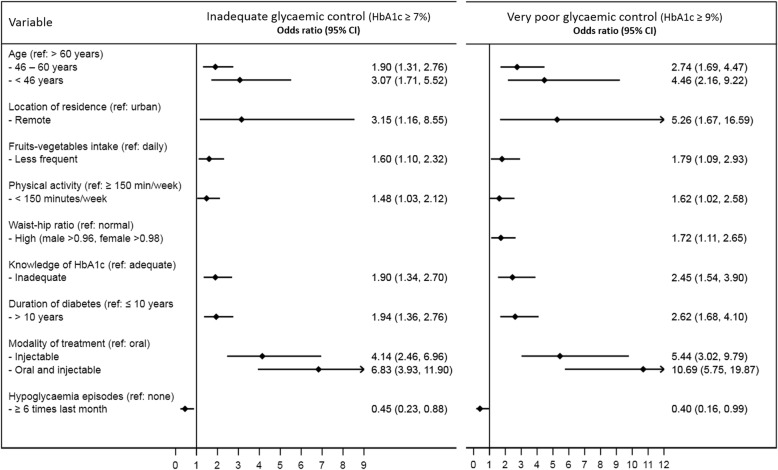
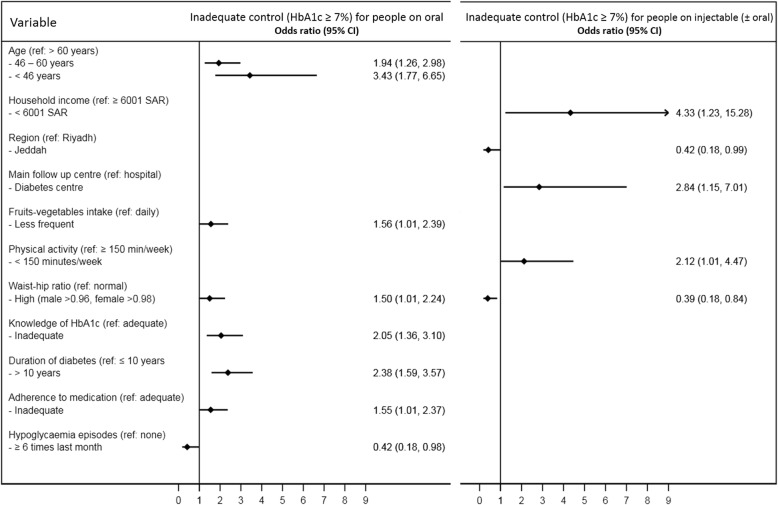
Results: A total of 1111 participants were recruited in the study. Mean age was 57.6 (±11.1) years, 65.2% of the participants were females, and mean HbA1c was 8.5 ± 1.9%. About three-fourths of participants had inadequate glycaemic control (≥ 7%). Multivariable analysis showed that age ≤ 60 years, longer duration of diabetes, living in a remote location, low household income, low intake of fruits and vegetable, low level of physical activity, lack of knowledge about haemoglobin A1c, high waist-hip ratio, low adherence to medication, and using injectable medications were independent risk factors for inadequate glycaemic control.
Conclusions: Inadequate glycaemic control is prevalent among people with type 2 diabetes in Saudi Arabia. In order to improve glycaemic control diabetes management plan should aim at controlling the modifiable risk factors which include low intake of fruits and vegetable, low level of physical activity, lack of knowledge about haemoglobin A1c, high waist-hip ratio, and low adherence to medications.
Keywords: Diabetes; Glycaemic control; Saudi Arabia.
Conflict of interest statement
Ethics approval and consent to participate
Ethical approval was obtained from the Monash University Human Research Ethics Committee in Australia and the Research Ethics Committee of the Ministry of Health in Saudi Arabia. Written informed consent was obtained from all the study participants.
Consent for publication
Not applicable
Competing interests
The authors declare that they have no competing interests.
Publisher’s Note
Springer Nature remains neutral with regard to jurisdictional claims in published maps and institutional affiliations.
Figures
References
-
- Cho NH, Kirigia J, Mbanya JC, Ogurstova K, Guariguata L, Rathmann W, et al. IDF DIABETES ATLAS eighth edition 2017. Int Diabet Fed. 2017:1–147.
-
- Al-Quwaidhi AJ, Pearce MS, Sobngwi E, Critchley JA, O’Flaherty M. Comparison of type 2 diabetes prevalence estimates in Saudi Arabia from a validated Markov model against the international diabetes federation and other modelling studies. Diabetes Res Clin Pract. 2014;103(3):496–503. doi: 10.1016/j.diabres.2013.12.036. - DOI - PMC - PubMed
-
- American Diabetes Association. American Diabetes Association Standards of Medical Care in Diabetes-2017. The Journal of Clinical and Applied Research and Education. 2017;40.
Publication types
MeSH terms
Substances
LinkOut - more resources
Full Text Sources
Other Literature Sources
Medical
Miscellaneous
