


Language Experience in the Second Year of Life and Language Outcomes in Late Childhood
- PMID: 30201624
- PMCID: PMC6192025
- DOI: 10.1542/peds.2017-4276
Language Experience in the Second Year of Life and Language Outcomes in Late Childhood
Abstract
Objectives: Quantity of talk and interaction in the home during early childhood is correlated with socioeconomic status (SES) and can be used to predict early language and cognitive outcomes. We tested the effectiveness of automated early language environment estimates for children 2 to 36 months old to predict cognitive and language skills 10 years later and examined effects for specific developmental age periods.
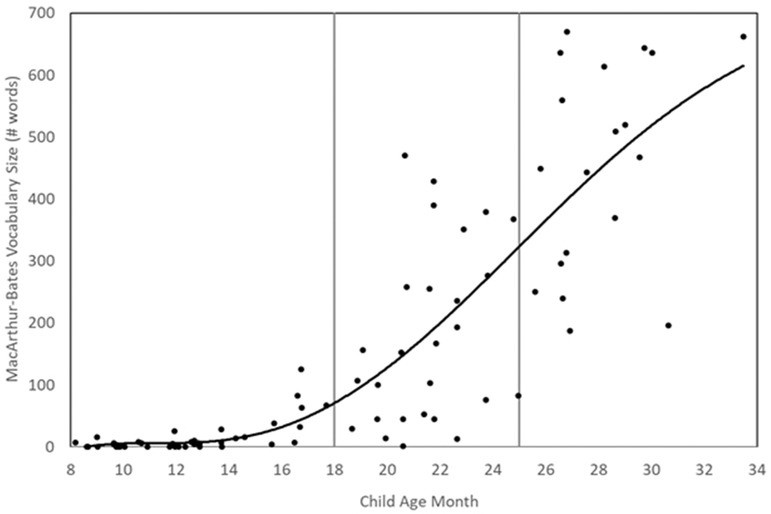
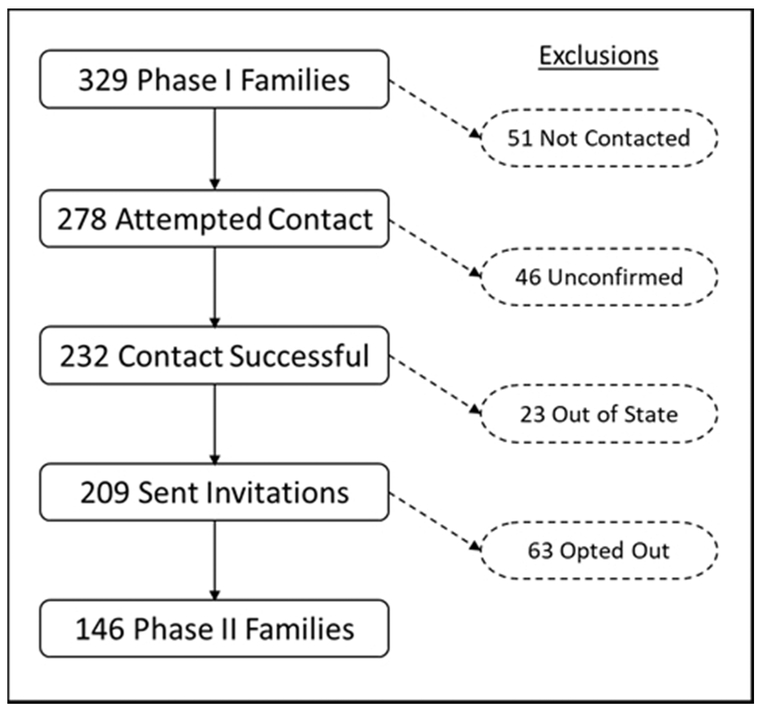
Methods: Daylong audio recordings for 146 infants and toddlers were completed monthly for 6 months, and the total number of daily adult words and adult-child conversational turnswere automatically estimated with Language Environment Analysis software. Follow-up evaluations at 9 to 14 years of age included language and cognitive testing. Language exposure for 3 age groups was assessed: 2 to 17 months, 18 to 24 months, and ≥25 months. Pearson correlations and multiple linear regression analyses were conducted.
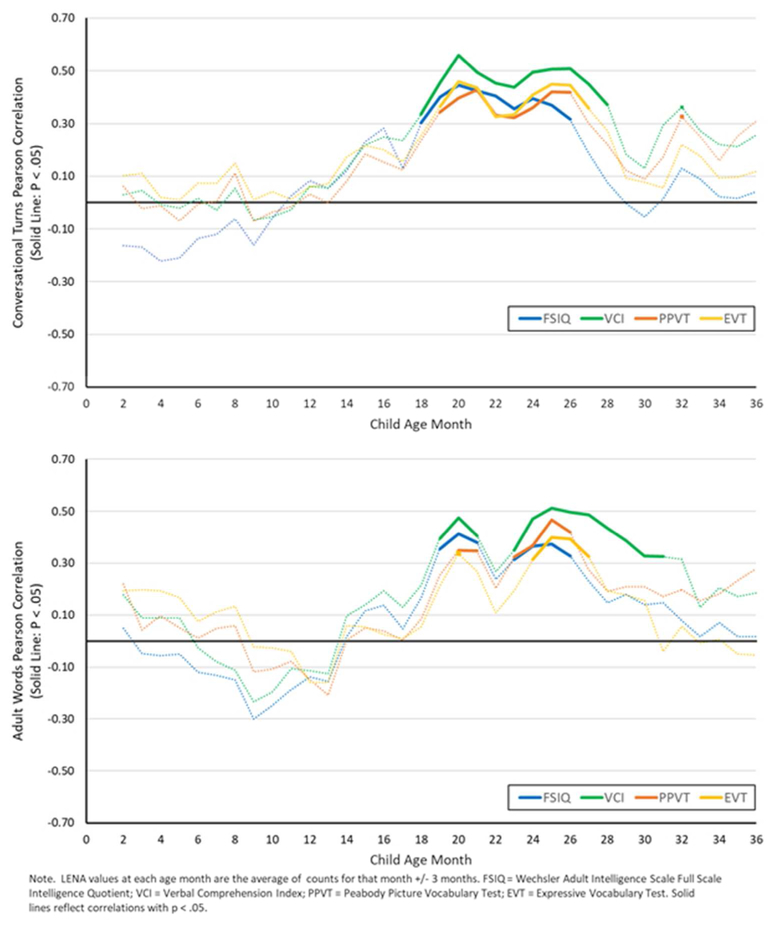
Results: Conversational turn counts at 18 to 24 months of age accounted for 14% to 27% of the variance in IQ, verbal comprehension, and receptive and/or expressive vocabulary scores 10 years later after controlling for SES. Adult word counts between 18 and 24 months were correlated with language outcomes but were considerably weakened after controlling for SES.
Conclusions: These data support the hypothesis that early talk and interaction, particularly during the relatively narrow developmental window of 18 to 24 months of age, can be used to predict school-age language and cognitive outcomes. With these findings, we underscore the need for effective early intervention programs that support parents in creating an optimal early language learning environment in the home.
Copyright © 2018 by the American Academy of Pediatrics.
Conflict of interest statement
POTENTIAL CONFLICT OF INTEREST: Dr Gilkerson, Mr Richards, and Ms Russo are full-time employees of the LENA Foundation, a 501(c)(3) public charity through which researchers developed and distribute the automated approach used to analyze the data described here. The salaries of LENA Foundation scientists are in no way associated with data analyses or research results; Drs Warren, Oller, and Vohr have indicated they have no potential conflicts of interest to disclose.
Figures
Comment in
-
Early Language Exposure and Middle School Language and IQ: Implications for Primary Prevention.Pediatrics. 2018 Oct;142(4):e20182234. doi: 10.1542/peds.2018-2234. Epub 2018 Sep 10. Pediatrics. 2018. PMID: 30201623 Free PMC article. No abstract available.
References
-
- Hart B, Risley TR. American parenting of language-learning children: Persisting differences in family-child interactions observed in natural home environments. Developmental Psychology. 1992;28(6):1096–1105.
-
- Hart B, Risley TR.Meaningful differences in the everyday experience of young American children. Baltimore, MD: Paul H. Brookes Publishing Co; 1995.
-
- Hoff E The specificity of environmental influence: Socioeconomic status affects early vocabulary development via maternal speech.Child Development. 2003;74(5):1368–1378. - PubMed
-
- Huttenlocher J, Haight W, Bryk A, Seltzer M, Lyons T. Early vocabulary growth: Relation to language input and gender. Developmental Psychology. 1991;27(2):236–248.
-
- Rowe ML. Child-directed speech: Relation to socioeconomic status, knowledge of child development and child vocabulary skill. Journal of Child Language. 2008;35(01):185–205. - PubMed
Publication types
MeSH terms
Grants and funding
LinkOut - more resources
Full Text Sources
Other Literature Sources
Medical
