


Growth factor release and enhanced encapsulated periodontal stem cells viability by freeze-dried platelet concentrate loaded thermo-sensitive hydrogel for periodontal regeneration
- PMID: 30202174
- PMCID: PMC6128323
- DOI: 10.1016/j.sdentj.2018.06.002
Growth factor release and enhanced encapsulated periodontal stem cells viability by freeze-dried platelet concentrate loaded thermo-sensitive hydrogel for periodontal regeneration
Abstract
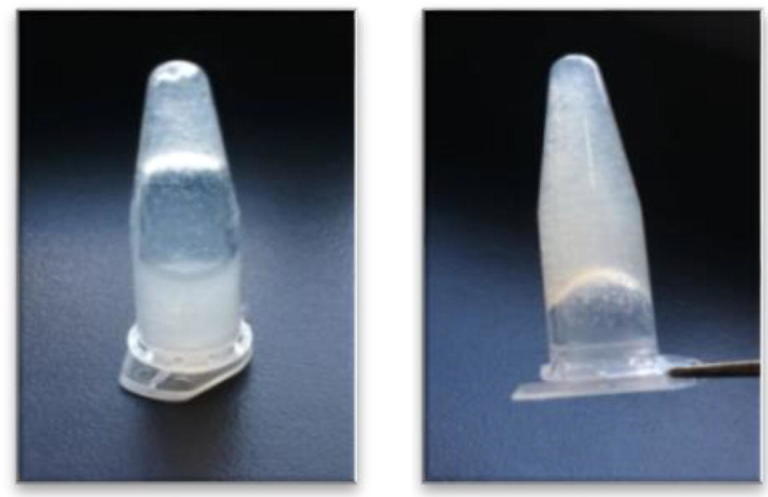
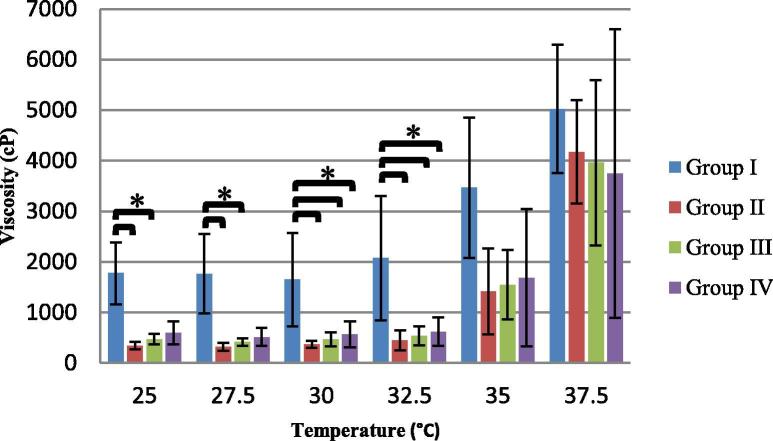
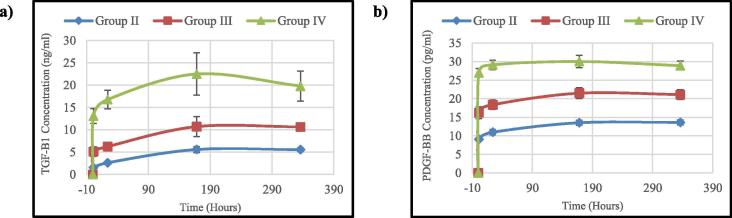
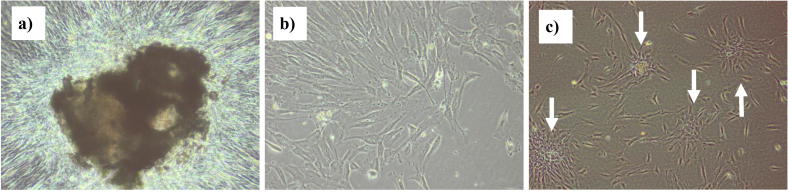
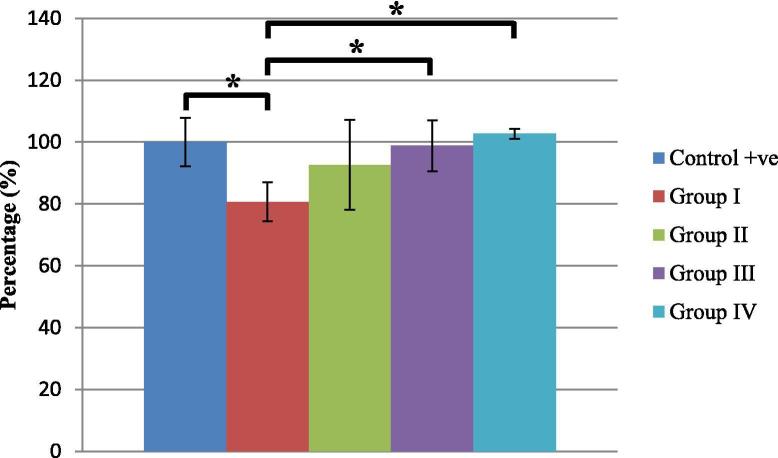
Periodontium regeneration is a highly challenging process as it requires the regeneration of three different tissues simultaneously. The aim of this study was to develop a composite material that can be easily applied and can sufficiently deliver essential growth factors and progenitor cells for periodontal tissue regeneration. Freeze-dried platelet concentrate (FDPC) was prepared and incorporated in a thermo-sensitive chitosan/β-glycerol phosphate (β-GP) hydrogel at concentrations of 5, 10, or 15 mg/ml. The viscosity of the hydrogels was investigated as the temperature rises from 25 °C to 37 °C and the release kinetics of transforming growth factor (TGF-β1), platelet-derived growth factor (PDGF-BB) and insulin-like growth factor (IGF-1) were investigated at four time points (1 h, 1 day, 1 week, 2 weeks). Periodontal ligament stem cells (PDLSCs) were isolated from human third molars and encapsulated in the different hydrogel groups. Their viability was investigated after 7 days in culture in comparison to standard culture conditions and non FDPC-loaded hydrogel. Results showed that loading FDPC in the hydrogel lowered the initial viscosity in comparison to the unloaded control group and did not affect the sol-gel transition in any group. All FDPC-loaded hydrogel groups exhibited sustained release of TGF-β1 and PDGF-BB for two weeks with significant difference between the different concentrations. The loading of 10 and 15 mg/ml of FDPC in the hydrogel increased the PDLSCs viability significantly compared to the unloaded hydrogel and was comparable to the standard culture conditions. Accordingly, it may be concluded that loading FDPC in a chitosan/β-GP hydrogel can offer enhanced injectability, a sustained release of growth factors and increased viability of encapsulated stem cells which can be beneficial in periodontium tissue regeneration.
Keywords: Chitosan; Growth factors; Periodontal regeneration; Platelet concentrate; Thermo-sensitive hydrogel.
Figures
References
-
- Albandar J.M. Epidemiology and risk factors of periodontal diseases. Dent. Clin. North Am. 2005;49:517–532. - PubMed
-
- Barrientos S., Stojadinovic O., Golinko M.S., Brem H., Tomic-Canic M. Perspective article: growth factors and cytokines in wound healing. Wound Repair Regen. 2008;16:585–601. - PubMed
-
- Berger J., Reist M., Chenite A., Felt-Baeyens O., Mayer J.M., Gurny R. Pseudo-thermosetting chitosan hydrogels for biomedical application. Int. J. Pharm. 2005;288:17–25. - PubMed
-
- Bradley J.C., Simoni J., Bradley R.H., McCartney D.L., Brown S.M. Time- and temperature-dependent stability of growth factor peptides in human autologous serum eye drops. Cornea. 2009;28:200–205. - PubMed
-
- Chen F., Zhang J., Zhang M., An Y., Chen F., Wu Z. A review on endogenous regenerative technology in periodontal regenerative medicine. Biomaterials. 2010;31:7892–7927. - PubMed
LinkOut - more resources
Full Text Sources
Other Literature Sources
Miscellaneous
