Review
. 2018 Aug 20:14:2163-2185.
doi: 10.3762/bjoc.14.190. eCollection 2018.

Tetrathiafulvalene - a redox-switchable building block to control motion in mechanically interlocked molecules

Affiliations
Review

Tetrathiafulvalene - a redox-switchable building block to control motion in mechanically interlocked molecules

Hendrik V Schröder et al. Beilstein J Org Chem. .

Abstract

With the rise of artificial molecular machines, control of motion on the nanoscale has become a major contemporary research challenge. Tetrathiafulvalenes (TTFs) are one of the most versatile and widely used molecular redox switches to generate and control molecular motion. TTF can easily be implemented as functional unit into molecular and supramolecular structures and can be reversibly oxidized to a stable radical cation or dication. For over 20 years, TTFs have been key building blocks for the construction of redox-switchable mechanically interlocked molecules (MIMs) and their electrochemical operation has been thoroughly investigated. In this review, we provide an introduction into the field of TTF-based MIMs and their applications. A brief historical overview and a selection of important examples from the past until now are given. Furthermore, we will highlight our latest research on TTF-based rotaxanes.

Keywords: artificial molecular machines; mechanically interlocked molecules; molecular switches; supramolecular chemistry; tetrathiafulvalene.


Figures
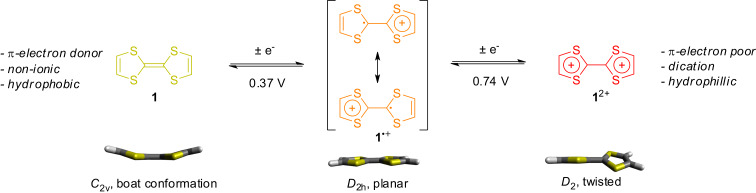
Figure 1
Figure 1
The two one-electron oxidation reactions of tetrathiafulvalene (TTF, 1) and the corresponding property changes.
Figure 2
Figure 2
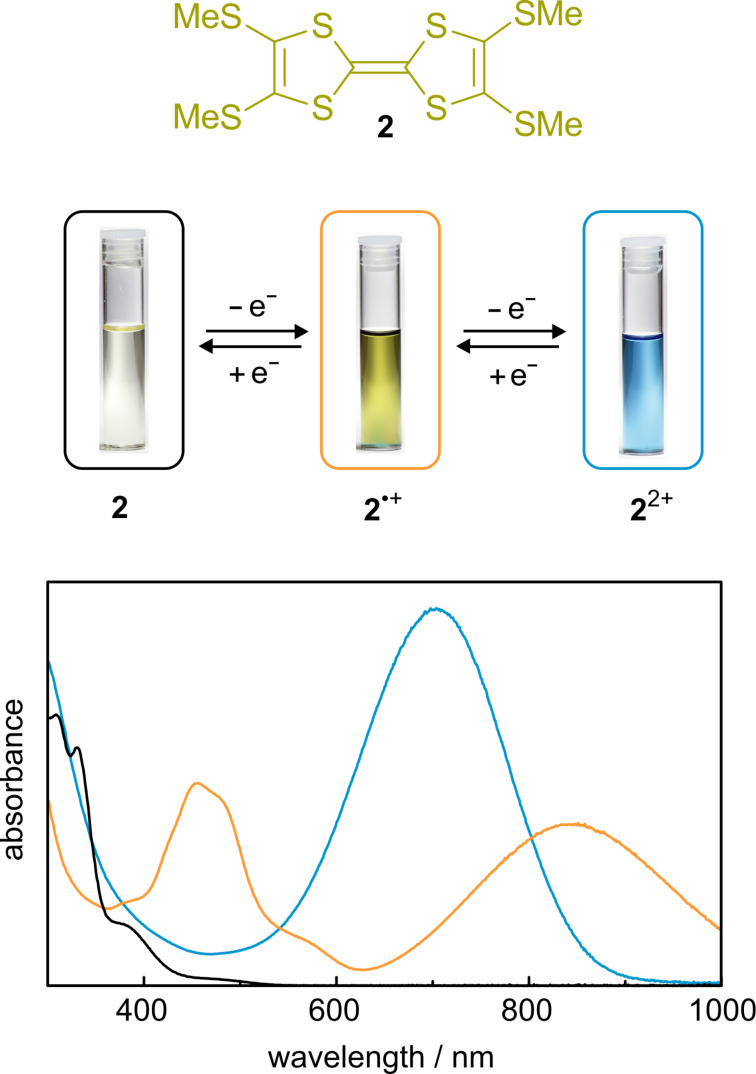
UV–vis spectra and photographs of TTF 2 in its three stable oxidation states (black line = 2, orange line = 2●+, blue line = 22+).
Figure 3
Figure 3
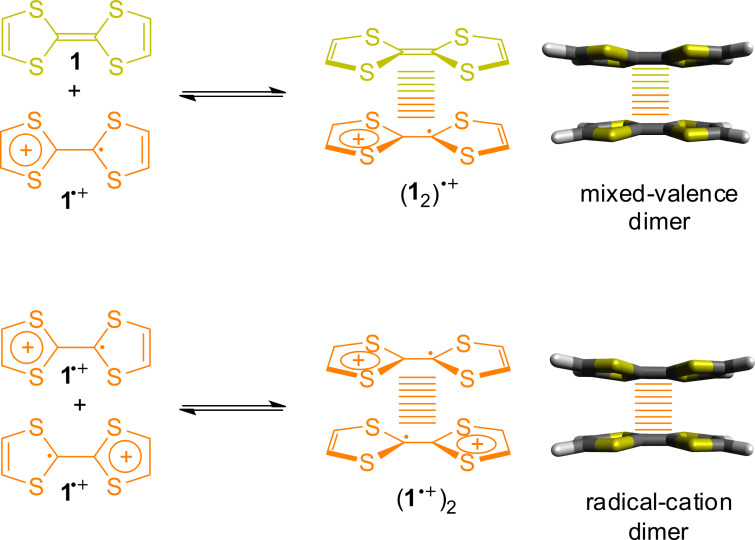
Structure and conformations of two TTF dimers in solution, the mixed-valence and the radical-cation dimer.
Figure 4
Figure 4
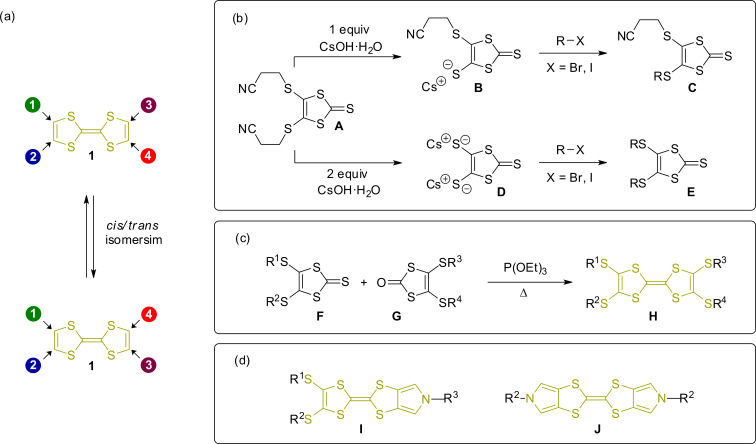
(a) The isomerism problem of TTF. (b)–(d) Major synthetic breakthroughs for the construction of TTF-based supramolecular architectures: (b) Stepwise deprotection/alkylation, (c) phosphite-mediated heterocoupling, and (d) pyrrolo-annulated TTF derivatives I and J.
Figure 5
Figure 5
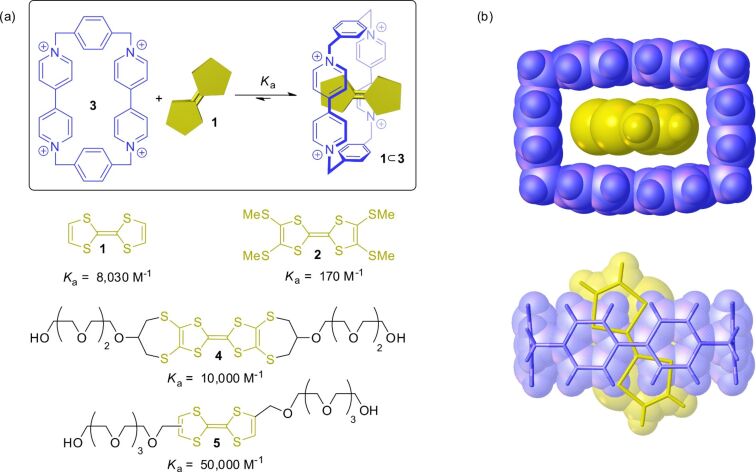
(a) Host–guest equilibrium between π-electron-poor cyclophane 3 and different TTFs with their corresponding association constants in CH3CN. (b) Crystal structure of host–guest complex 1formula image3 [33]. Solvent molecules and counterions are omitted for clarity.
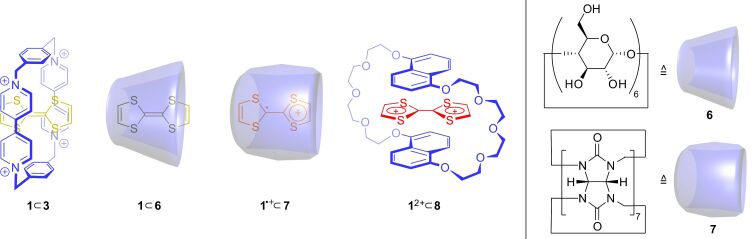
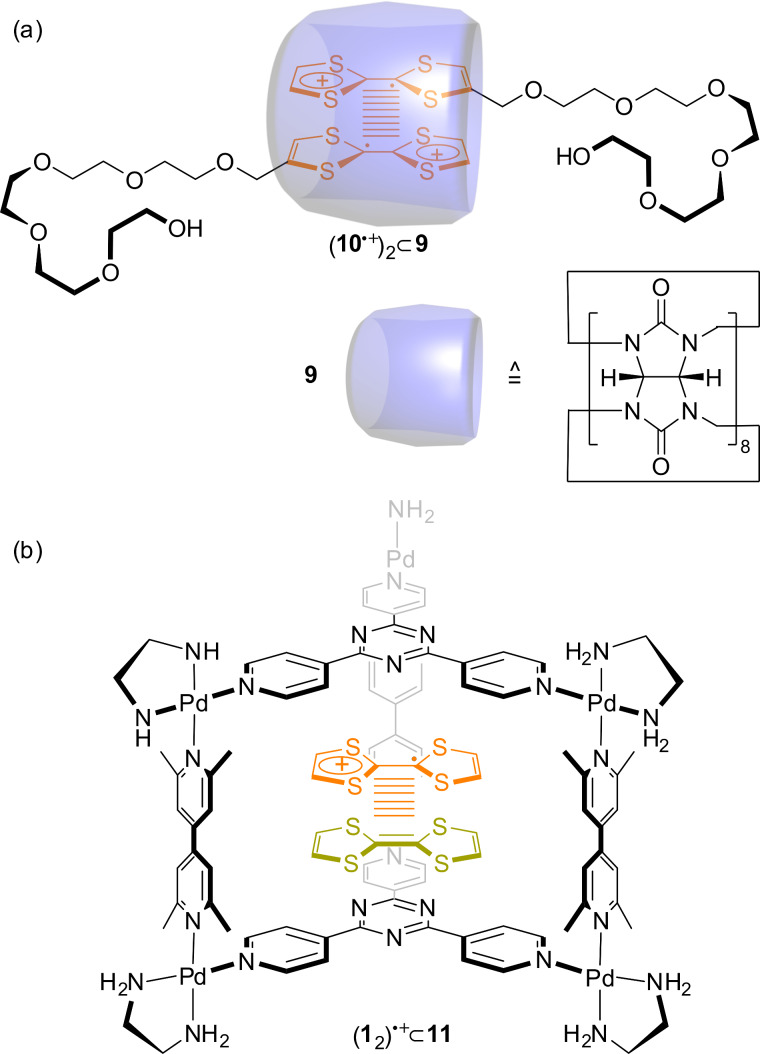
Figure 6
Figure 6
TTF complexes with different host molecules.
Figure 7
Figure 7
Stable TTF (a) radical-cation and (b) mixed-valence dimers in confined molecular spaces.
Figure 8
Figure 8
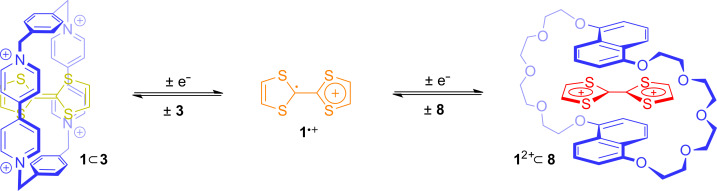
A “three-pole supramolecular switch”: Controlled by its oxidation state, TTF (1) jumps back and forth between different host molecules.
Figure 9
Figure 9
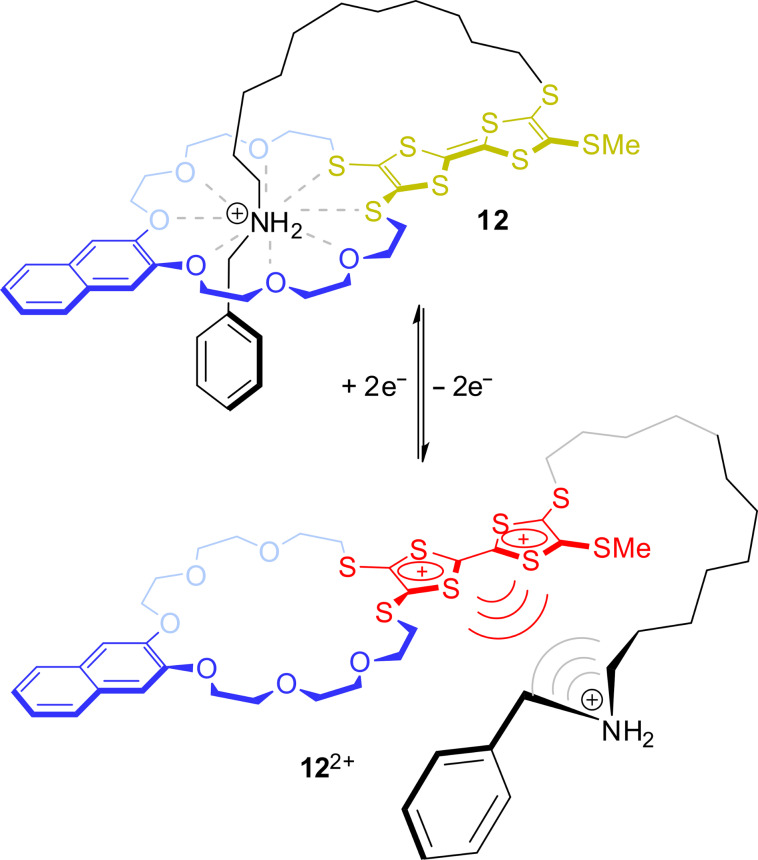
Redox-controlled closing and opening motion of the artificial molecular lasso 12.
Figure 10
Figure 10
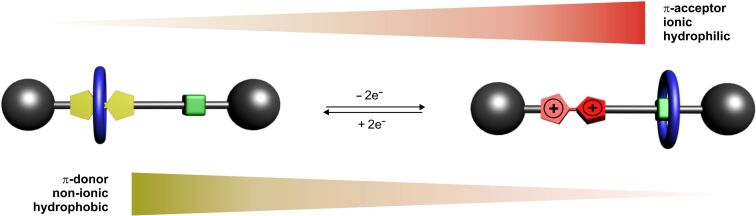
Graphical illustration how a non-degenerate TTF-based shuttle works under electrochemical operation.
Figure 11
Figure 11
The first TTF-based rotaxane 13.
Figure 12
Figure 12
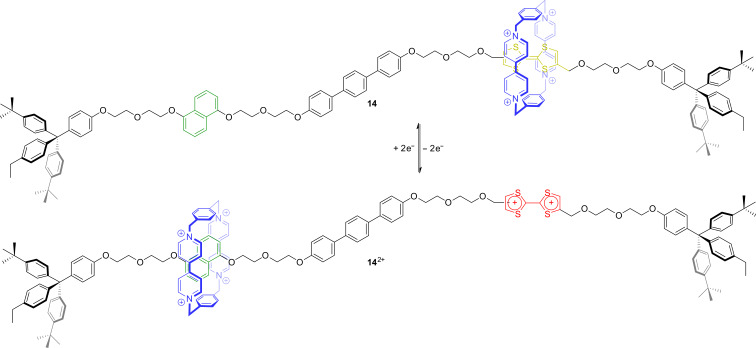
A redox-switchable bistable molecular shuttle 14.
Figure 13
Figure 13
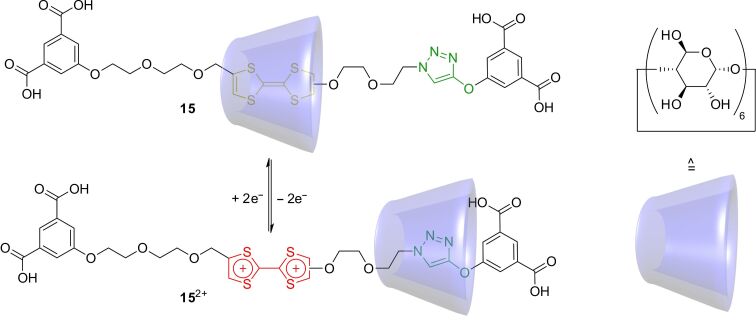
The redox-switchable cyclodextrin-based rotaxane 15.
Figure 14
Figure 14
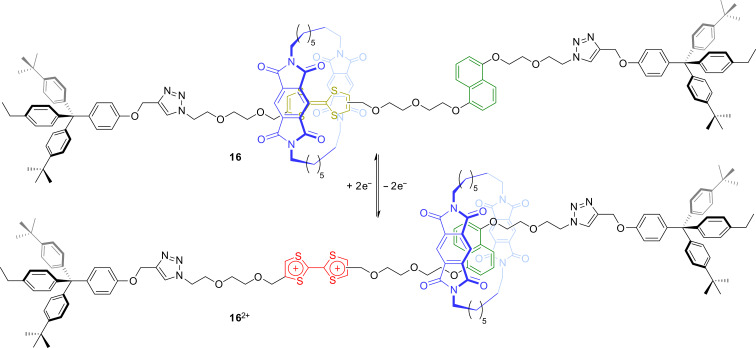
The redox-switchable non-ionic rotaxane 16 with a pyromellitic diimide macrocycle.
Figure 15
Figure 15
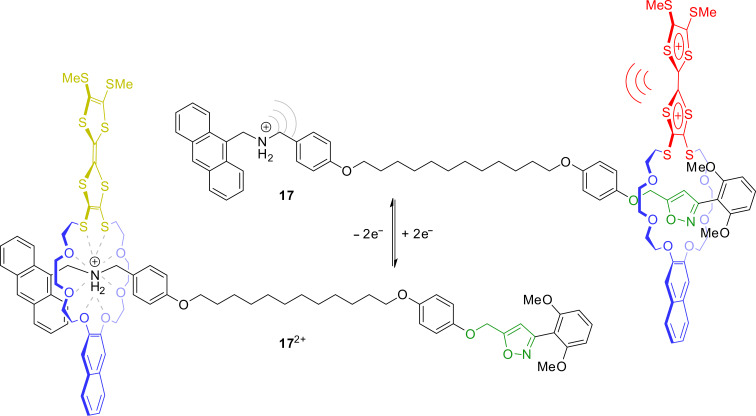
The redox-switchable TTF rotaxane 17 based on a crown/ammonium binding motif.
Figure 16
Figure 16
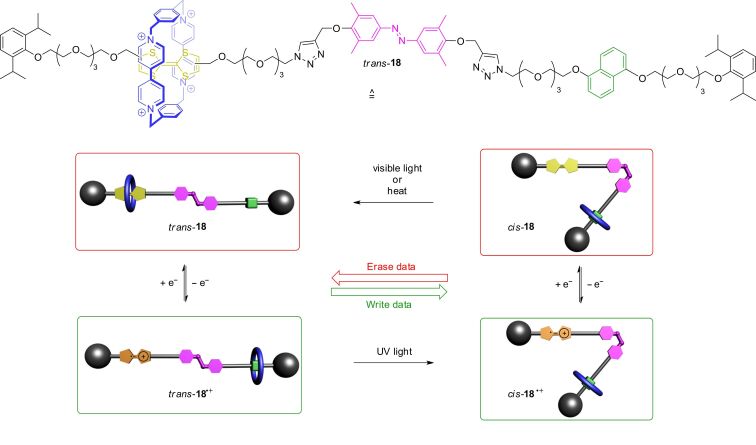
Structure and operation of the electro- and photochemically switchable rotaxane 18 which acts as potential memory device.
Figure 17
Figure 17
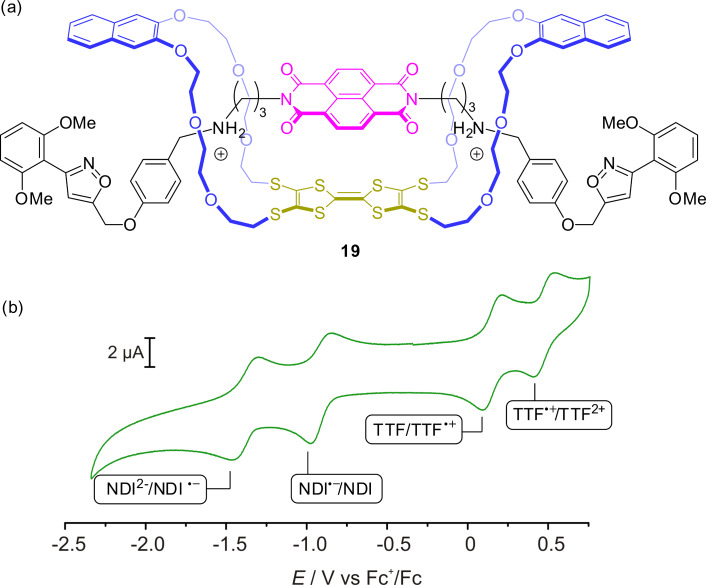
(a) The redox-switchable rotaxane 19 with a donor–acceptor pair which is stable in five different switching states. (b) Cyclic voltammogram showing the transitions between the five oxidation states of 19.
Figure 18
Figure 18
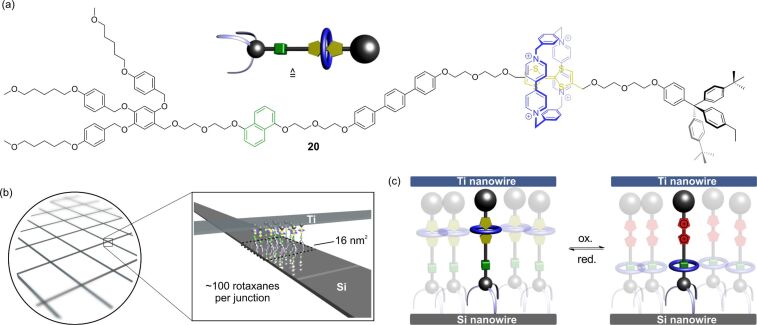
Schematic representation of a molecular electronic memory based on a bistable TTF-based rotaxane. (a) Molecular structure of the amphiphilic [2]rotaxane 20. (b) Structure of the crossbar device. (c) Switching mechanism of rotaxane 20 in a junction.
Figure 19
Figure 19
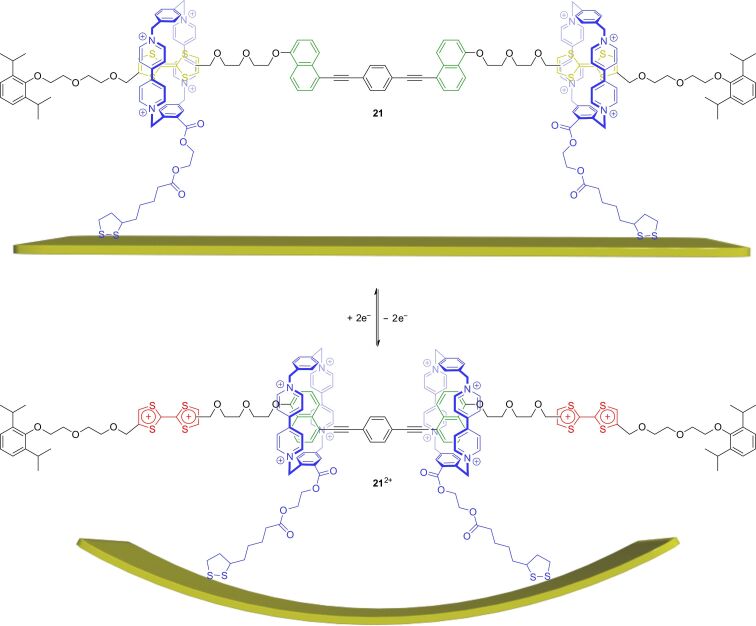
Schematic representation of bending motion of a microcantilever beam with gold surface induced by operation of the redox-switchable [3]rotaxane 21 attached to its surface.
Figure 20
Figure 20
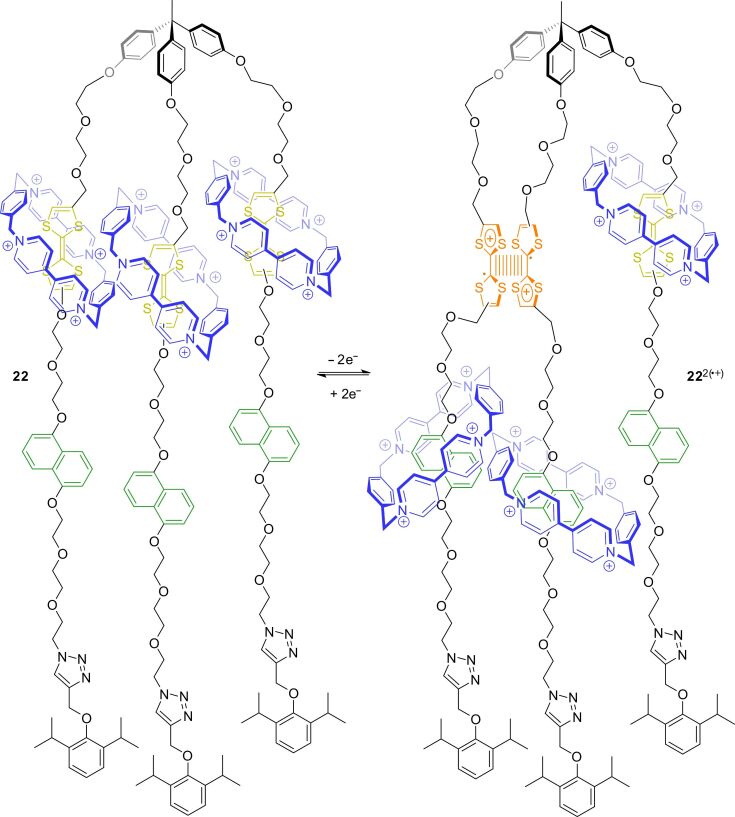
TTF-dimer interactions in a redox-switchable tripodal [4]rotaxane 22.
Figure 21
Figure 21
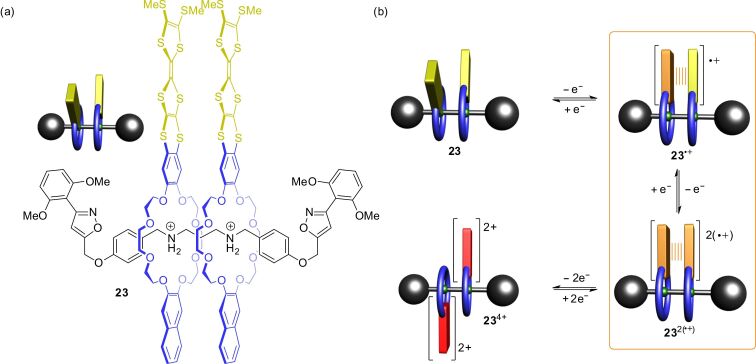
(a) A molecular friction clutch 23 which can be operated by electrochemical stimuli. (b) Schematic representation of 23 in its four stable oxidation states with corresponding wheel co-conformations.
Figure 22
Figure 22
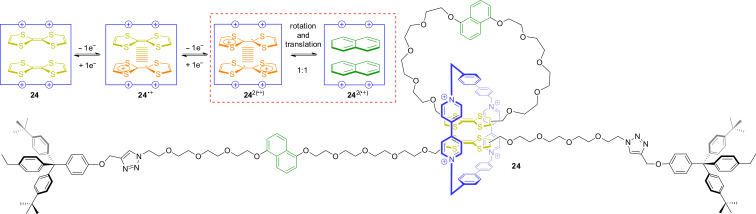
Fusion between rotaxane and catenane: a [3]rotacatenane 24 which can stabilize TTF dimers.
Figure 23
Figure 23
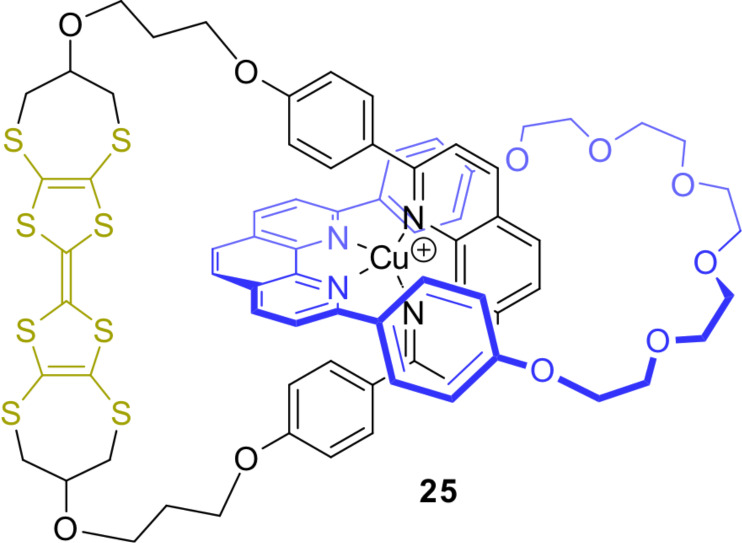
The first TTF-based catenane 25.
Figure 24
Figure 24
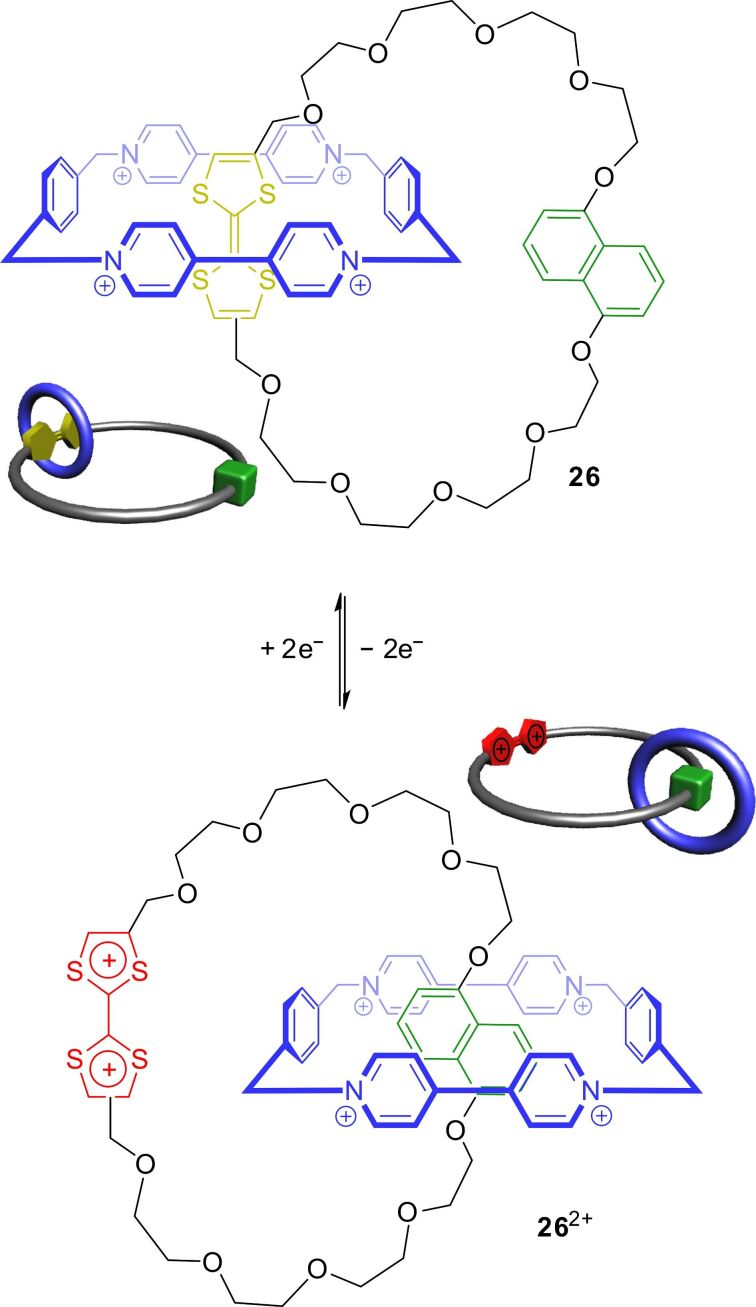
Electrochemically controlled circumrotation of the bistable catenane 26.
Figure 25
Figure 25
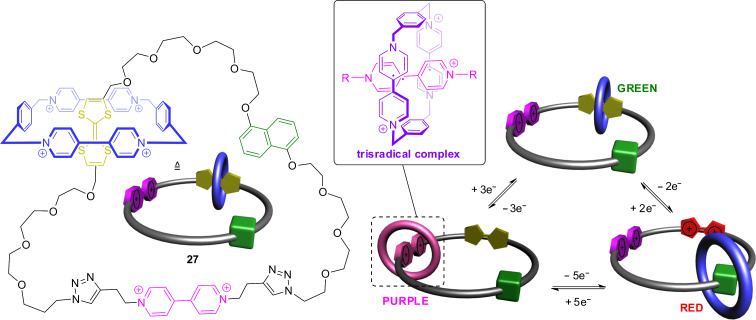
A tristable switch based on the redox-active [2]catenane 27 with three different stations.
Figure 26
Figure 26
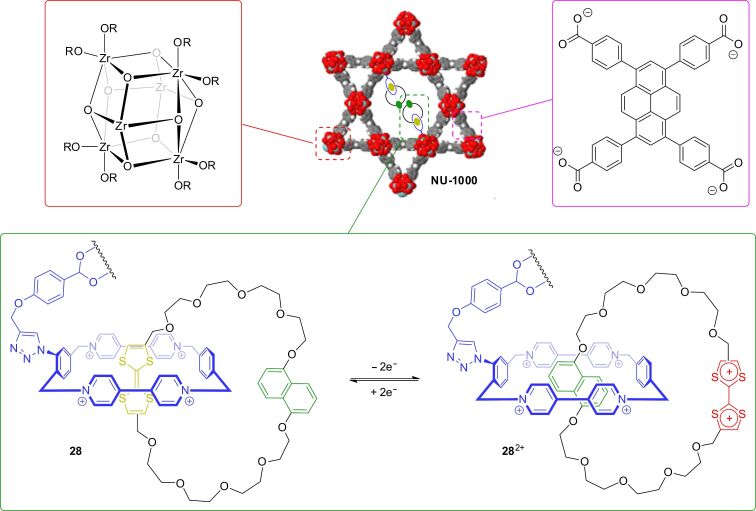
Structure of catenane-functionalized MOF NU-1000 [108] with structural representation of subcomponents. The TTF-based catenane 28 can be reversibly switched inside the MOF.
Figure 27
Figure 27
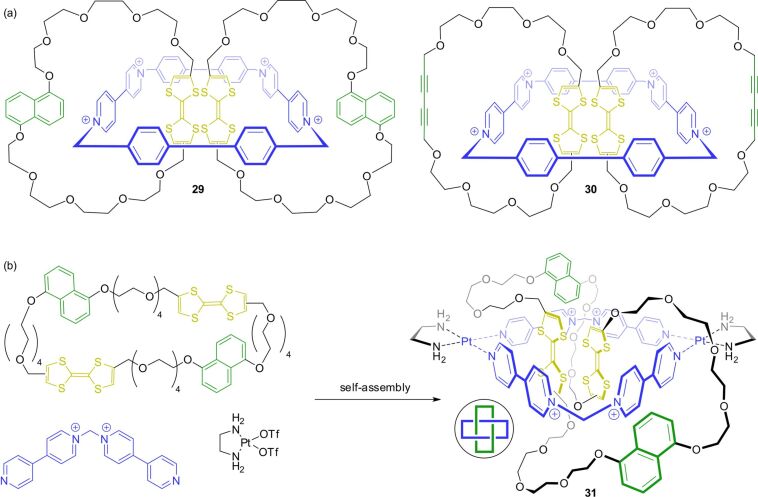
(a) [3]Catenanes 29 and 30 which can stabilize mixed-valence or radical-cation dimers of TTF. (b) Self-assembly synthesis of the molecular Solomon link 31 incorporating two TTF units.

References

    1. Boyer P D. Annu Rev Biochem. 1997;66:717–749. doi: 10.1146/annurev.biochem.66.1.717. - DOI - PubMed
    1. Kinbara K, Aida T. Chem Rev. 2005;105:1377–1400. doi: 10.1021/cr030071r. - DOI - PubMed
    1. Hirokawa N, Noda Y, Tanaka Y, Niwa S. Nat Rev Mol Cell Biol. 2009;10:682–696. doi: 10.1038/nrm2774. - DOI - PubMed
    1. Balzani V, Credi A, Raymo F M, Stoddart J F. Angew Chem, Int Ed. 2000;39:3348–3391. doi: 10.1002/1521-3773(20001002)39:19<3348::AID-ANIE3348>3.0.CO;2-X. - DOI - PubMed
    1. Coskun A, Banaszak M, Astumian R D, Stoddart J F, Grzybowski B A. Chem Soc Rev. 2012;41:19–30. doi: 10.1039/C1CS15262A. - DOI - PubMed

LinkOut - more resources