


Diagnosing Nonfunctional Pancreatic NETs in MEN1: The Evidence Base
- PMID: 30202829
- PMCID: PMC6125714
- DOI: 10.1210/js.2018-00087
Diagnosing Nonfunctional Pancreatic NETs in MEN1: The Evidence Base
Abstract
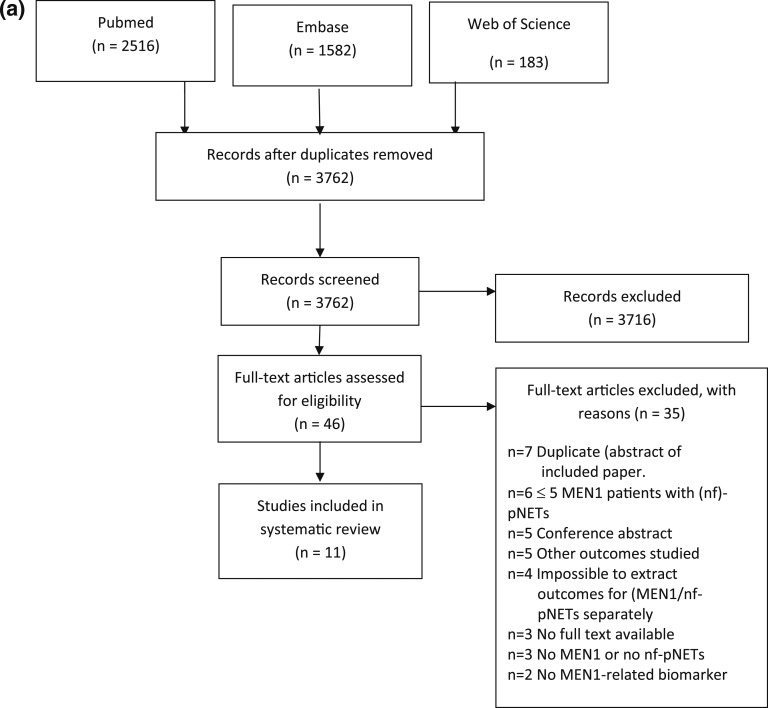
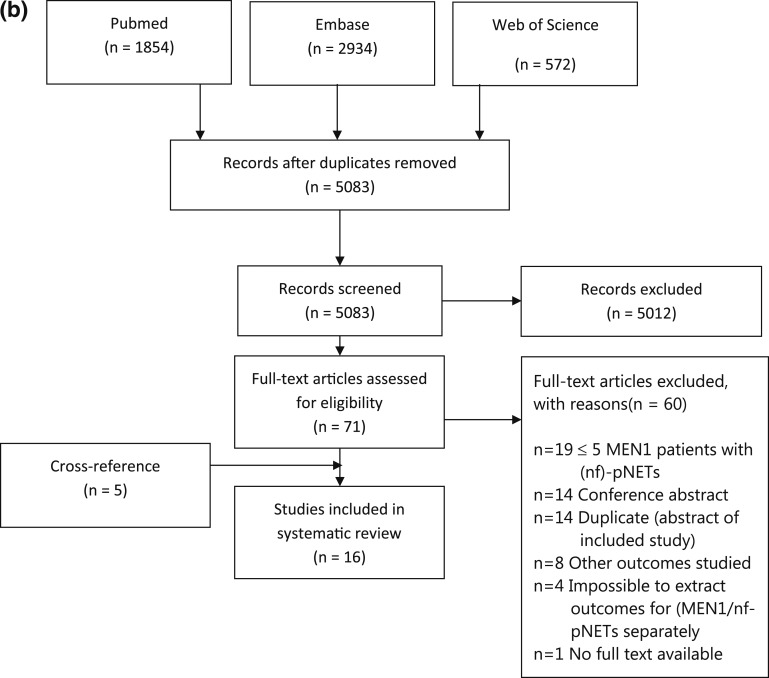
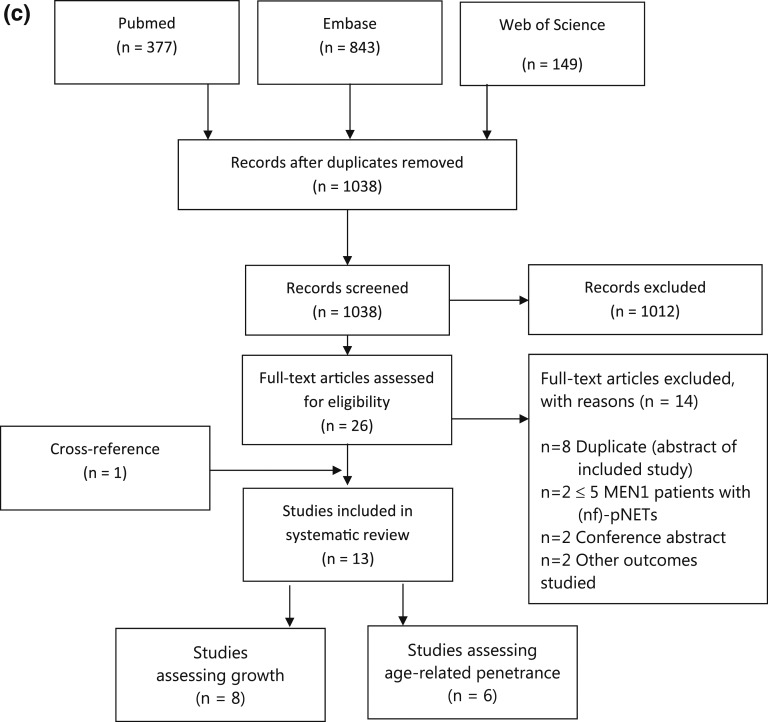
In multiple endocrine neoplasia type 1 (MEN1), nonfunctional pancreatic neuroendocrine tumors (NF-pNETs) are the most frequently diagnosed NETs and a leading cause of MEN1-related death. The high prevalence and malignant potential of NF-pNETs outline the need for an evidence-based screening program, as early diagnosis and timely intervention could reduce morbidity and mortality. Controversies exist regarding the value of several diagnostic tests. This systematic review aims to evaluate current literature and amplify an up-to-date evidence-based approach to NF-pNET diagnosis in MEN1. Three databases were systematically searched on the diagnostic value of biomarkers and imaging modalities. Twenty-seven studies were included and critically appraised (modified Quality Assessment of Diagnostic Accuracy Studies). Another 12 studies, providing data on age-related penetrance and tumor growth, were included to assess the optimal frequency and timing of screening. Based on current literature, biomarkers should no longer play a role in the diagnostic process for NF-pNETs, as accuracies are too low. Studies evaluating the diagnostic value of imaging modalities are heterogeneous with varying risks of bias. For the detection of NF-pNETs, endoscopic ultrasound (EUS) has the highest sensitivity. A combined strategy of EUS and MRI seems to be the most useful. Gallium 68 octreotate-DOTA positron emission tomography-CT could be added if NF-pNETs are diagnosed to identify metastasis. Reported growth rates were generally low, and two distinct phenotypes were observed. Surveillance programs should focus on and be adapted to the presence of substantial growth in NF-pNETs. The optimal age to start screening must yet be determined, as insufficient evidence for an evidence-based recommendation was available.
Keywords: imaging modalities; multiple endocrine neoplasia type 1; pancreatic neuroendocrine tumors; screening; tumor markers.
Figures
References
-
- Chandrasekharappa SC, Guru SC, Manickam P, Olufemi SE, Collins FS, Emmert-Buck MR, Debelenko LV, Zhuang Z, Lubensky IA, Liotta LA, Crabtree JS, Wang Y, Roe BA, Weisemann J, Boguski MS, Agarwal SK, Kester MB, Kim YS, Heppner C, Dong Q, Spiegel AM, Burns AL, Marx SJ. Positional cloning of the gene for multiple endocrine neoplasia-type 1. Science. 1997;276(5311):404–407. - PubMed
-
- Thakker RV, Newey PJ, Walls GV, Bilezikian J, Dralle H, Ebeling PR, Melmed S, Sakurai A, Tonelli F, Brandi ML; Endocrine Society . Clinical practice guidelines for multiple endocrine neoplasia type 1 (MEN1). J Clin Endocrinol Metab. 2012;97(9):2990–3011. - PubMed
-
- Goudet P, Murat A, Binquet C, Cardot-Bauters C, Costa A, Ruszniewski P, Niccoli P, Ménégaux F, Chabrier G, Borson-Chazot F, Tabarin A, Bouchard P, Delemer B, Beckers A, Bonithon-Kopp C. Risk factors and causes of death in MEN1 disease. A GTE (Groupe d’Etude des Tumeurs Endocrines) cohort study among 758 patients. World J Surg. 2010;34(2):249–255. - PubMed
-
- de Laat JM, van der Luijt RB, Pieterman CRC, Oostveen MP, Hermus AR, Dekkers OM, de Herder WW, van der Horst-Schrivers AN, Drent ML, Bisschop PH, Havekes B, Vriens MR, Valk GD. MEN1 redefined, a clinical comparison of mutation-positive and mutation-negative patients. BMC Med. 2016;14(1):182. - PMC - PubMed
Publication types
LinkOut - more resources
Full Text Sources
Other Literature Sources