


Predicting the outcome of conservative treatment with physiotherapy in adults with shoulder pain associated with partial-thickness rotator cuff tears - a prognostic model development study
- PMID: 30205818
- PMCID: PMC6134519
- DOI: 10.1186/s12891-018-2239-8
Predicting the outcome of conservative treatment with physiotherapy in adults with shoulder pain associated with partial-thickness rotator cuff tears - a prognostic model development study
Abstract
Background: Rotator cuff disorders represent the commonest type of painful shoulder complaints in clinical practice. Although conservative treatment including physiotherapy is generally recommended as first-line treatment, little is known about the precise treatment indications for subgroups of rotator cuff disorders, particularly people with shoulder pain associated with partial-thickness tears of the rotator cuff, PTTs: "symptomatic PPTs". The aim of this study was to develop a prognostic model for predicting the outcome of a phase of conservative treatment primarily with physiotherapy in adults with symptomatic PTTs.
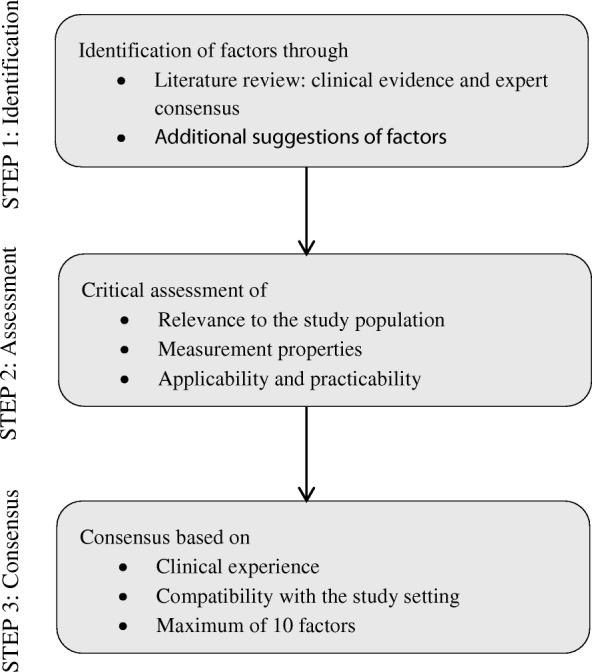
Methods: A prospective observational cohort study was conducted in an outpatient setting in Germany. Ten baseline factors were selected to evaluate nine pre-defined multivariable candidate prognostic models (each including between two and nine factors) in a cohort of adults with symptomatic atraumatic PTTs undergoing a three-month phase of conservative treatment primarily with physiotherapy. The primary outcome was change in the Western Ontario Rotator Cuff Index. The models were developed using linear regression and an information-theoretic analysis approach: Akaike's Information Criterion (AICC).
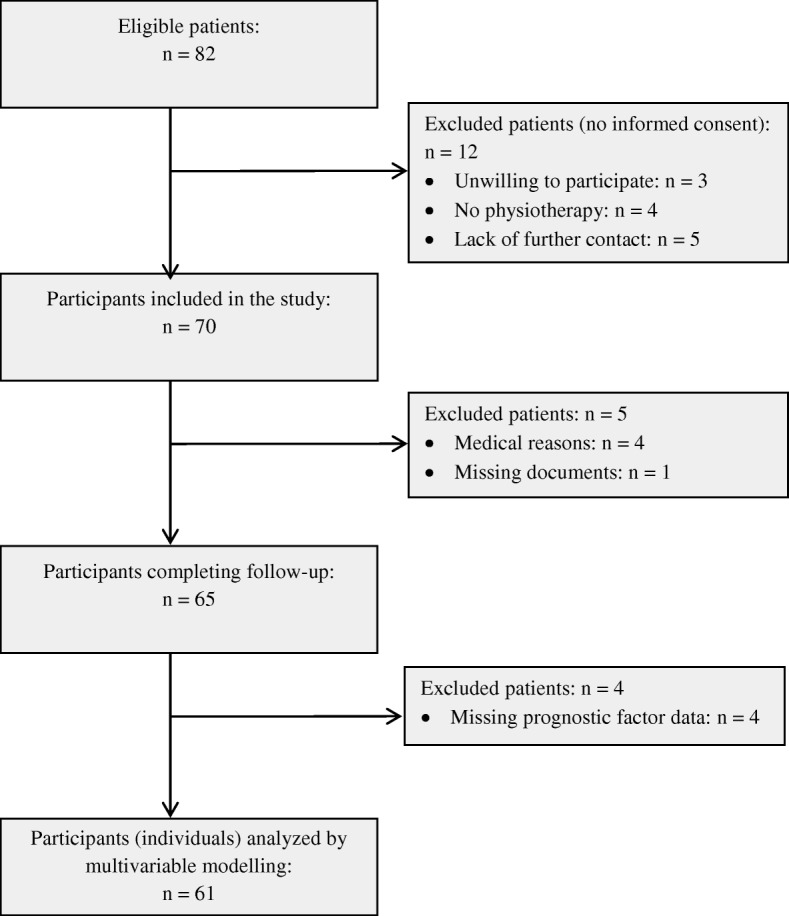
Results: Eight candidate models were analyzed using data from 61 participants. Two "best models" were identified: smoking & pain catastrophizing and disability & pain catastrophizing. However, none of the models had a satisfactory performance or precision.
Conclusions: We could not determine a prognostic model with satisfactory performance and precision. Further high-quality prognostic model studies with larger samples are needed, but should be underpinned, and thus preceded, by robust research that enhances knowledge of relevant prognostic factors.
Study registration: DRKS00004462 . Registered 08 April 2014; retrospectively registered (prior to the analysis).
Keywords: Conservative treatment; Physical therapy; Prognosis; Prognostic model development; Rotator cuff; Shoulder pain.
Conflict of interest statement
Ethics approval and consent to participate
The study was approved by the Teesside University School of Health and Social Care Research Governance & Ethics Committee and the Ethics Commission of the Hamburg Medical Council (Germany). Written informed consent, a prerequisite for study participation, was obtained from all participants.
Consent for publication
Not applicable.
Competing interests
The authors declare that they have no competing interests.
Publisher’s Note
Springer Nature remains neutral with regard to jurisdictional claims in published maps and institutional affiliations.
Figures
References
Publication types
MeSH terms
LinkOut - more resources
Full Text Sources
Other Literature Sources
Medical
Miscellaneous
