


Self-stigma of antidepressant users through secondary analysis of PhotoVoice data
- PMID: 30206504
- PMCID: PMC6125114
- DOI: 10.9740/mhc.2018.09.214
Self-stigma of antidepressant users through secondary analysis of PhotoVoice data
Abstract
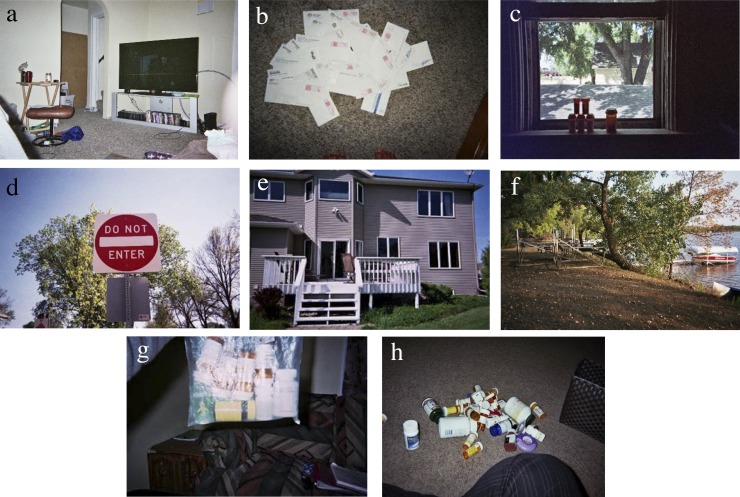
Introduction: Aspects of self-stigma and medication-related stigma among individuals with depressive disorders remain largely unexplored. The primary objective of this study is to highlight and characterize self-stigma and medication-related stigma experiences of antidepressant users.
Methods: This is a secondary analysis of data obtained from PhotoVoice studies examining psychotropic medication experiences. Transcripts of reflections from 12 individuals self-reporting a depressive disorder diagnosis and receipt of a prescription for an antidepressant were included. A directed content analysis approach based on expansion of the Self-Stigma of Depression Scale and an iterative process of identification of medication-stigma and stigma-resistance were used. Total mentions of self-stigma, stigma resistance, medication stigma, and underlying themes were tallied and evaluated.
Results: Self-stigma was mentioned a total of 100 times with at least 2 mentions per participant. Self-blame was the most prominent construct of self-stigma and was mentioned nearly twice as often as any other self-stigma construct. Most participants also made mentions of self-stigma resistance. Half of the individual participants mentioned stigma resistance more times than they mentioned self-stigma, which suggests some surmounting of self-stigma. Medication-related stigma was also prominent, denoting negativity about the presence of medications in one's life.
Discussion: Self-stigma related to self-blame may be problematic for antidepressant users. Identification and measurement of stigma resistance, especially in peer interactions, may represent a promising concept in overcoming self-stigma. Future work should explore emphasizing self-blame aspects when designing interventions to reduce self-stigma among individuals with depressive disorders and explore development of tools to measure stigma resistance.
Keywords: PhotoVoice; antidepressant users; self-stigma; stigma perceptions; stigma resistance.
Conflict of interest statement
Disclosures: The authors have nothing to disclose.
Figures
References
-
- Jones E. Social stigma: the psychology of marked relationships. New York: W.H. Freeman;; 1984.
-
- Corrigan P, Watson A, Barr L. The self-stigma of mental illness: implications for self-esteem and self-efficacy. J Soc Clin Psychology. 2006;25(8):875–84. doi: 10.1521/jscp.2006.25.8.875. - DOI
-
- Yen C-, Chen C-, Lee Y, Tang T-, Ko C-, Yen J- Association between quality of life and self-stigma, insight, and adverse effects of medication in patients with depressive disorders. Depress Anxiety. 2009;26(11):1033–9. doi: 10.1002/da.20413. 19288581 DOI: 10.1002/da.20413 PubMed PMID: PubMed PMID: 19288581. - DOI - PubMed
-
- Kamaradova D, Latalova K, Prasko J, Kubinek R, Vrbova K, Mainerova B, et al. Connection between self-stigma, adherence to treatment, and discontinuation of medication. Patient Prefer Adherence. 2016;10:1289–98. doi: 10.2147/ppa.s99136. 27524884 PMC4966500 DOI: 10.2147/ppa.s99136 PubMed PMID: 27524884 PubMed Central PMCID: PubMed PMID: 27524884 PubMed Central PMCID: PMC4966500. - DOI - PMC - PubMed
LinkOut - more resources
Full Text Sources
Other Literature Sources
Research Materials