


Peptides as Therapeutic Agents for Inflammatory-Related Diseases
- PMID: 30208640
- PMCID: PMC6163503
- DOI: 10.3390/ijms19092714
Peptides as Therapeutic Agents for Inflammatory-Related Diseases
Abstract
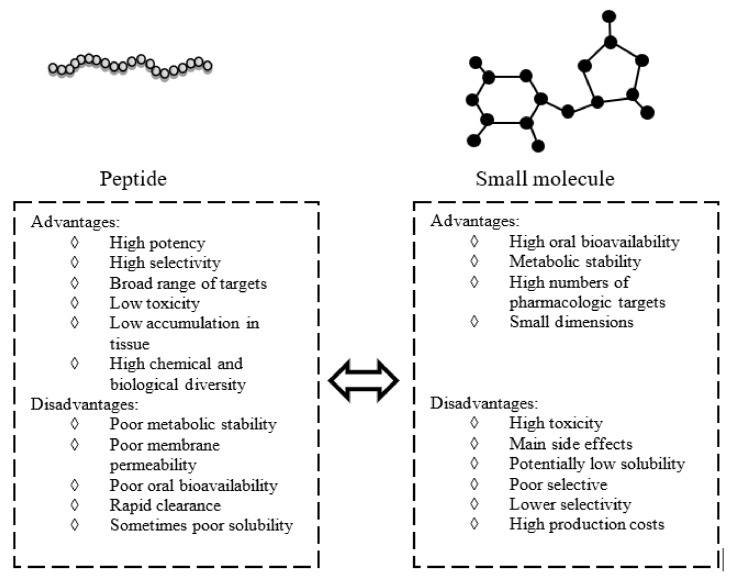
Inflammation is a physiological mechanism used by organisms to defend themselves against infection, restoring homeostasis in damaged tissues. It represents the starting point of several chronic diseases such as asthma, skin disorders, cancer, cardiovascular syndrome, arthritis, and neurological diseases. An increasing number of studies highlight the over-expression of inflammatory molecules such as oxidants, cytokines, chemokines, matrix metalloproteinases, and transcription factors into damaged tissues. The treatment of inflammatory disorders is usually linked to the use of unspecific small molecule drugs that can cause undesired side effects. Recently, many efforts are directed to develop alternative and more selective anti-inflammatory therapies, several of them imply the use of peptides. Indeed, peptides demonstrated as elected lead compounds toward several targets for their high specificity as well as recent and innovative synthetic strategies. Several endogenous peptides identified during inflammatory responses showed anti-inflammatory activities by inhibiting, reducing, and/or modulating the expression and activity of mediators. This review aims to discuss the potentialities and therapeutic use of peptides as anti-inflammatory agents in the treatment of different inflammation-related diseases and to explore the importance of peptide-based therapies.
Keywords: anti-inflammatory peptides; inflammatory diseases; peptides as therapeutic.
Conflict of interest statement
The authors declare no conflict of interest.
Figures


References
Publication types
MeSH terms
Substances
LinkOut - more resources
Full Text Sources
Other Literature Sources
