


Development of genistein-PEGylated silica hybrid nanomaterials with enhanced antioxidant and antiproliferative properties on HT29 human colon cancer cells
- PMID: 30210672
- PMCID: PMC6129527
Development of genistein-PEGylated silica hybrid nanomaterials with enhanced antioxidant and antiproliferative properties on HT29 human colon cancer cells
Abstract
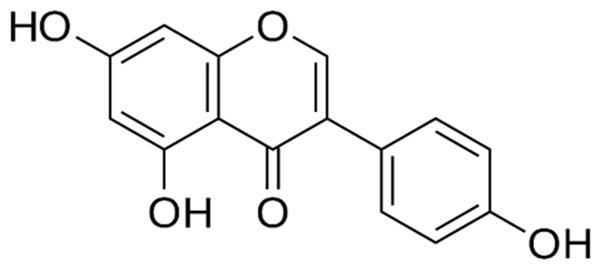
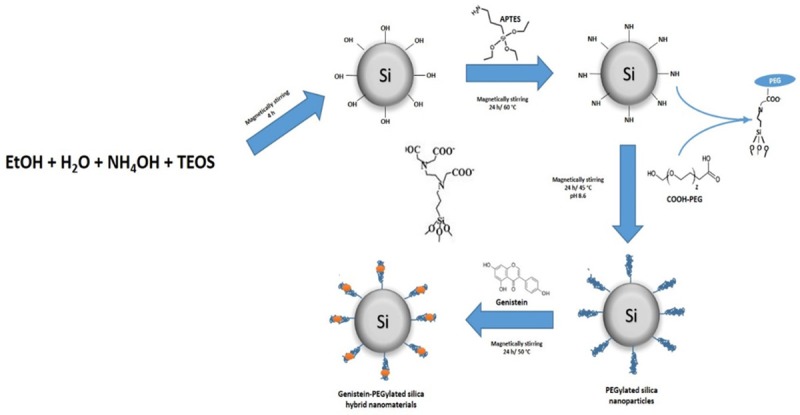
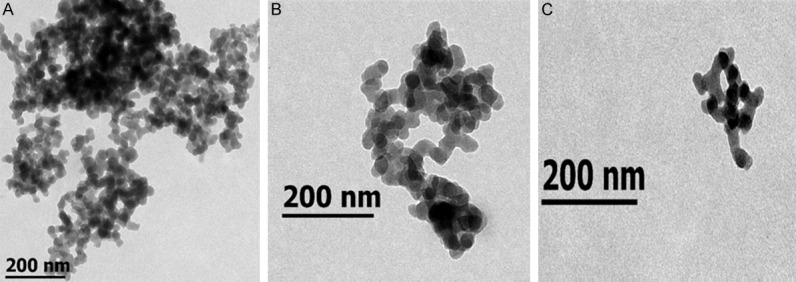
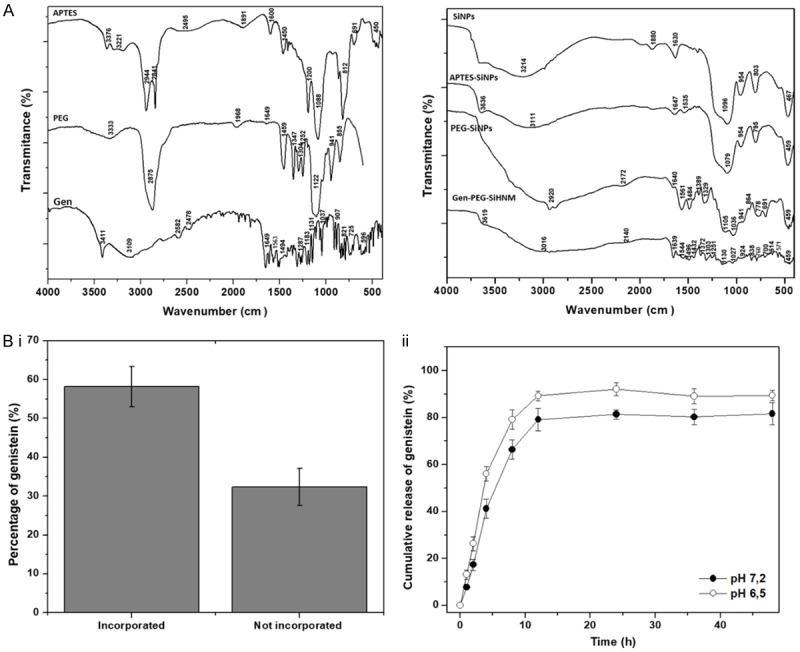
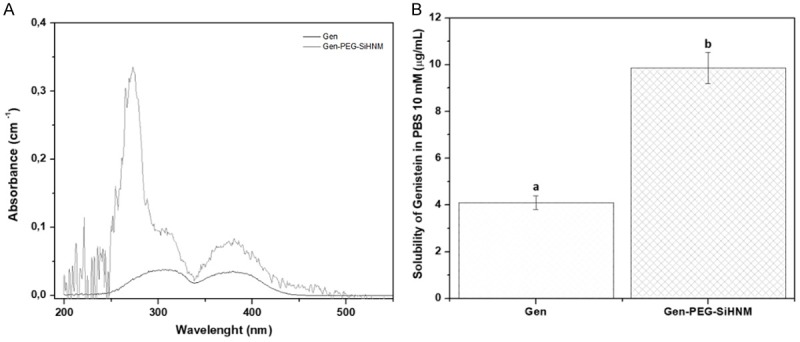
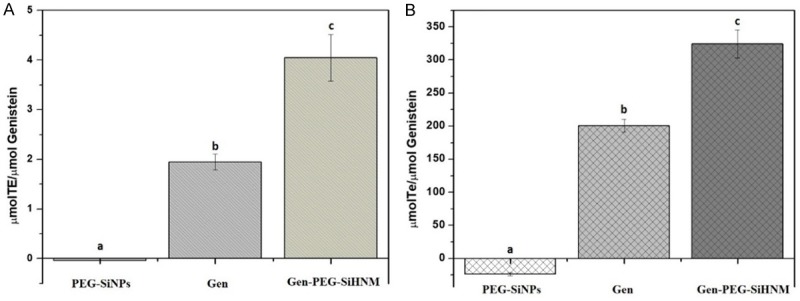
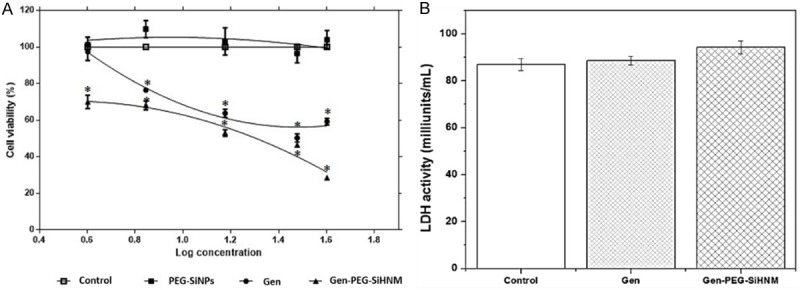
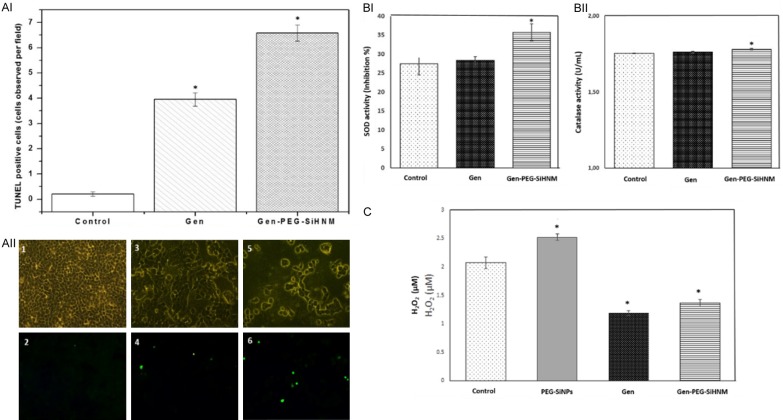
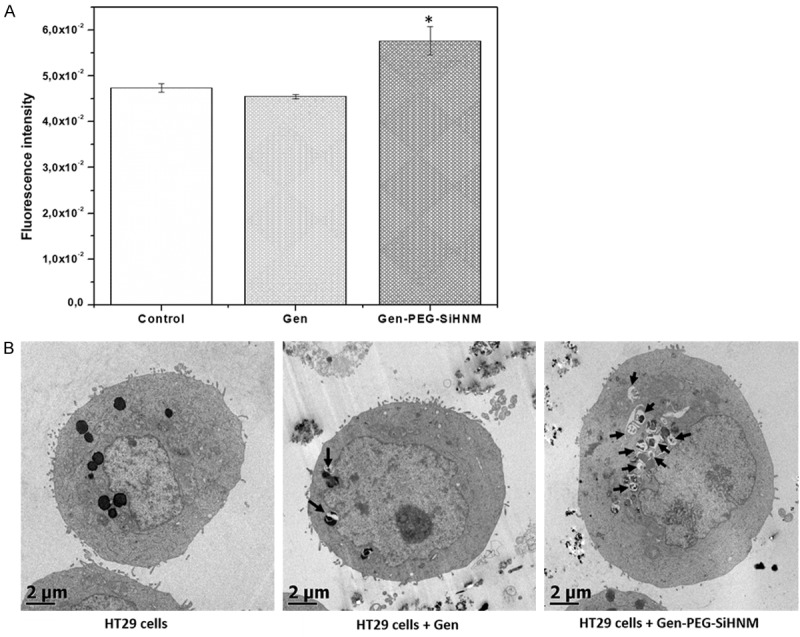
The anticancer use of genistein (Gen) has been severely limited due to its low water solubility, low bioavailability, and instability under experimental conditions. To overcome these limitations, we propose a formulation of a hybrid nanomaterial (HNM) based upon the incorporation of Gen into PEGylated silica nanoparticles (PEG-SiNPs) (Gen-PEG-SiHNM), where their physicochemical and biological effects on HT29 cells were evaluated. Genistein-loaded PEGylated silica hybrid nanomaterials were obtained by a simple end effective aqueous dispersion method. Physicochemical properties were determined by its mean particle size, surface charge, amount of cargo, spectroscopic properties, release profiles and aqueous solubility. In vitro biological performance was carried out by evaluating its antioxidant capacity and elucidating its antiproliferative mechanistic. Results showed that small (ca. 33 nm) and spherical particles were obtained with positive surface charge (+9.54 mV). Infrared analyses determined that encapsulation of genistein was successfully achieved with an efficiency of 51%; it was observed that encapsulation process enhanced the aqueous dispersibility of genistein and cumulative release of genistein was pH-dependent. More important, after encapsulation data showed that Gen potentiated its antioxidant and antiproliferative effects on HT29 human colon cancer cells by the modulation of endogenous antioxidant enzymes and H2O2 production, which simultaneously activated two different processes of cell death (apoptosis and autophagy), unlike free genistein that only activated one (apoptosis) in a lower proportion. Overall, our data support that Gen-PEG-SiHNM could be potentially used as alternative treatment for colorectal cancer in a near future.
Keywords: Colorectal cancer; PEGylated silica nanoparticles; antiproliferative effects; genistein; hybrid nanomaterials; mechanisms of programmed cell death.
Conflict of interest statement
None.
Figures
References
-
- Siegel RL, Miller KD, Jemal A. Cancer statistics, 2016. CA Cancer J Clin. 2016;66:7–30. - PubMed
-
- Meirow D, Nugent D. The effects of radiotherapy and chemotherapy on female reproduction. Hum Reprod Update. 2001;7:535–543. - PubMed
-
- Ortiz R, Melguizo C, Prados J, Álvarez PJ, Caba O, Rodriguez-Serrano F, Hita F, Aranega A. New gene therapy strategies for cancer treatment: a review of recent patents. Recent Pat Anticancer Drug Discov. 2012;7:297–312. - PubMed
-
- Parhi P, Mohanty C, Sahoo SK. Nanotechnology-based combinational drug delivery: an emerging approach for cancer therapy. Drug Discov Today. 2012;17:1044–1052. - PubMed
LinkOut - more resources
Full Text Sources