


Unaffected siblings of adolescents and adults with fragile X syndrome: Effects on maternal well-being
- PMID: 30211570
- PMCID: PMC6416081
- DOI: 10.1037/fam0000458
Unaffected siblings of adolescents and adults with fragile X syndrome: Effects on maternal well-being
Abstract
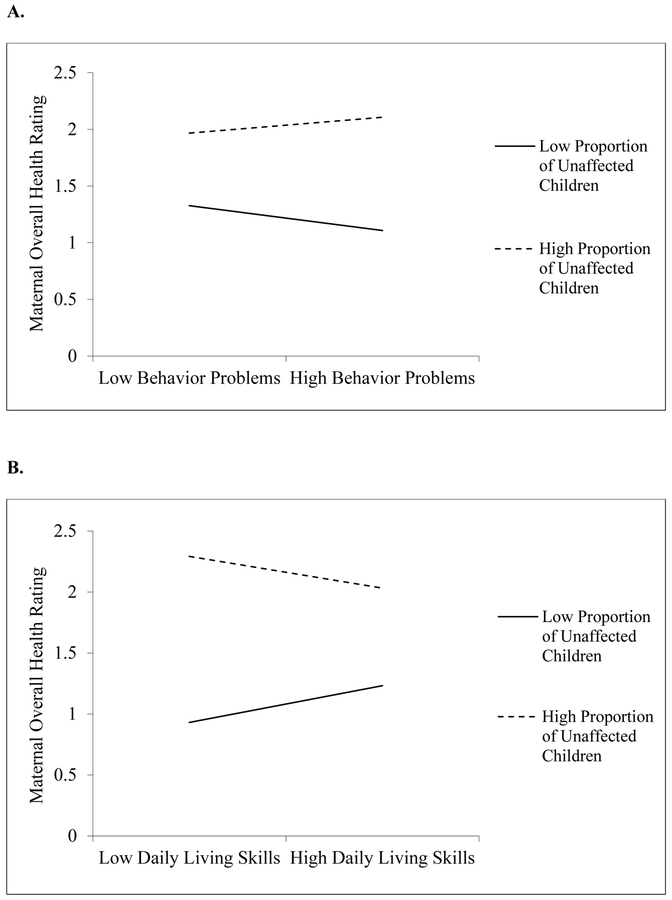
The present study investigated the effects of children without disabilities on maternal physical and mental health in families with adolescents or adults with fragile X syndrome. Mothers with the FMR1 premutation (N = 87) reported on behavior problems and functional limitations of their adolescent or adult child with fragile X syndrome and their own physical and mental health. Mothers also provided a blood sample to determine FMR1 CGG repeat length. The proportion of unaffected children in the family significantly buffered the effect of both child behavior problems and functional limitations on maternal self-rated health, such that having a higher proportion of unaffected children in the family had a protective effect on maternal health when the target child had more severe behavior problems and functional limitations. There was a similar buffering process for maternal depressive symptoms but at a trend level. Additionally, maternal CGG repeat length had a significant curvilinear association with self-rated health, indicating that mothers with midrange repeat lengths reported the poorest health, whereas mothers with lower and higher repeat lengths in the premutation range reported better health. The data suggest that unaffected children in the family may be an important resource for premutation carrier mothers. Findings are consistent with previous research indicating that mothers with varying levels of genetic liability have variable risk for health problems. (PsycINFO Database Record (c) 2019 APA, all rights reserved).
Conflict of interest statement
Conflict of Interest:
The authors declare that they have no conflict of interest.
Figures
References
-
- Abbeduto L, Seltzer MM, Shattuck P, Krauss MW, Orsmond G, & Murphy MM (2004). Psychological well-being and coping in mothers of youths with autism, Down syndrome, or fragile X syndrome. American Journal of Mental Retardation, 109(3), 237–254. - PubMed
-
- Allen E, Sullivan A, Marcus M, Small C, Dominguez C, Epstein M, … Sherman S (2007). Examination of reproductive aging milestones among women who carry the FMR1 premutation. Human reproduction, 22(8), 2142–2152. - PubMed
-
- Broderick CB (1993). Understanding family process: Basics of family systems theory: Sage.
MeSH terms
Substances
Grants and funding
LinkOut - more resources
Full Text Sources
Other Literature Sources
Medical
