. 2019 Nov:80:33-43.
doi: 10.1016/j.alcohol.2018.08.012. Epub 2018 Sep 11.

Alcohol consumption increases susceptibility to pneumococcal pneumonia in a humanized murine HIV model mediated by intestinal dysbiosis

Affiliations

Alcohol consumption increases susceptibility to pneumococcal pneumonia in a humanized murine HIV model mediated by intestinal dysbiosis

Derrick R Samuelson et al. Alcohol. 2019 Nov.

Abstract

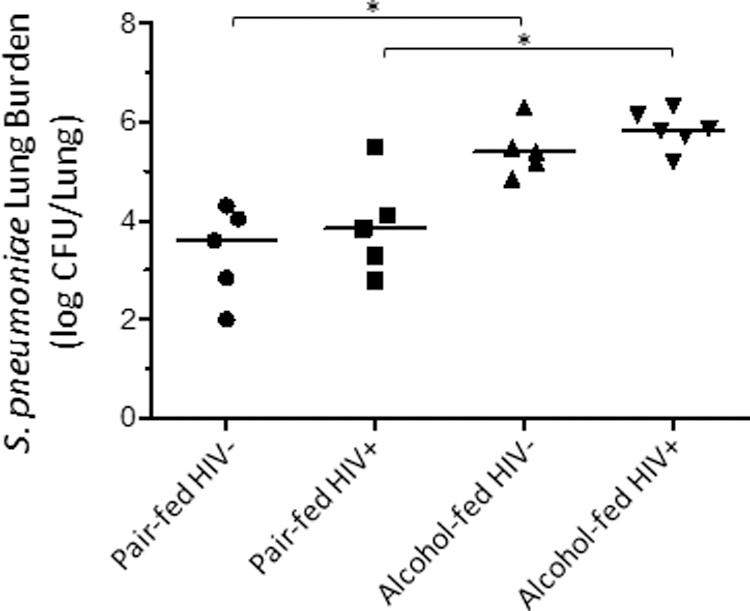
Alcohol use in persons living with HIV (PLWH) worsens the severity of bacterial pneumonia. However, the exact mechanism(s) by which this occurs remain ill-defined. We hypothesized that alcohol in the setting of HIV infection decreases Streptococcus pneumoniae clearance from the lung through mechanisms mediated by the gut microbiota. Humanized BLT (bone marrow, liver, thymus) mice were infected with 1 × 10⁴ TCID50 of HIV (BAL and JRCSF strains) via intraperitoneal (i.p.) injection. One week post-HIV infection, animals were switched to a Lieber-DeCarli 5% ethanol diet or an isocaloric control diet for 10 days. Alcohol-fed animals were also given two binges of 2 g/kg ethanol on days 5 and 10. Feces were also collected, banked, and the community structures were analyzed. Mice were then infected with 1 × 10⁵ CFU (colony-forming units) of S. pneumoniae and were sacrificed 48 h later. HIV-infected mice had viral loads of ∼2 × 10⁴ copies/mL of blood 1 week post-infection, and exhibited an ∼57% decrease in the number of circulating CD4+ T cells at the time of sacrifice. Fecal microbial community structure was significantly different in each of the feeding groups, as well as with HIV infection. Alcohol-fed mice had a significantly higher burden of S. pneumoniae 48 h post-infection, regardless of HIV status. In follow-up experiments, female C57BL/6 mice were treated with a cocktail of antibiotics daily for 2 weeks and recolonized by gavage with intestinal microbiota from HIV+ ethanol-fed, HIV+ pair-fed, HIV- ethanol-fed, or HIV- pair-fed mice. Recolonized mice were then infected with S. pneumoniae and were sacrificed 48 h later. The intestinal microbiota from alcohol-fed mice (regardless of HIV status) significantly impaired clearance of S. pneumoniae. Collectively, these data indicate that alcohol feeding, as well as alcohol-associated intestinal dysbiosis, compromise pulmonary host defenses against pneumococcal pneumonia. Determining whether HIV infection acts synergistically with alcohol use in impairing pulmonary host defenses will require additional study.

Keywords: Alcohol; Host defense; Microbiota; Pulmonary; S. pneumoniae.


Conflict of interest statement

Competing interests: The authors have declared that no competing interests exist.

Figures

Figure 1:
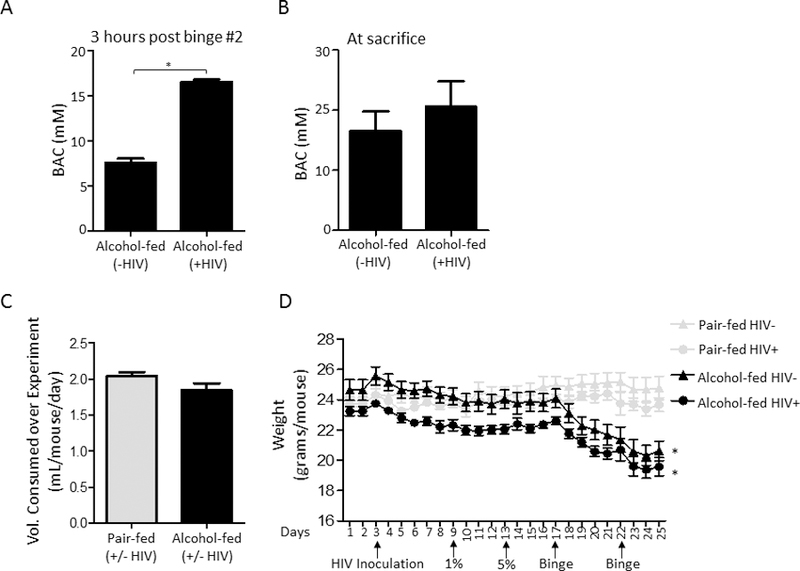
Figure 1:. Binge-on-chronic alcohol feeding in HIV-infected humanized BLT mice.
(A) Blood alcohol levels (mM) of chronic alcohol fed mice following 10 days of diet and 3 hrs following the second binge alcohol administration. (B) Blood alcohol levels (mM) of chronic alcohol fed mice at the time of sacrifice. (C) Volume of liquid diet consumed by alcohol-fed and pair-fed mice per day per mouse. (D) Body weights of pair-fed and alcohol-fed mice at baseline and post binge-on-chronic alcohol feeding (10 days chronic + 2x binge). Bars are the mean ± SEM, *indicates P<0.05, by Mann-Whitney U. N=5/group.
Figure 2:
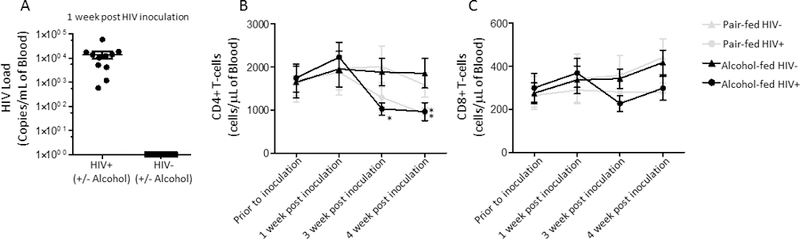
Figure 2:. HIV infection decreases circulating CD4+ T-cells in humanized BLT mice.
(A) HIV viral load (copies/ml) at 1-week post infection in pair-fed and binge-on-chronic alcohol treated mice. (B) Difference in absolute number of circulating CD4+ T-cells in HIV-infected humanized BLT mice. (C) Difference in absolute number of circulating CD8+ T-cells in HIV-infected humanized BLT mice. Bars represent the mean of the cell counts post infection minus the cell counts prior to infection ± SEM. * indicates P < 0.05, by Mann-Whitney U or by repeated measures 2-way ANOVA with Bonferroni correction. N=5/group. Viral loads in HIV-negative samples are set to one for visualization on the log scale.
Figure 3:
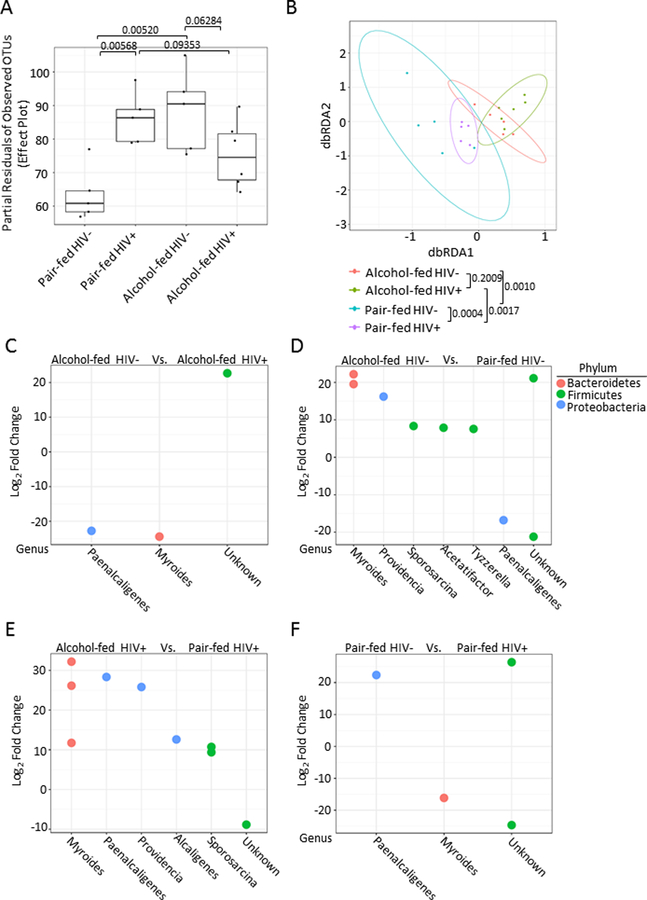
Figure 3:. Binge-on-chronic alcohol feeding in HIV-infected humanized BLT mice alters the intestinal microbial community structure.
(A) Alpha-diversity of the fecal microbial communities following binge-on-chronic alcohol feeding and HIV-infected. Significant differences in α-diversity of the microbial communities were seen between; HIV-infected alcohol-fed mice compared to HIV-infected pair-fed mice, HIV-infected pair-fed mice compared to HIV-negative pair-fed mice, alcohol-fed HIV-infected mice compared to HIV-negative pair-fed mice, and HIV-infected alcohol-fed mice compared to HIV-negative alcohol-fed mice. (B) Beta-diversity of the fecal microbial communities following binge-on-chronic alcohol feeding and HIV-infected. Significant differences in the β-diversity were seen between; HIV-infected alcohol-fed mice compared to HIV-infected pair-fed mice, HIV-negative alcohol-fed mice compared to HIV-negative pair-fed mice, as well as HIV-infected pair-fed mice compared to HIV-negative pair-fed mice. No significant difference was observed between HIV-infected alcohol-fed mice compared to HIV-negative alcohol-fed mice. (C) HIV infection alters the realative abundance of specific OTUs compared to HIV-negative pair-fed mice. Postive changes indicate the genus is more abundant in the HIV-infected animals, while negative values indicate that the genus is more abundant in the HIV-negative animals. (D) Alcohol-feeding alters the realative abundance of of specific OTUs compared to pair-feeding in HIV-infected mice. Postive changes indicate the genus is more abundant in the pair-fed animals, while negative values indicate that the genus is more abundant in the alcohol-fed animals (E) HIV infection alters the realative abundance of specific OTUs compared to HIV-negative alcohol-fed mice. Postive changes indicate the genus is more abundant in the HIV-infected animals, while negative values indicate that the genus is more abundant in the HIV-negative animals. (F) Alcohol-feeding alters the realative abundance of specific OTUs compared to pair-feeding in HIV-negative mice. Postive changes indicate the genus is more abundant in the pair-fed animals, while negative values indicate that the genus is more abundant in the alcohol-fed animals.
Figure 4:
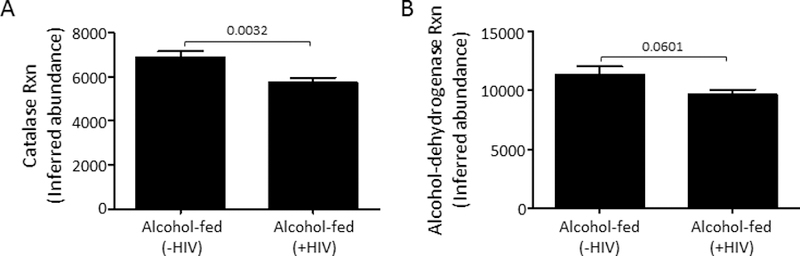
Figure 4:. Inferred functional capacity for catalase and alcohol-dehydrogenase is decreased in alcohol-fed HIV-infected humanized BLT mice:
(A) HIV-infected alcohol-fed mice have significantly lower inferred capacity for catalase function compared to HIV-negative alcohol-fed mice. (B) HIV-infected alcohol-fed mice have significantly lower inferred capacity for alcohol-dehydrogenase function compared to HIV-negative alcohol-fed mice. P values are indicated, as determined by Student’s T-test. N=5/group.
Figure 5:
Figure 5:. Binge-on-chronic alcohol use increases host susceptibility to Streptococcus pneumoniae in HIV-infected humanized BLT mice.
Streptococcus lung burden (Log10 CFU/ml) at 48 hrs. post infection in pair-fed and binge-on-chronic alcohol-treated mice. Bars represent the median log10 CFU/lung of S. pneumoniae. * indicates P < 0.05, by Mann-Whitney U or by ANOVA with Dunn’s correction. N=10/group.
Figure 6:
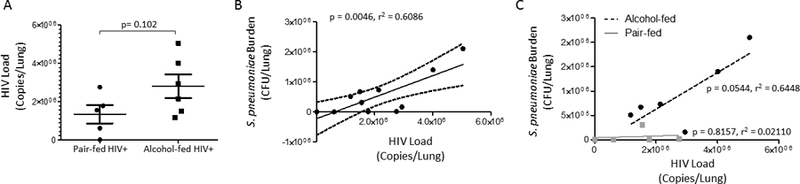
Figure 6:. Streptococcus pneumoniae infection increases pulmonary HIV viral load.
(A) HIV RNA levels in the lungs of alcohol-fed and pair-fed mice. (B) Streptococcus lung burden (Log10 CFU/ml) correlates with pulmonary HIV RNA levels (P = 0.0046 r2 = 0.6086). (C) Streptococcus lung burden (Log10 CFU/ml) correlates with pulmonary HIV RNA levels in alcohol-fed mice but not in pair-fed mice (P = 0.0544 r2 = 0.6448 and P = 0.8157 r2 = 0.0211).
Figure 7:
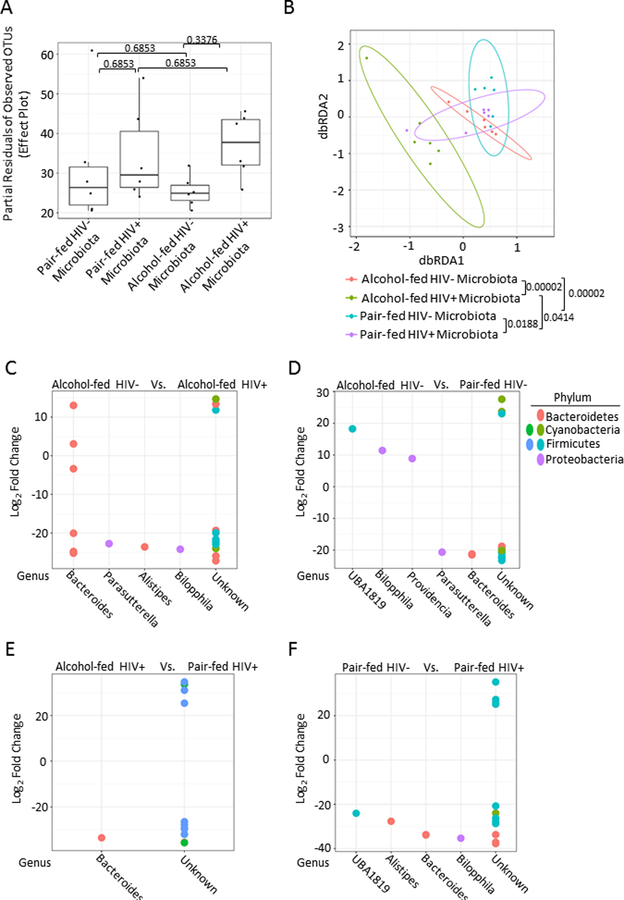
Figure 7:. Fecal microbial community structure following xenotransplantation.
Microbial community structure was analyzed 1 week following xenotransplantation into alcohol and HIV-naïve mice, prior to S. pneumoniae infection. (A) No significant changes to the microbial α-diversity where observed between any group. (B) β-diversity of the xenotransplanted microbial communities from alcohol-fed, pair-fed mice, HIV infection alcohol-fed mice, and HIV-infected pair-fed mice. Significant differences in the β-diversity of the xenotransplanted microbial communities were seen between; HIV-infected alcohol-fed mice compared to HIV-infected pair-fed mice, HIV-negative alcohol-fed mice compared to HIV-negative pair-fed mice, HIV-infected pair-fed mice compared to HIV-negative pair-fed mice, and HIV-infected alcohol-fed mice compared to HIV-negative alcohol-fed mice via vegan. (C) Xenotransplanted microbiota from HIV-infected mice alters the realative abundance of specific OTUs compared to xenotransplanted microbiota from HIV-negative pair-fed mice. Postive changes indicate the genus is more abundant in the HIV-infected xenotransplanted microbiota, while negative values indicate that the genus is more abundant in the HIV-negative xenotransplanted microbiota. (D) Xenotransplanted microbiota from alcohol-fed mice alters the realative abundance of of specific OTUs compared to xenotransplanted microbiota from pair-fed HIV-infected mice. Postive changes indicate the genus is more abundant in the pair-fed xenotransplanted microbiota, while negative values indicate that the genus is more abundant in the alcohol-fed xenotransplanted microbiota (E) Xenotransplanted microbiota from HIV-infected mice alters the realative abundance of specific OTUs compared to xenotransplanted microbiota from HIV-negative alcohol-fed mice. Postive changes indicate the genus is more abundant in the HIV-infected xenotransplanted microbiota, while negative values indicate that the genus is more abundant in the HIV-negative xenotransplanted microbiota. (F) Xenotransplanted microbiota from alcohol-fed mice alters the realative abundance of specific OTUs compared to xenotransplanted microbiota from HIV-negative pair-fed mice. Postive changes indicate the genus is more abundant in the pair-fed xenotransplanted microbiota, while negative values indicate that the genus is more abundant in the alcohol-fed xenotransplanted microbiota.
Figure 8:
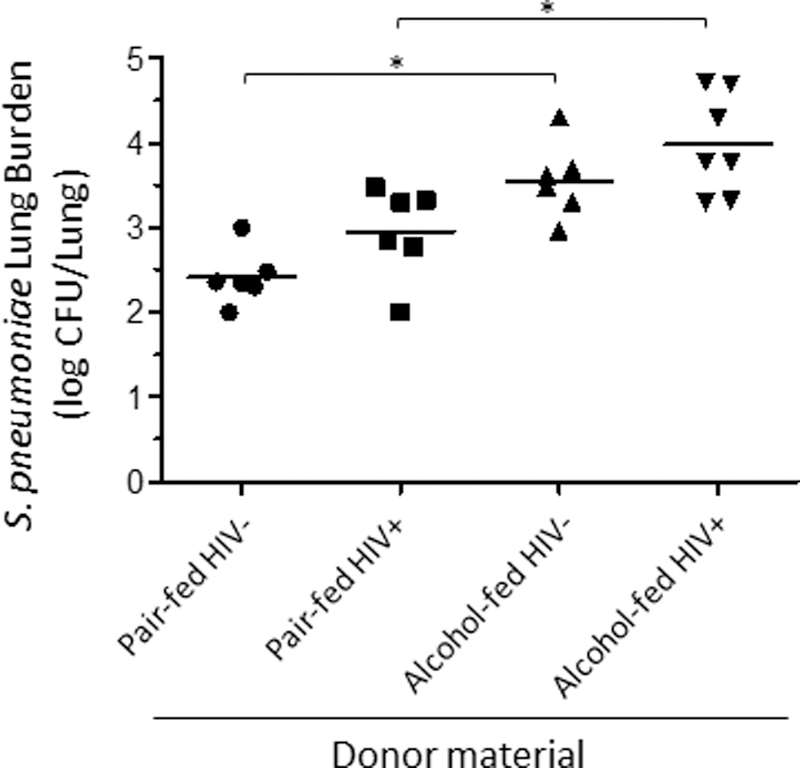
Figure 8:. Alcohol-associated intestinal dysbiosis increases host susceptibility to Streptococcus pneumoniae in mice, independent of alcohol or HIV infection.
Streptococcus lung burden (Log10 CFU/ml) at 48 hrs. post infection in animals recolonized with microbiota from HIV+ ethanol-fed, HIV+ pair-fed, HIV- ethanol-fed, or HIV- pair-fed. Bars represent the median log10 CFU/lung of S. pneumoniae. * indicates P < 0.05, by Mann-Whitney U or by ANOVA with Dunn’s correction. N=10/group.
Figure 9:
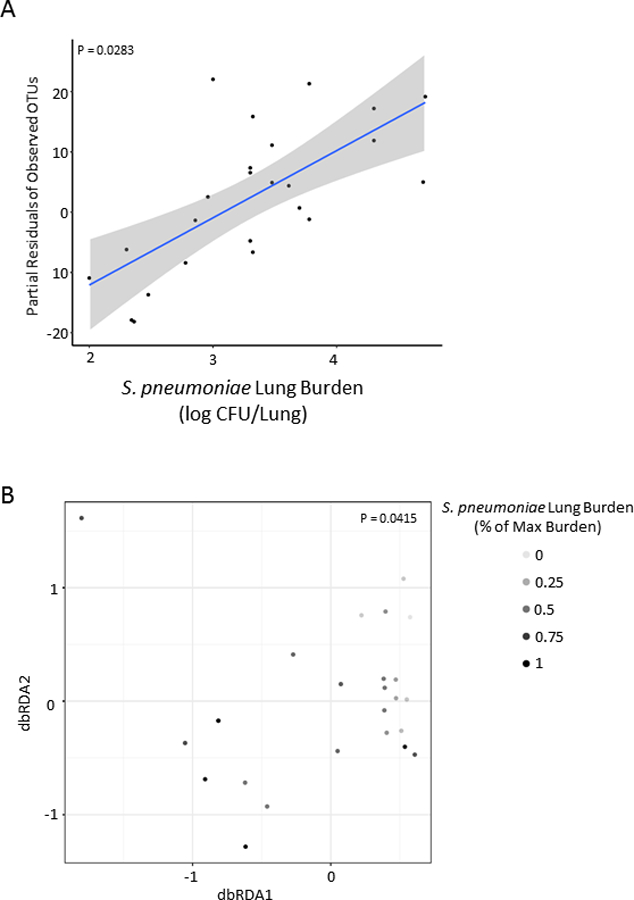
Figure 9:. Streptococcus pneumoniae burden is associated with microbial community structure following xenotransplantation.
S. pneumoniae pulmonary burden was significantly association with both (A) α-diversity and (B) β-diversity, as determined by multiple general linear regression and permutational multivariate analysis of variance within R, respectively. Model covariables included xenotransplanted microbial community origin, S. pneumoniae pulmonary burden, and sequencing depth.

References

    1. Alcohol Facts and Statistics | National Institute on Alcohol Abuse and Alcoholism (NIAAA) (2016). from https://www.niaaa.nih.gov/alcohol-health/overview-alcohol-consumption/al...
    1. Alcohol Use Disorder | National Institute on Alcohol Abuse and Alcoholism (NIAAA) (2016). from http://www.ncbi.nlm.nih.gov/pubmed/
    1. Anders S, & Huber W (2010). Differential expression analysis for sequence count data. Genome Biol, 11(10), R106. - PMC - PubMed
    1. Bagby GJ, Zhang P, Purcell JE, Didier PJ, & Nelson S (2006). Chronic binge ethanol consumption accelerates progression of simian immunodeficiency virus disease. Alcohol Clin Exp Res, 30(10), 1781–1790. - PubMed
    1. Beck JM, Schloss PD, Venkataraman A, Twigg H 3rd, Jablonski KA, Bushman FD, et al. (2015). Multicenter Comparison of Lung and Oral Microbiomes of HIV-infected and HIV-uninfected Individuals. Am J Respir Crit Care Med, 192(11), 1335–1344. - PMC - PubMed

Publication types

MeSH terms